
Polarization Rising Nationally While Remaining Moderate Within Local Communities According to Survey of Public Officials
Nine out of 10 officeholders say polarization is hurting the nation; public institutions are seen as key partners in strengthening civic participation and reducing polarization
Dec 3, 2025
New York, NY, December 9, 2025 — A new survey finds that 89 percent of local officials say polarization is negatively affecting the United States, the highest figure since data collection began in August 2024. In contrast, 30 percent of the same officials say polarization is hurting their local community, a figure unchanged during the past year, suggesting that community life remains resilient despite national strife. The survey is part of a series conducted by the nonprofit CivicPulse and the philanthropic foundation Carnegie Corporation of New York.
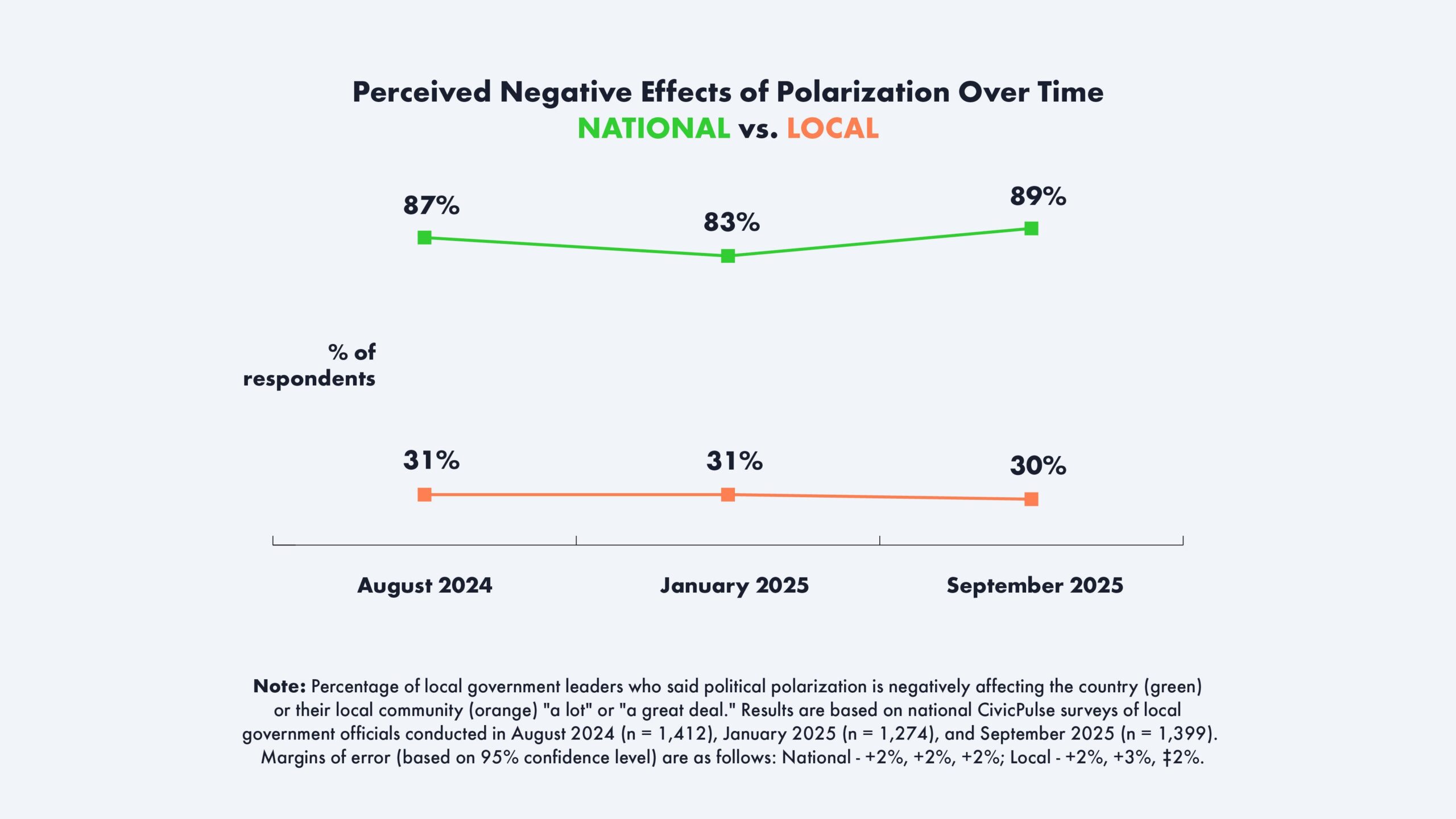
The population size of a community remains a critical factor, with local officials in communities with more than 50,000 residents much more likely to report a “great deal” or “a lot” of local negative effects of polarization (41 percent) compared to their counterparts in smaller communities (28 percent).
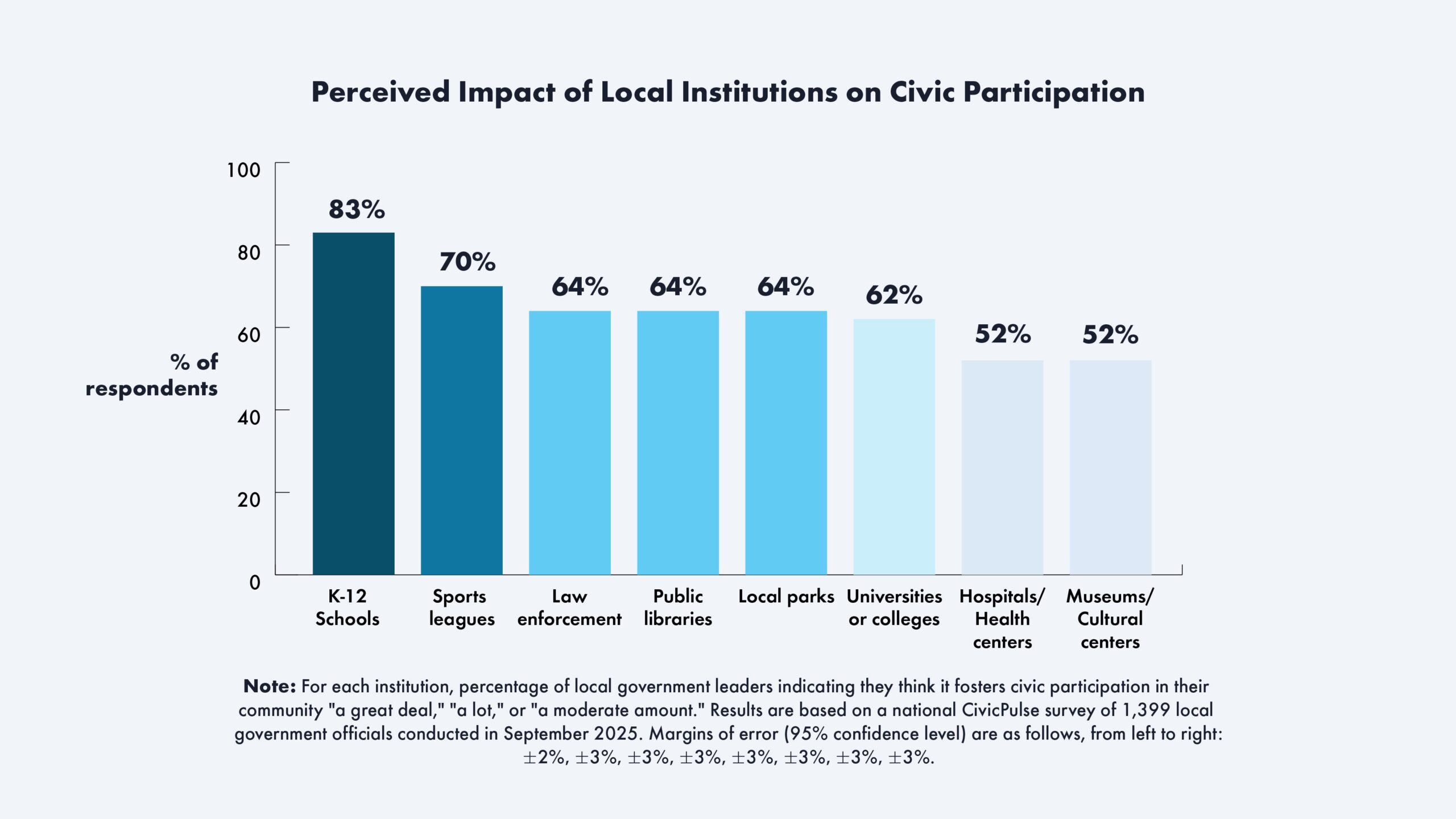
These survey findings build on earlier research that identified greater civic participation as a widely acknowledged way of reducing polarization. Among eight local institutions presented, K–12 schools (83 percent) and sports leagues (70 percent) were ranked by local leaders as having the highest positive impact on civic participation, with law enforcement, public libraries, and local parks tied for third (64 percent). Each provides a setting where adult and youth participation is already high and the infrastructure for it already exists.
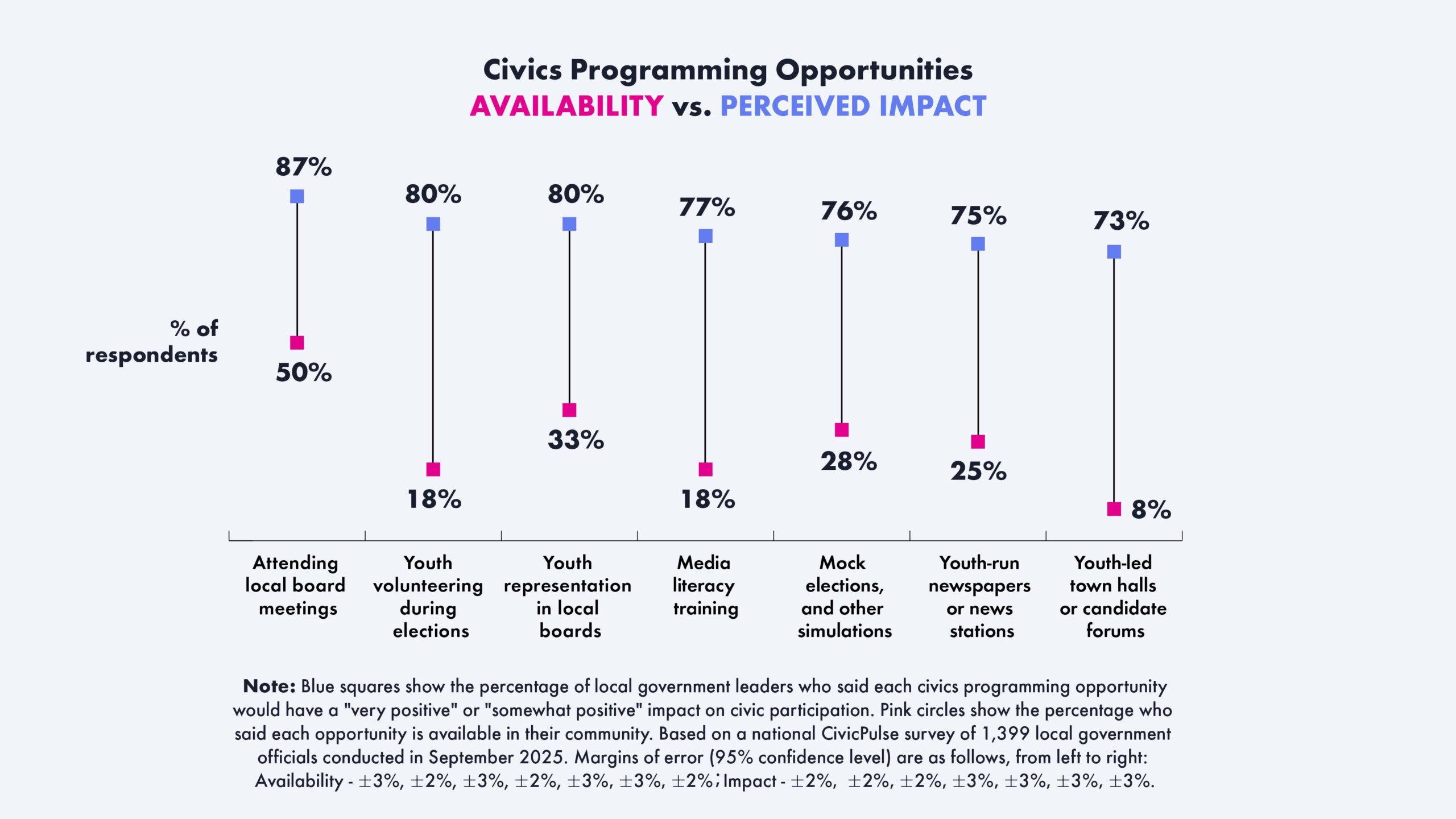
The data also points to the potential of youth civics programming in reducing polarization across the country. When asked to evaluate the impact of a range of civics programming, respondents gave positive ratings to all seven. Topping the list: attending a local government meeting (87 percent), youth volunteering during elections (80 percent), and youth representation in local governance (80 percent). Despite the positive perceptions of these programs, the survey finds that less than half of local communities have such opportunities available.
“We have seen how polarization erodes trust and compromise, leading to legislative gridlock and a breakdown in the efficacy of our democratic institutions at the national level,” said Dame Louise Richardson, president of Carnegie, former head of the University of Oxford, and a distinguished political scientist. “Our local officials are providing examples of what can be accomplished despite our ideological differences.”
The survey asked respondents about ways to improve the public’s access to information about government operations. Findings show that while tools like digital calendars, livestreaming, and video recordings have been adopted by most local governments, a notable share still don’t use them, reflecting a digital divide. Local officials express significantly less interest in using more complex digital tools, including artificial intelligence.
“At a time when political dysfunction dominates the headlines, people may be surprised to see how resilient most local communities are to the forces of polarization,” said Nathan Lee, founder and managing director of CivicPulse. “Our research identifies opportunities for local leaders and residents to strengthen positive civic participation in a way that further reinforces this resilience.”
Between September and October of 2025, CivicPulse surveyed 1,399 officials in local government, including members of city councils, county commissions, and school boards.
Read and download the full report here.
These findings are the third installment in CivicPulse’s Polarization in America: Survey of Local Government, a series of nationally representative surveys and follow-up interviews of municipal, county, and school board officials in America conducted in August 2024, January 2025, and September 2025. Carnegie commissioned the research to inform its grantmaking priority of reducing political polarization. Read the reports on the first and second surveys.
About CivicPulse
CivicPulse is a nonprofit, nonpartisan research organization dedicated to enhancing local and state government in the U.S. by conducting representative surveys of public officials, producing actionable research, and facilitating practitioner-researcher dialogue.
About Carnegie Corporation of New York
Carnegie Corporation of New York was established by Andrew Carnegie in 1911 to promote the advancement and diffusion of knowledge and understanding. Today the foundation works to reduce political polarization through philanthropic support for the issues that Carnegie considered most important: education, democracy, and peace. @CarnegieCorp
Contact CivicPulse for more on the data, demographics, and survey methodology: info@civicpulse.org