
Investigating the Roots of Political Polarization
The 2026 class of Andrew Carnegie Fellows will conduct research into the causes of division in America
By Gabriel Fine
Jul 27, 2026

Polarization has emerged as a major topic of discussion in U.S. politics in recent years. A Carnegie-supported survey by CivicPulse in 2025 found that 89 percent of local officials said that it was negatively affecting the country. Yet polarization in the United States is not a new phenomenon. Katlyn Marie Carter, an Andrew Carnegie Fellow at the University of Notre Dame, is exploring how political polarization has deep roots in American history, including early American debates over truth in politics.
Carter is one of 24 Andrew Carnegie Fellows selected in 2026 to receive $200,000 grants to pursue research projects and share their knowledge with the public. The 2026 class marks the third year the program has focused on the causes of political polarization in the U.S., representing an $18 million investment in scholarly research on the subject. In 2027, the program will expand its focus to examine polarization worldwide.
The 2026 fellows’ research includes how extremist content in online games contributes to polarization among young men, lessons from communities of color in building social cohesion, and an assessment of how religious ideology has shaped American politics over the last 75 years.
Here is a preview of some of their work:
 Did early America have a ‘post-truth’ problem?
Katlyn Marie Carter, University of Notre Dame
What We Know
The early American republic, like today, was marked by political polarization exacerbated by revolutionary upheaval and profound transformations in communication technologies. These divisions led to contests over the truth, infusing political divisions into interpretations of reality.
Key Questions
How did early Americans work to establish shared standards of truth in politics, and how did those efforts contribute to polarization when they failed?
Goals
- Publish a book tracing early American debates over truth in politics.
- Develop and share a college course that uses these cases to help students think about today’s controversies through a historical lens and outside of partisan frameworks.
 How online gaming radicalizes young men
Eunji Kim, Columbia University
What We Know
Seventy percent of men under 30 spend their leisure time gaming online, where narratives of aggrieved masculinity dominate. Over half of players report exposure to extremist content, while white nationalist groups systematically target gaming environments for recruitment.
Key Questions
How do online gaming communities shape young men’s political identities? Does sustained exposure to gaming fuel polarization and extremism?
Goals
- Generate evidence of online gaming’s political effects.
- Develop practical tools that platforms, parents, and policymakers can use to reduce polarization.
- Publish a book.
 Do images polarize us?
Ayse Lokmanoglu, Boston University
What We Know
Over half of adults report getting their news through social media, encountering politics primarily through viral memes, clips on TikTok, or AI-generated campaign ads. Recent election cycles show how fabricated visuals can slip into mainstream discourse through ordinary sharing. This influences who people trust, how they interpret events, and how they regard political opponents.
Key Questions
How does authentic, altered, and AI-generated imagery circulate in politically sensitive moments, and does exposure intensify polarization?
Goals
- Map how political imagery circulates online and gains attention.
- Test whether the imagery erodes trust, feeds polarization, or encourages empathy.
- Lead a media literacy AI workshop for journalists, educators, and students.
- Publish findings in a book.
 Latinos and the right
Cecilia Márquez, Duke University
What We Know
A major story in U.S. politics is the growing conservatism of Latinos: in the 2024 presidential election, 48 percent voted for Donald Trump, up from 29 percent in 2020. Nevertheless, Latino right-wing extremists are still viewed as political anomalies. A long and overlooked study of Latinos embracing far-right ideologies from the 1960s to today reveals a more complex history.
Key Questions
How and why do Latinos participate in far-right movements, and how do race, diaspora, and ideology shape political polarization?
Goals
- Complete archival and oral history research.
- Publish a book that traces Latino far-right activism from the 1960s to the present and illuminates how far-right beliefs circulate in Latino communities.
- Organize a conference on Latino political polarization.
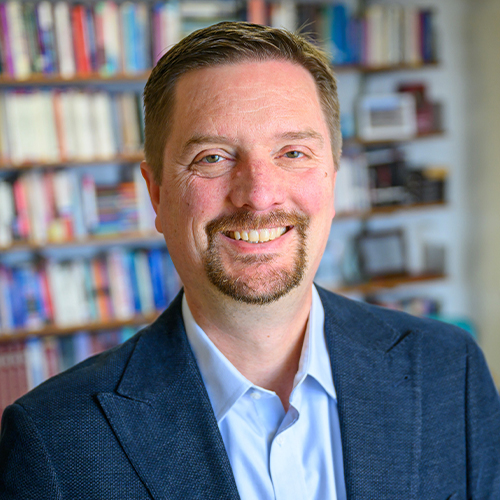 Religious ideology and polarization
Matthew Avery Sutton, Washington State University
What We Know
Over the past 75 years, religious leaders and political strategists have increasingly turned policy disagreements into moral crusades that invoke fears of Satan and mobilize voters. Amplified more recently by movements like QAnon and the New Apostolic Reformation, this messaging has fueled polarization by casting political disagreements as battles between good and evil.
Key Questions
How have religious leaders and policymakers recast politics as spiritual warfare over the last 75 years, and how has this contributed to political polarization?
Goals
- Publish a book that captures the cultural and religious forces behind polarization and equips readers and policymakers to resist divisive rhetoric.
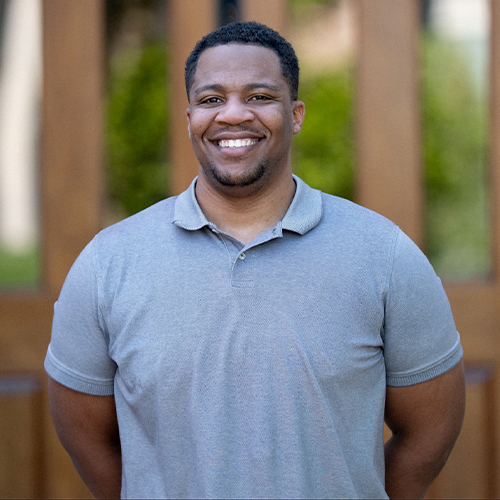 The cultural roots of social cohesion
Michael Strawbridge, Washington University in St. Louis
What We Know
As American politics has grown more polarized, Black communities have remained one of the most politically cohesive groups in the country, consistently aligned on party identification and support for policies addressing racial inequality.
Key Questions
What unites Black Americans politically, and how has this cohesion been sustained across generations, even as American politics has become increasingly polarized?
Goals
- Publish a book that demonstrates how involvement in cultural spaces like churches, barbershops, historically Black colleges and universities, Black-owned media, and civic organizations has resulted in political unity across diverse Black populations.
- Apply those findings to broader questions about what creates and sustains cohesion.
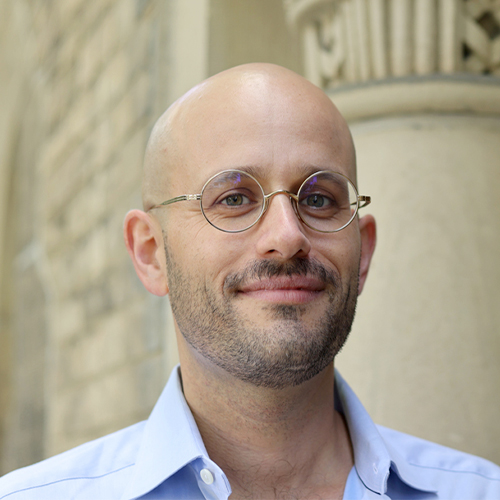 Can civics education reduce polarization?
Chagai M. Weiss, University of Toronto
What We Know
Research shows that adolescence is a pivotal period for the formation of political attitudes and that schools play a key role in socializing students. This makes a case for revitalizing civic education as an antidote to America’s increasing polarization. However, studies of the evolution of civic education, its depolarizing effects, and the factors shaping its widespread adoption remain scarce.
Key Questions
Can civic education strengthen citizens’ commitment to democratic norms and foster cooperation across political divides? What motivates educators to adopt effective curricula?
Goals
- Document state-level legislation on civic education and analyze the political values represented in civics textbooks.
- Run field experiments in Utah and Maryland schools that test the depolarizing effects of various civics curricula and measure whether bipartisan political endorsements increase adoption of these programs by schools.
Meet the 2026 Andrew Carnegie Fellows
Gabriel Fine is the content manager at the Andrew Carnegie Foundation.