
Polarization in America: How Polarized Are We?
The latest survey by CivicPulse finds that an increasing number of local government leaders (41 percent) say polarization is hurting their communities
By Andrew Carnegie Foundation
Oct 6, 2026
The CivicPulse/Carnegie series of four national surveys, conducted in 2024, 2025, and 2026, asked local officials about their perceptions of polarization and possible solutions to its negative effects.
“The issues brought on by the midterm elections percolate to people’s everyday conversations. This shapes their view of local governance and the community. National or state issues become assigned to local governance, even when the issue is not in the purview of local governance.”
Trustee, midsize municipality, Illinois
Survey IV
Conducted June–August 2026
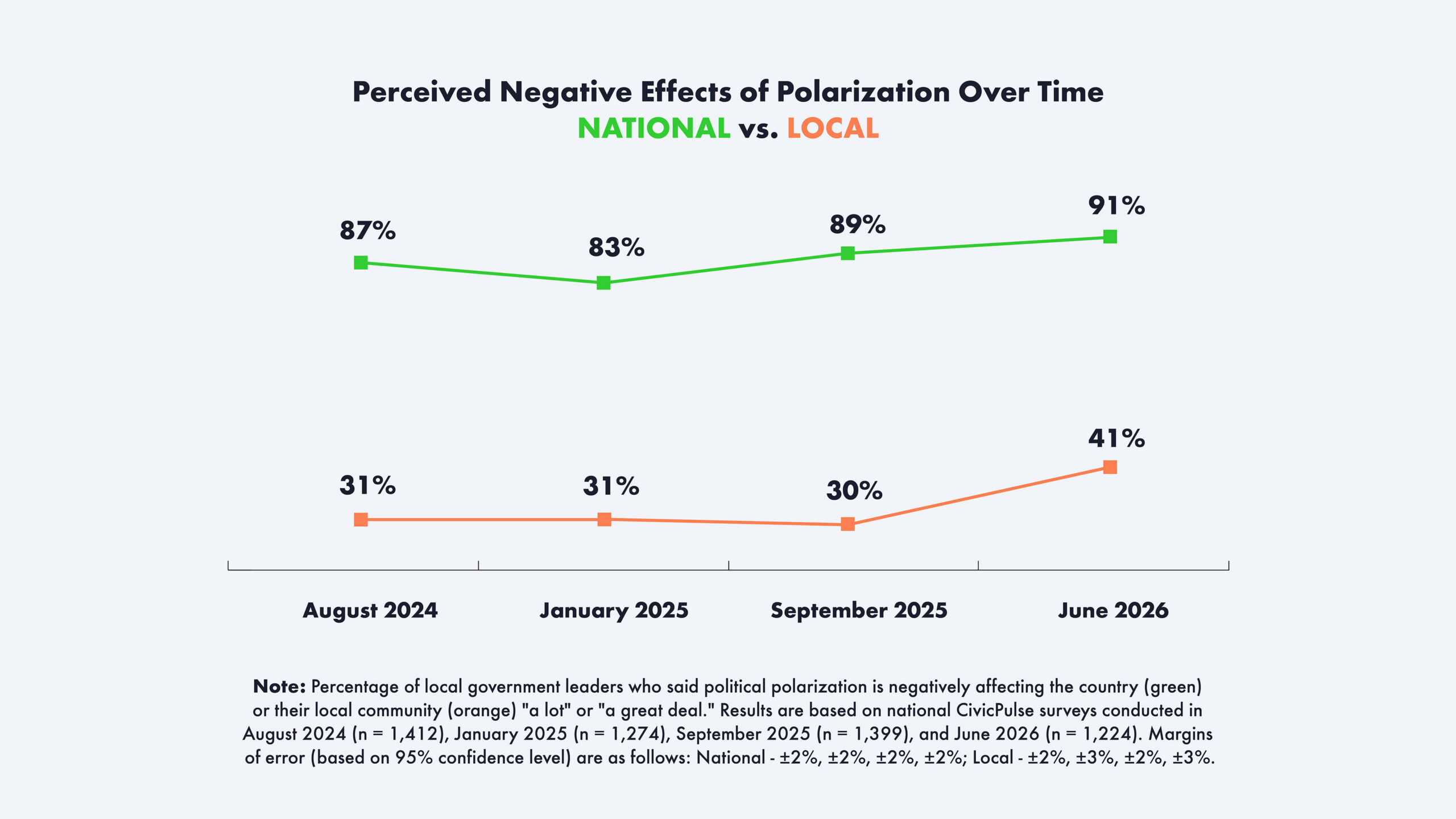
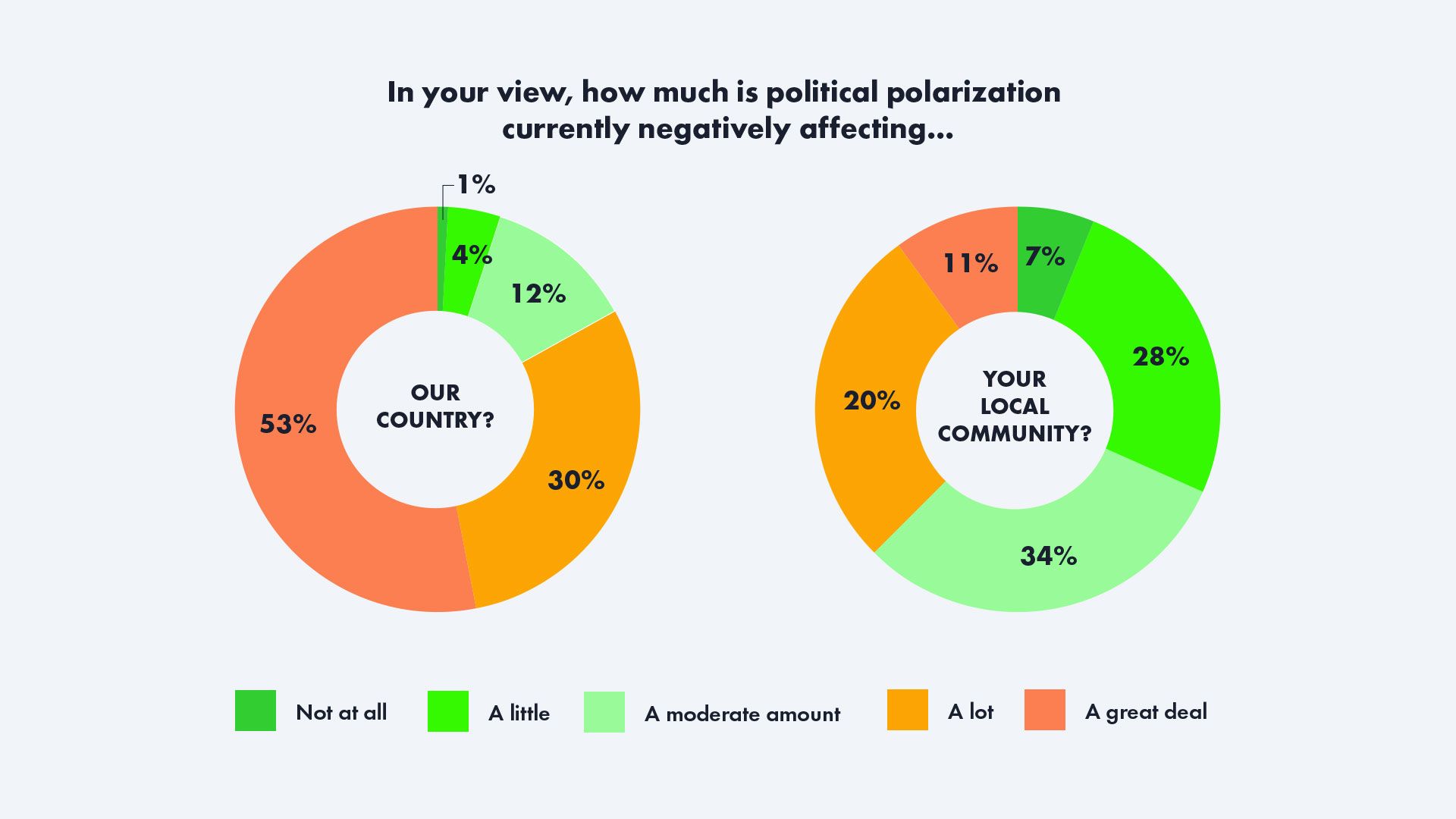
A new survey finds that 91 percent of local officials say polarization is negatively affecting the country, and in a sharp increase, 41 percent say that polarization is negatively affecting their own communities, up from 30 to 31 percent in previous surveys. This is the largest single change recorded in the survey results since data collection began in August 2024, and a departure from three prior surveys in which local communities were shown to be more insulated from polarization.
The increase reached smaller communities previously considered the most resilient. Among communities under 50,000 residents, the share of officials reporting substantial negative effects rose to 39 percent from a steady 28 percent. Larger communities, over 50,000, remain the most affected at 49 percent, up from a low of 40 percent.
The survey is the fourth installment in a series conducted by the nonprofit CivicPulse and commissioned by the Andrew Carnegie Foundation, formerly Carnegie Corporation of New York.
Read the press release and coverage in NBC News.
The issues that divide communities
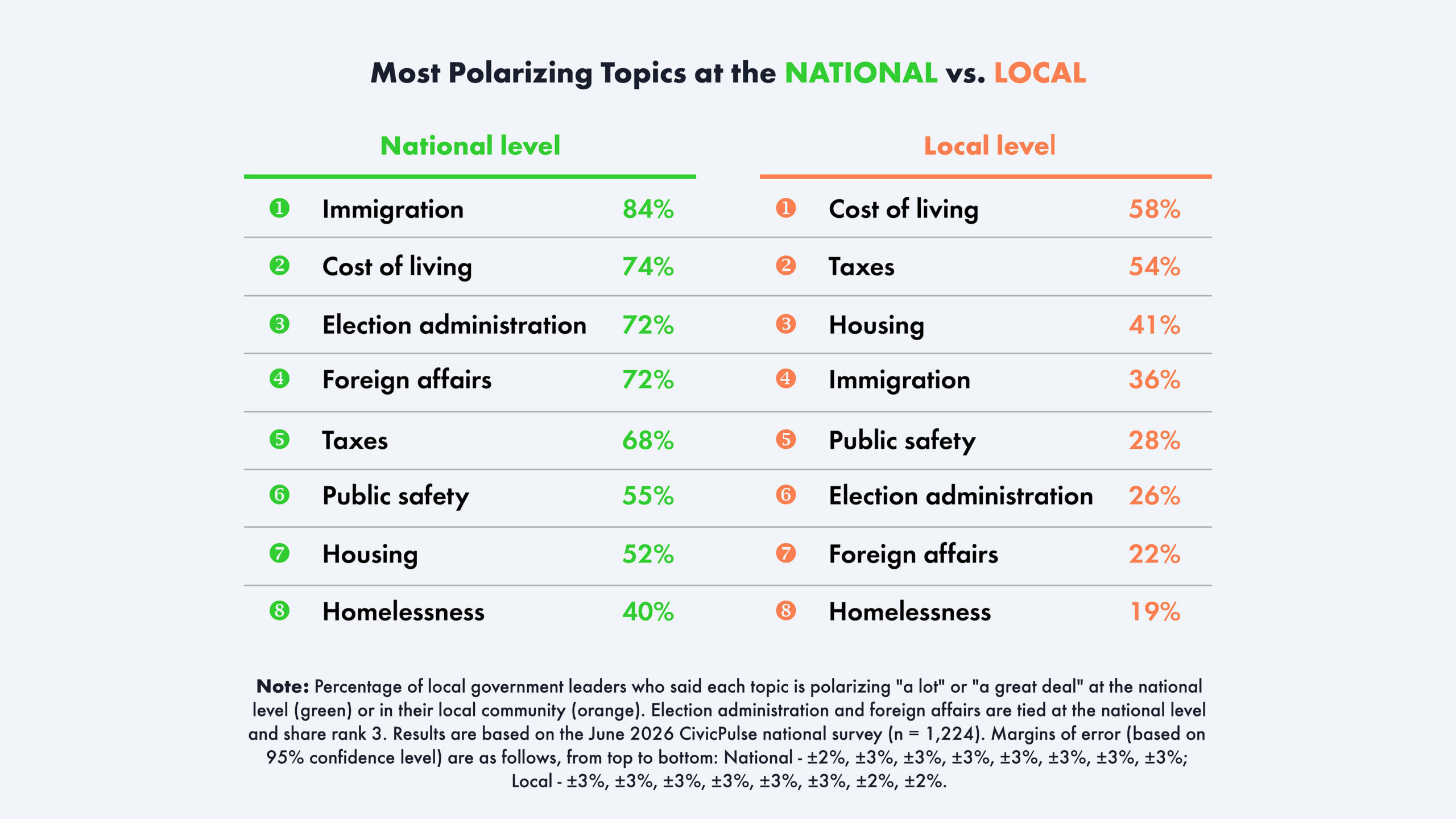
For the first time, the survey ranks how polarizing specific issues are, both nationally and within their own communities. Nationally, immigration ranks first, cited as the most polarizing topic by 84 percent of officials, followed by cost of living (74 percent) and election administration and foreign affairs (both 72 percent). Within their own communities, cost of living leads at 58 percent, followed by taxes (54 percent) and housing (41 percent).
What to expect before the midterm elections
The survey also asked local leaders what they expect heading into the midterm elections in November. Two-thirds say cost of living (64 percent) and taxes (59 percent) are becoming more polarizing, followed by immigration at nearly half (44 percent).
More than two-thirds of local leaders (69 percent) expect polarization in their communities to worsen at least “a moderate amount” in the lead-up to the midterms, and 38 percent expect it to worsen “a lot” or “a great deal.”
Where resilience is strongest
Asked what they are proud of in their own communities, county and municipal officials most often cite community solidarity (32 percent) with residents coming together across political lines, followed by avoiding party labels (20 percent) and civil discourse and tangible accomplishments (19 percent each). School board officials most often cite keeping decisions centered on students (35 percent), followed by academic achievement and program quality (21 percent) and community support for schools (18 percent).
The most recent survey was conducted between June 23 and August 21, 2026, and surveyed 1,224 officials in local government, including members of city councils, county commissions, and school boards.
Download Survey IV
Survey III
Conducted September–October 2025
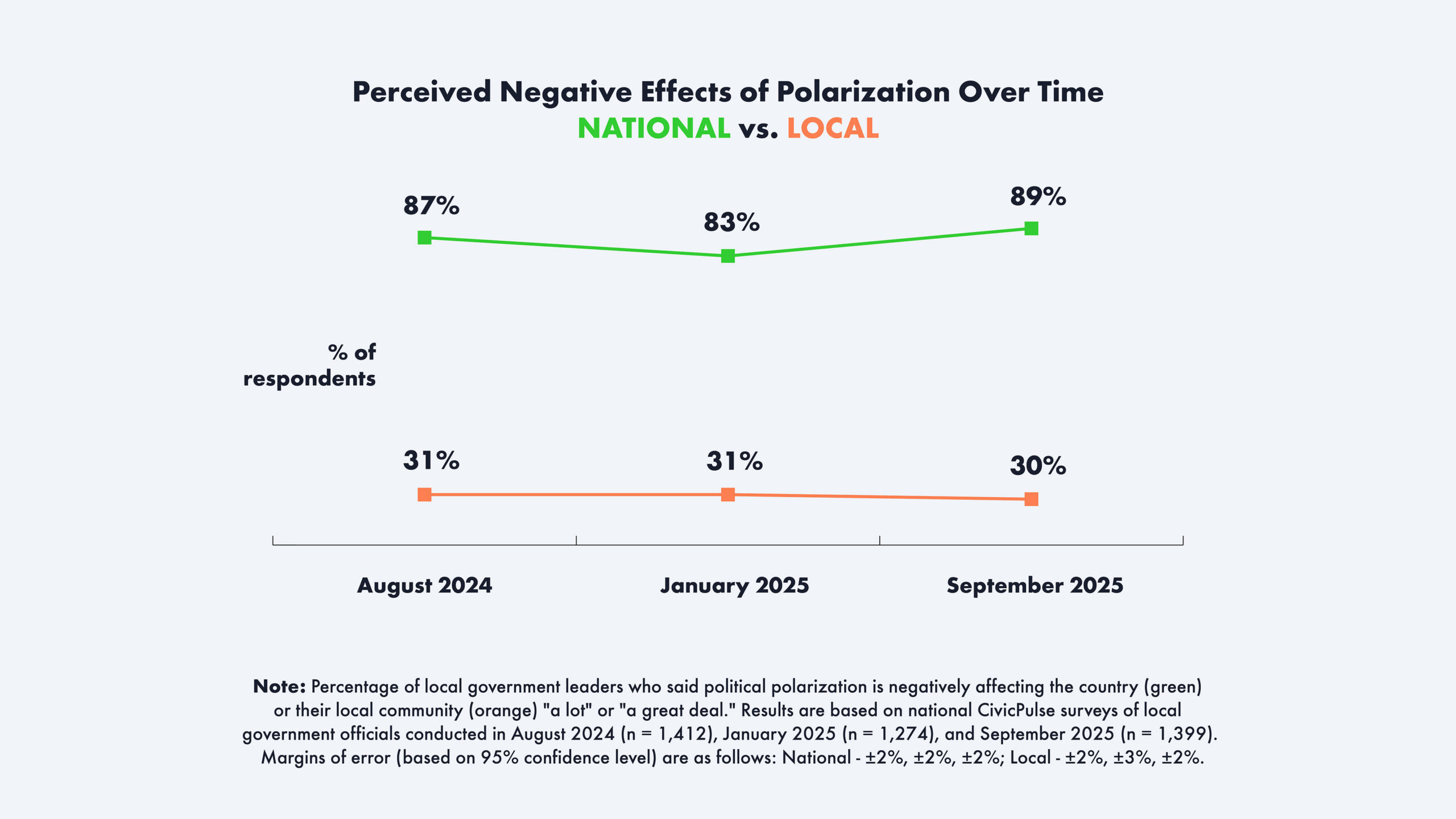
A new survey finds that 89 percent of local officials say polarization is negatively affecting the United States, the highest figure since data collection began in August 2024. In contrast, 30 percent of the same officials say polarization is hurting their local community, a figure unchanged during the past year, suggesting that community life remains resilient despite national strife.
The population size of a community remains a critical factor, with local officials in communities with more than 50,000 residents much more likely to report a “great deal” or “a lot” of local negative effects of polarization (41 percent) compared to their counterparts in smaller communities (28 percent).
The survey is the third installment in a series conducted by the nonprofit CivicPulse and commissioned by the Andrew Carnegie Foundation. Read the press release and coverage in NBC News.
K–12 schools and recreational sports leagues viewed as most effective local institutions in improving civic participation
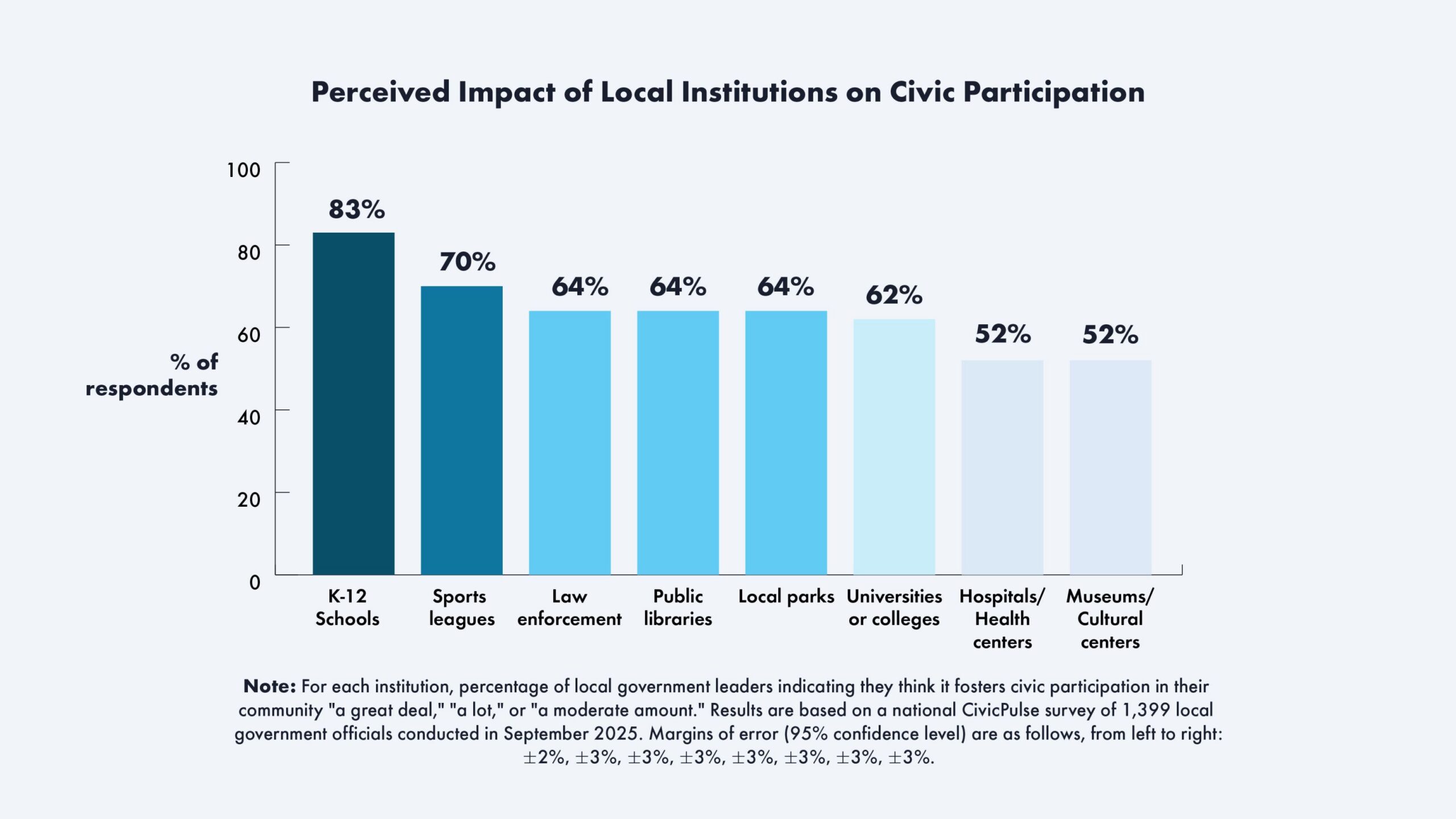
Among eight local institutions presented, K–12 schools (83 percent) and sports leagues (70 percent) are the ones that the most local leaders say have a positive impact on civic participation, with law enforcement, public libraries, and local parks tied for third (64 percent). Each provides a setting where adult and youth participation is already high and the infrastructure for it already exists.
Youth civics programming: positive perceptions, few opportunities
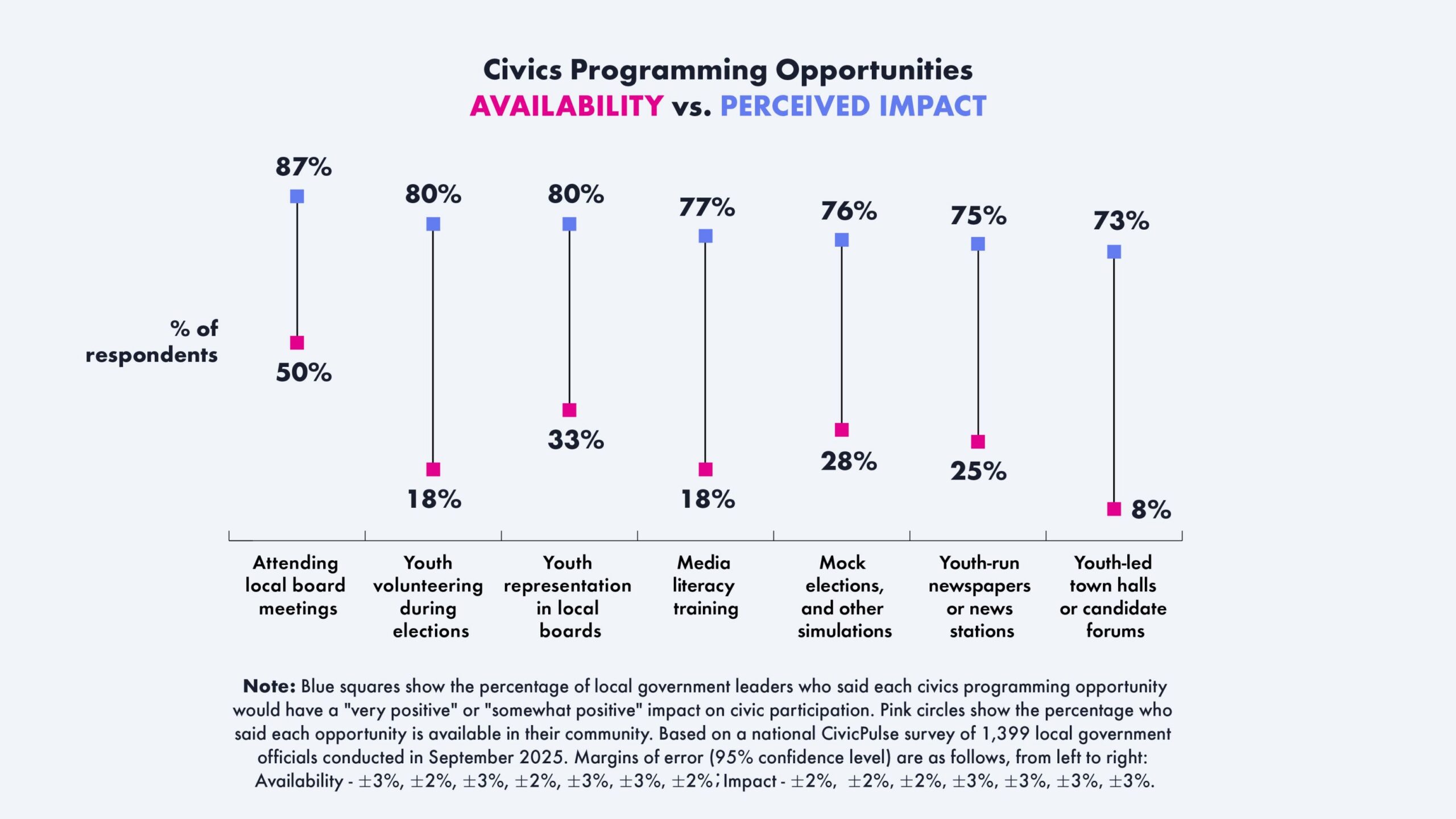
The data points to the potential of youth civics programming in reducing polarization across the country. When asked to evaluate the impact of a range of civics programming, respondents gave positive ratings to all seven. Topping the list: attending a local government meeting (87 percent), youth volunteering during elections (80 percent), and youth representation in local governance (80 percent).
Despite the positive perceptions of these programs, the survey finds that less than half of local communities have such opportunities available.
Digital tools help, but gaps remain
The survey asked respondents about ways to improve the public’s access to information about government operations. Findings show that while tools like digital calendars, livestreaming, and video recordings have been adopted by 60 to 68 percent of local governments, a notable share still don’t use them, reflecting a digital divide. Local officials express significantly less interest in using more complex digital tools. For example, just one in five (22 percent) believe that artificial intelligence tools for resident engagement, such as chatbots and agents, are effective.
Download Survey III
“There is a big difference between the level of polarization at the national level and what we have in our local government.”
A council member representing a midsize city in Maine
Survey II
Conducted January–March 2025
The degree of polarization perceived by local leaders in their communities remained steady following the 2024 presidential election and the transition from the Biden administration to a second Trump administration in 2025. Our second survey, conducted between January and March 2025, showed that local governments continued to navigate divisive challenges more successfully than their state or federal counterparts.
The survey found that 31 percent of local government leaders saw polarization as negatively affecting their communities, while 83 percent saw it negatively affecting the country, a slight improvement over earlier results (87 percent).
What are local communities doing to reduce polarization?
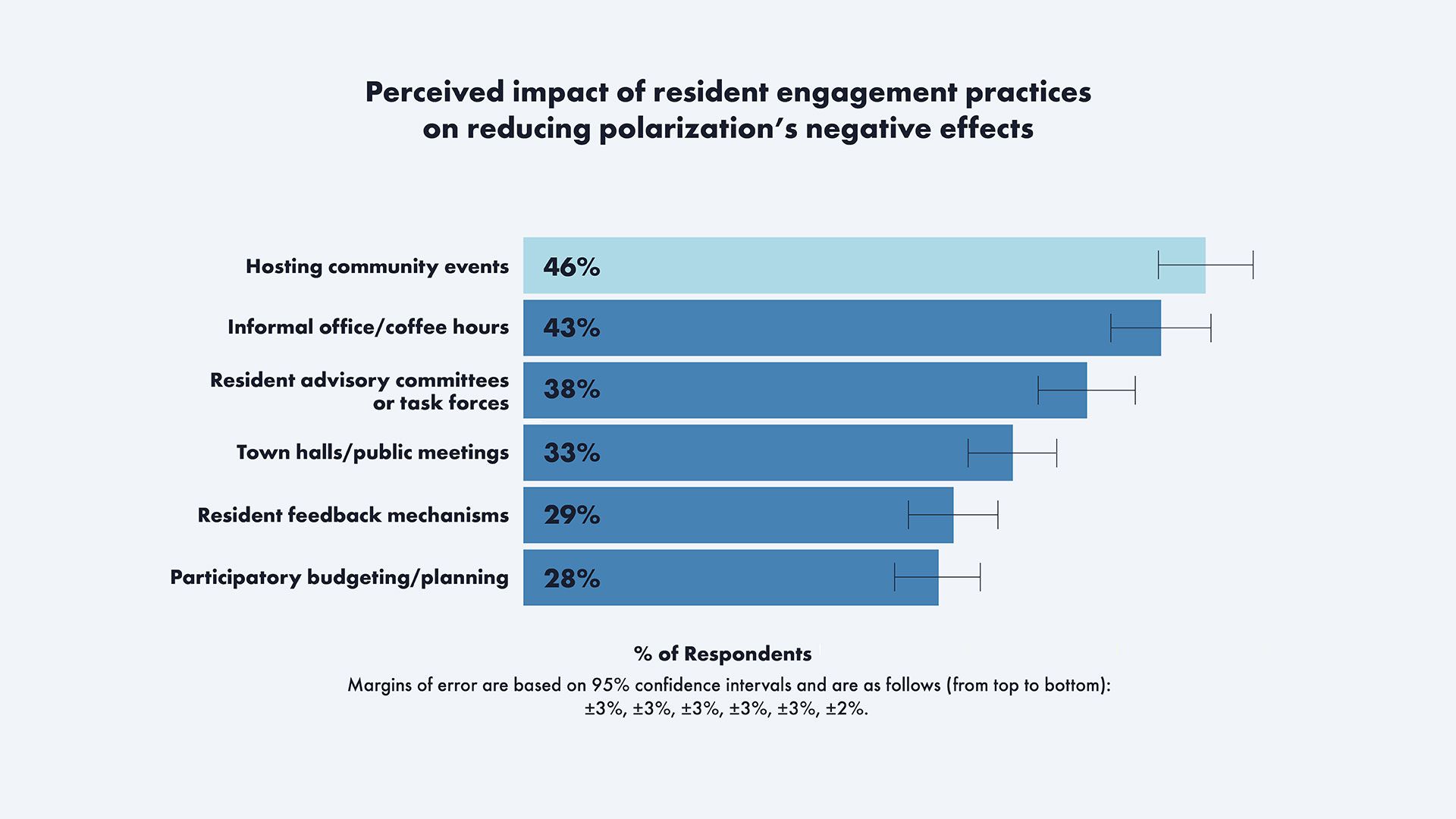
- 46 percent said hosting community events is effective in reducing polarization, 43 percent said informal meetings; and 38 percent said advisory committees or task forces.
- 48 percent said they choose to focus on certain policy topics that are universal, such as infrastructure, housing, and public safety for officials serving municipalities, counties, and townships; school board members selected student well-being and academics.
- 57 percent said they consider the challenge of polarization when choosing how to frame communications about their work, stressing community benefits, concrete outcomes, and evidence, while using neutral language.
Do civics education and volunteerism decrease polarization?
Drawing on information in the first survey, the second survey focused on two types of experiences that can lead to greater civic participation and enduring changes in perspective: civics education in schools and extended volunteer experiences, including paid community service programs.
- Two out of five school board members (38 percent) said civics classes could help reduce polarization while half (49 percent) did not perceive a difference. However, civics education was associated with greater civic participation, and 84 percent of high schools and 48 percent of K–8 schools reported offering some form of civics classes.
- 44 percent of local government leaders said long-term volunteering could reduce polarization, yet only 9 percent reported the presence of long-term, paid volunteering opportunities in their communities. Serving on boards and commissions and volunteering with parent-teacher organizations or in classrooms were the most common examples.
Download Survey II
Survey I
Conducted August–December 2024
Between August and September 2024, CivicPulse surveyed more than 1,400 volunteer respondents — elected leaders, managers, and key department heads working in municipalities, townships, and counties from across the United States. The results were released in October 2024, and here is what we learned.
Closer to home, farther from division
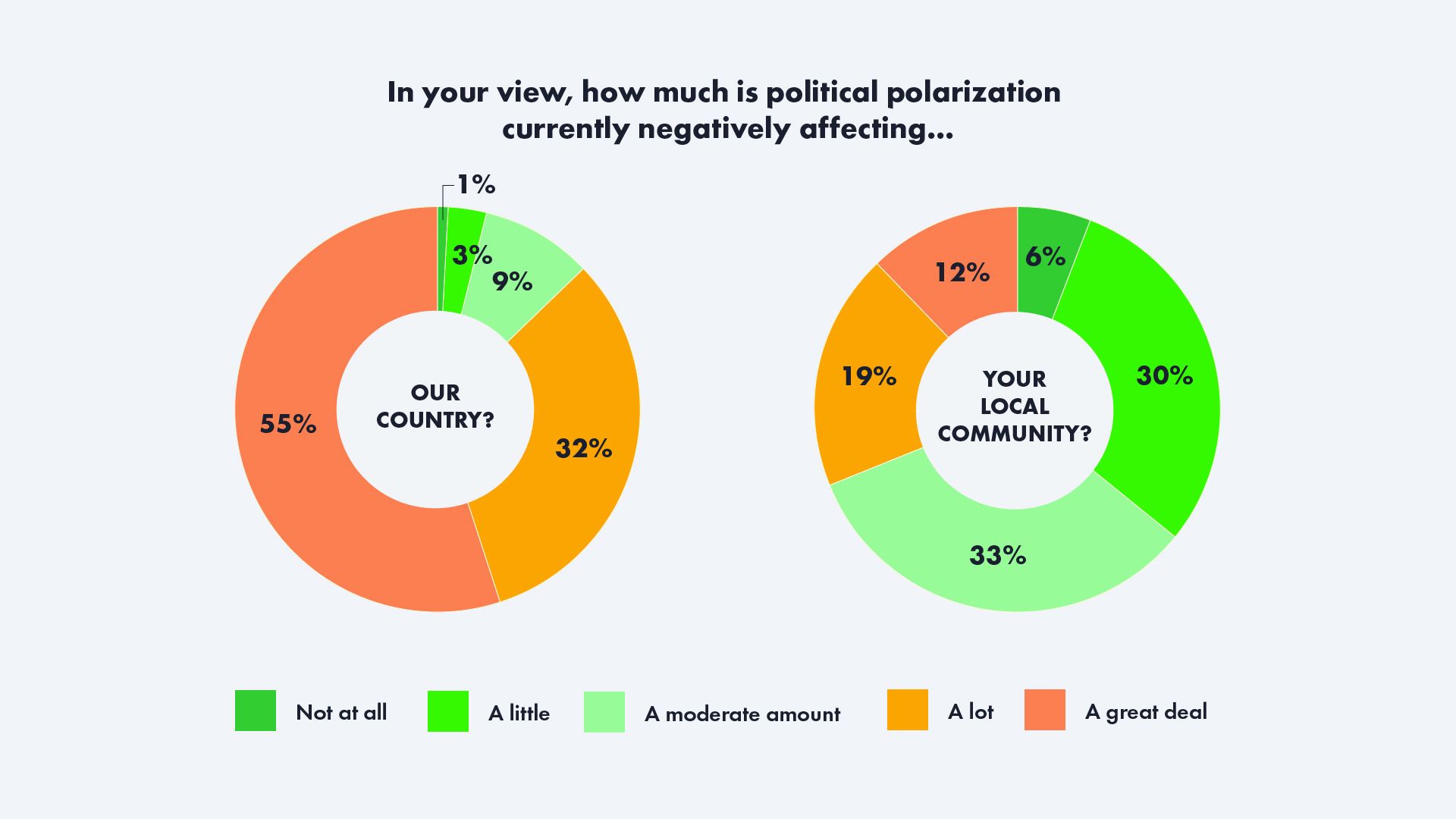
An overwhelming majority of local government leaders (87 percent) said polarization is hurting the country but far fewer (31 percent) see negative effects in their communities.
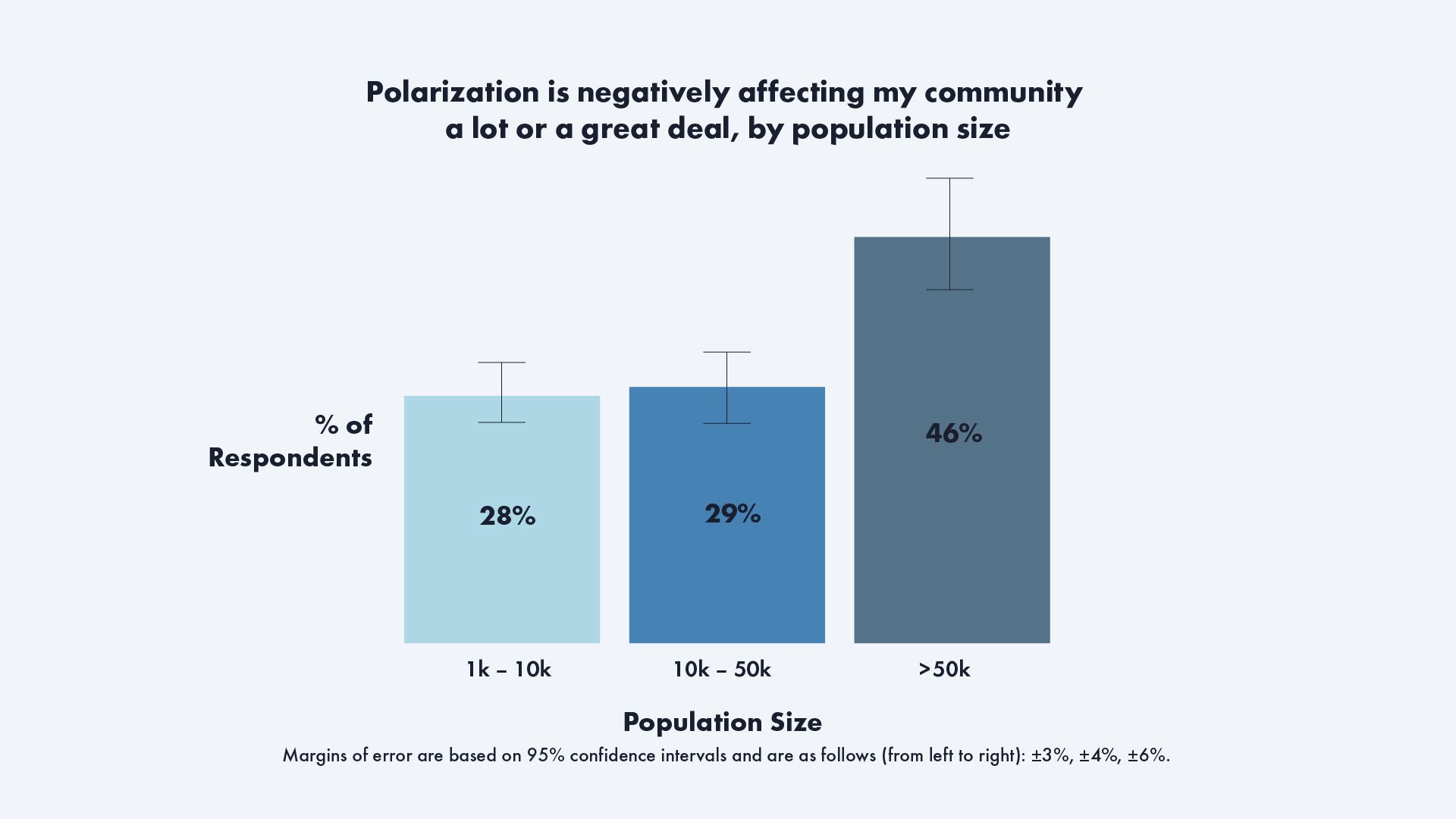
The smaller the community, the less polarization affects governing
Communities with less than 10,000 residents ranked the negative impact of polarization at 28 percent, while communities above 50,000 ranked it at 46 percent.
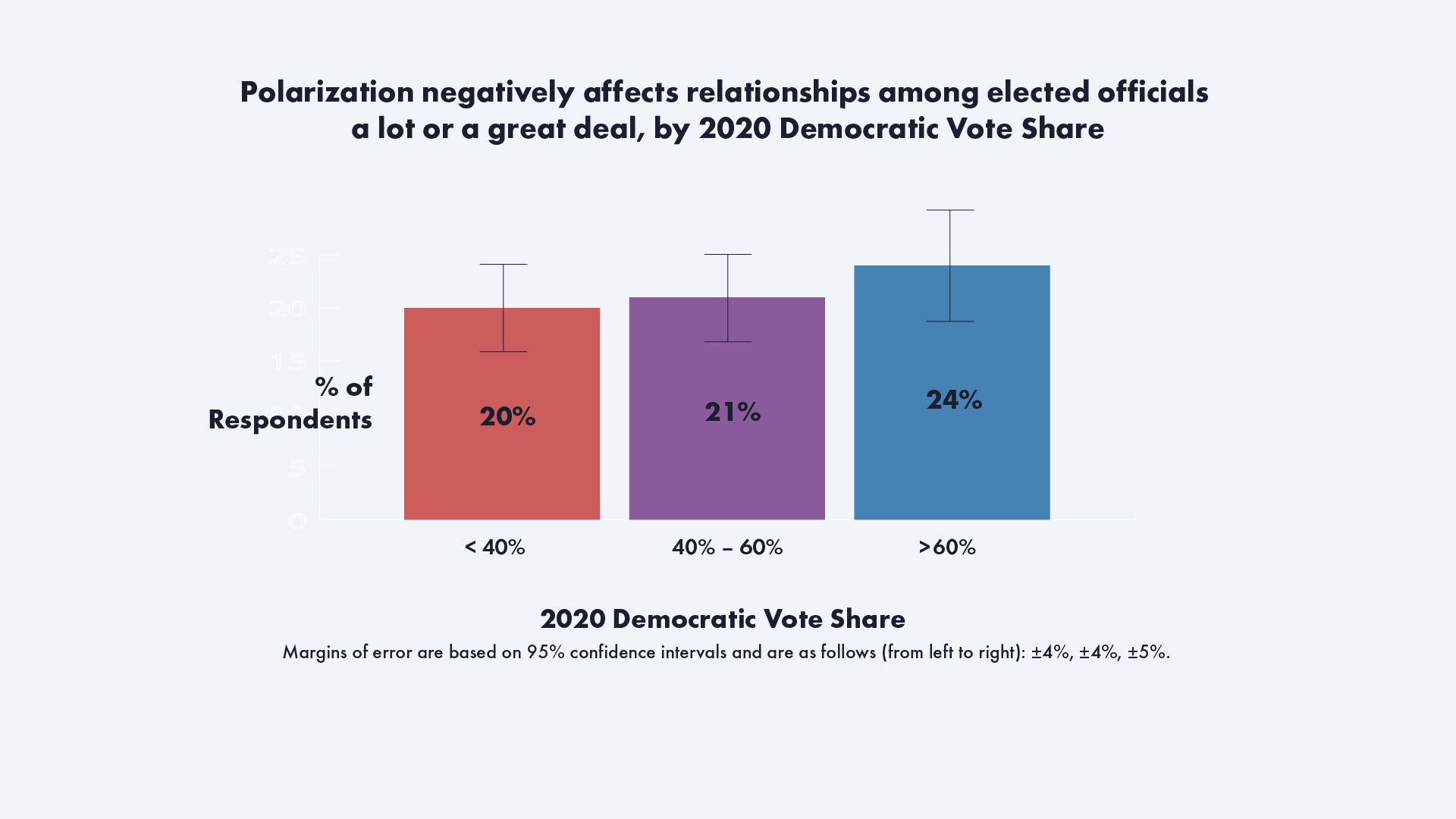
Most locally elected officials think they overcome political differences
Polarization was reported as having negatively affected elected leaders’ relationships in 20 percent of Republican-majority communities, 24 percent of Democratic-majority communities, and 21 percent of communities with a balance of Republicans and Democrats.
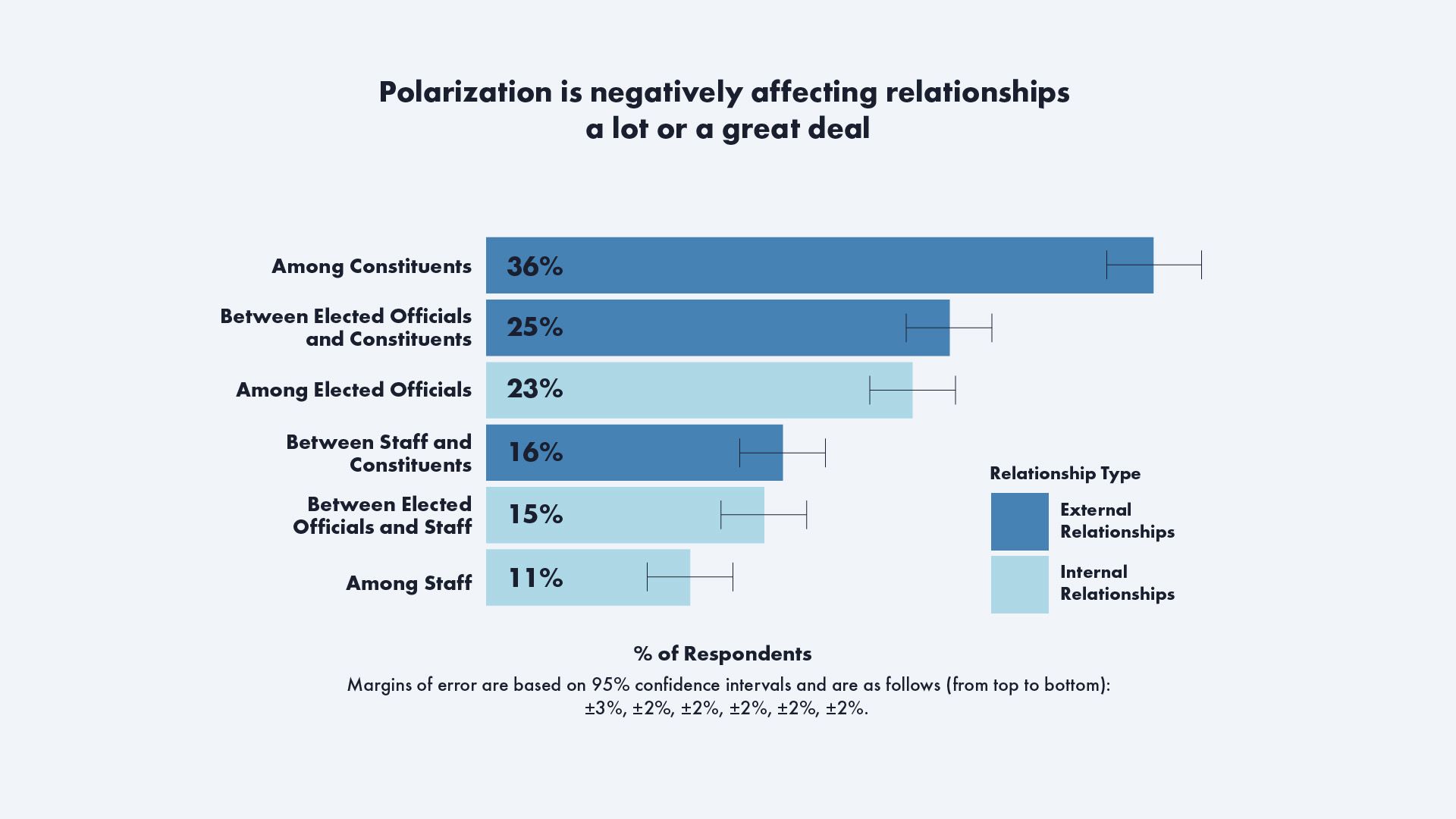
Polarization is most prevalent in relationships with and among constituents
Polarization was reported as having negatively affected elected leaders’ relationships in 20 percent of Republican-majority communities, 24 percent of Democratic-majority communities, and 21 percent of communities with a balance of Republicans and Democrats.
Download Survey I