
Andrew Carnegie Foundation Expands Focus of Its Fellowship Program to Examine Polarization in the U.S. and Worldwide
Carnegie commits up to $18 million to fund scholarly research on polarization and its impact on democracy
Jun 23, 2026
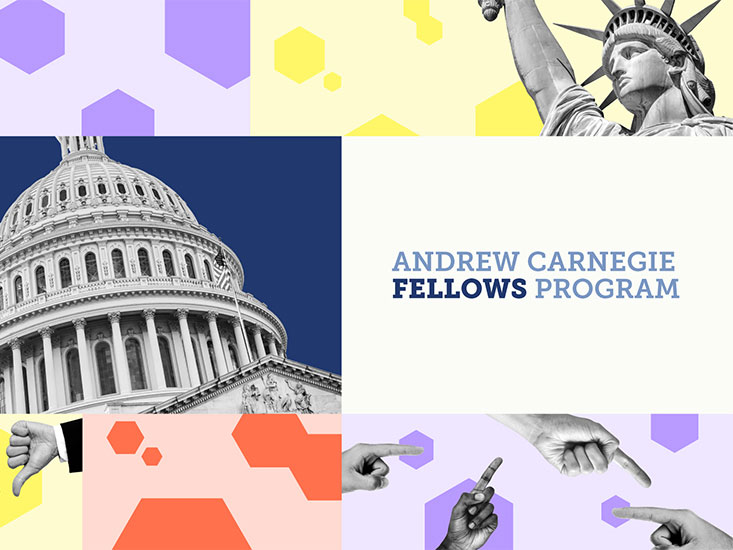
New York, New York, June 23, 2026 — The Andrew Carnegie Foundation, formerly Carnegie Corporation of New York, announced today that it is expanding the focus of its signature fellowship program. After dedicating the last three years to funding scholarship on political polarization in the United States, the Andrew Carnegie Fellows Program will broaden its research to look at the interplay of polarization and democracy in other countries as well.
For the next three years, Carnegie is committing up to $18 million to fund scholarship on topics such as the relationship between populism and polarization, how democracies have resisted or reversed polarization, and the conditions under which it has declined rather than become entrenched or escalated into violence.
“Andrew Carnegie warned that ‘mutual ignorance breeds mutual distrust,’” said Dame Louise Richardson, president of the foundation and chair of the Andrew Carnegie Fellows jury. “Like our founder, we believe in the diffusion of knowledge and understanding to advance a more peaceful world. In extending the program’s research to include international perspectives, we seek to learn how other countries have experienced polarization and how those lessons might be applied in the U.S. to mitigate the impact of partisan division and ensure the sustainability of pluralist democracy.”
The program will award $200,000 research stipends to scholars working in the humanities or social sciences. The funding allows them to take a sabbatical of up to two years and devote themselves to their research, making the program one of the most generous fellowships of its type. The first class of fellows under the expanded focus will be announced in spring 2027. Scholars must be U.S. citizens or permanent residents to be eligible.
When founded in 2015, the Andrew Carnegie Fellows Program supported a wide range of research. Starting with the 2024 class, Carnegie dedicated three years to understanding political polarization in the United States, awarding grants to 78 scholars. Overall, the program has funded over 320 fellows, representing more than $60 million in grants.
The anticipated result of the fellowship is generally a book or major study. Research by past fellows has led to congressional testimony on topics such as social media and privacy protections, transnational crime, governmental responses to pandemics, and college affordability. Fellows have received numerous honors, including the Nobel Prize and the National Book Award.
Hundreds of nominators — including heads of professional societies, major university presses, and prominent news publications — recommend scholars for consideration every year. Leading authorities in each field anonymously evaluate all applications. The final selections are made by a distinguished jury composed of presidents, deans, and senior academics from some of the nation’s premier universities, research institutions, and think tanks.
Read more about the Andrew Carnegie Fellows Program, the work of past fellows, the criteria for proposals, and a historical timeline of scholarly research supported by Carnegie.
Follow the conversation at #CarnegieFellows via Facebook, Instagram, LinkedIn, and X (Twitter).
About the Andrew Carnegie Foundation
The Andrew Carnegie Foundation, formerly Carnegie Corporation of New York, works to reduce political polarization through grants that support ladders of opportunity and a more peaceful world. Its funding provides individuals with the knowledge and tools needed to improve their lives, participate fully in society, and advance peace.