
24 Scholars Awarded Research Fellowships to Understand and Reduce Political Polarization
The Andrew Carnegie Foundation announces nearly $5 million in grants to the 2026 Class of Andrew Carnegie Fellows
New York, NY, May 5, 2026 — Carnegie Corporation of New York announced this year’s class of Andrew Carnegie Fellows today. Twenty-four scholars will each receive a $200,000 research stipend to explore the causes of political polarization and to identify possible solutions.
The class of 2026 marks the third cohort focused on developing a body of rigorous, evidence-based research about what can be done to strengthen the forces of cohesion in the United States, an overarching priority for the foundation’s grantmaking. Winning proposals look at topics such as the historical and religious roots of societal divisions in America, how digital communities shape the political identities of young men, and potential institutional reforms in campaign finance, the federal courts, and education, among other areas.
Carnegie has committed a total of $18 million to scholarly research focused on polarization, providing grants to 78 fellows since 2024. The funding allows scholars to take a sabbatical of up to two years and devote themselves to their work, making the Andrew Carnegie Fellows Program one of the most generous stipends of its type.
“Andrew Carnegie saw it as his mission to encourage, in the broadest and most liberal manner, investigations, research, and discovery, and the application of knowledge to the improvement of mankind,” said Dame Louise Richardson, president of Carnegie Corporation of New York and chair of the Andrew Carnegie Fellows jury. “Through support of our fellows, we are continuing that mission and seeking to harness the insights of scholars of all ages, stages, and disciplines to help us understand the nature of political polarization in the United States today and to devise a means of mitigating its impact on American society.”
The 2026 nomination cycle drew a record 381 submissions. The winners consist of 12 scholars from public universities, 11 from private universities, and one from a public university in Canada. Sixteen are tenured, eight are untenured, and they include 13 men and 11 women. The final selections were made by a distinguished panel of 11 jurors comprised of presidents, deans, and senior academics from some of the nation’s premier universities, research institutions, and think tanks.
The criteria prioritized originality and promise, the potential for impact on the field, and the applicant’s plans for communicating the research findings to a broad audience. Among the winning topics:
- Investigating how online gaming communities shape the political identities of young men and reinforce extremism and partisanship
- Mapping how AI-generated political images spread online and testing whether simple media literacy tools can slow their polarizing effect
- Identifying reforms within lower federal courts to protect judicial decision-making from partisan influences and to uphold the rule of law
- Measuring the psychological toll of apocalyptic fundraising messages on voters and creating less financial dependence on billionaire donors
- Examining how political cynicism, rooted in a sense of individuals being abandoned by institutions, has driven polarization
- Testing whether traditional or action- and project-based civics classes are best at helping students disagree productively, and exploring how bipartisan endorsements can encourage schools to use them
- Studying how certain religious and political leaders use the fear of the devil to turn policy debates into battles between good and evil, driving voters apart
- Understanding how the partisan loyalty of older adults and the institutional distrust among younger adults create different paths to polarization, in order to develop age-specific solutions
More than 700 nominators, including the heads of universities, professional societies, major university presses, and leading news publications, were invited to recommend scholars for consideration. Leading authorities in each field anonymously evaluated all applications. The highest-scoring proposals were then forwarded to the jury.
When founded in 2015, the Andrew Carnegie Fellows Program funded a range of research in the humanities and social sciences. Starting with the 2024 class, Carnegie changed the focus as part of a three-year commitment to understanding political polarization. In total, the fellows program has funded over 320 fellows, representing more than $60 million in grants.
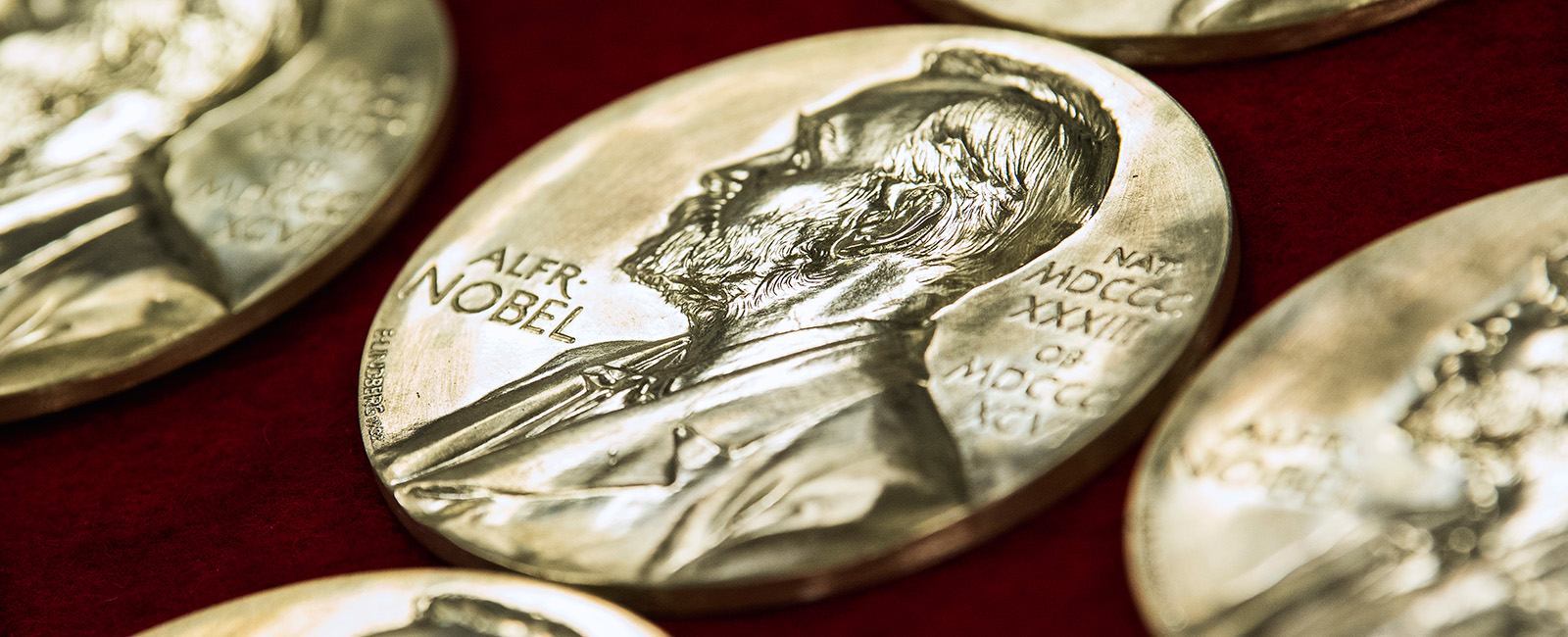
The anticipated result is generally a book or major study. Research by past fellows has led to Congressional testimony that addressed topics such as social media and privacy protections, transnational crime, governmental responses to pandemics, and college affordability. Fellows have received numerous honors through their research, including the Nobel Prize and National Book Award.
Support for scholarly research is a continuation of the mission of Carnegie Corporation of New York, established by Andrew Carnegie in 1911 to promote the advancement and diffusion of knowledge and understanding. Today the foundation works to reduce political polarization through philanthropic support for the issues that our founder considered most important: education, democracy, and peace.
Read more about the Andrew Carnegie Fellows Program, the work of past honorees, the criteria for proposals, and a historical timeline of scholarly research supported by Carnegie.
Follow the conversation at #CarnegieFellows via Facebook, Instagram, LinkedIn, and X (Twitter).
Media Contact: Angely Montilla, Carnegie Corporation of New York: AEM@carnegie.org
Class of 2026
Adam Bonica, Stanford University
The Fundraising Doom Loop: How Money in Politics Prevents Depolarization
Ceren Budak, University of Michigan
User Agency and the Trade-offs of Reducing Polarization Online
Katlyn Marie Carter, University of Notre Dame
The Politics of Truth in Early America
Kathryn Falb, Johns Hopkins University
Creating Early Off-Ramps from the “Manosphere” to Prevent Polarization and Promote Social Cohesion
Daniel Martinez HoSang, Yale University
The Cynical Style in American Politics
Stephen Kantrowitz, University of Wisconsin–Madison
Who is an American? The Contested History of U.S. Citizenship
Eunji Kim, Columbia University
Online Gaming and Political Polarization Among Young Men
Allison Orr Larsen, William & Mary
How the Courts Can Save Themselves
Darren Linvill, Clemson University
Polarization and the Role of Foreign Malign Influence
Ayse Lokmanoglu, Boston University
Seeing Polarization: Visual Media, AI Images, and Democratic Resilience
Kristin Lunz Trujillo, Boston College
Understanding the Psychological Roots of Urban–Rural Division to Reduce Polarization
Ben Lyons, University of Utah
How Generations Polarize: Understanding Age-Structured Polarization and the Future of Democratic Resilience
Neil M. Maher, New Jersey Institute of Technology
Unequal Natures: How to Build Consensus Across a Segregated City
Cecilia Márquez, Duke University
Latinos and the Right: Race and Radicalization in U.S. Politics, 1960–Present
Wayde Z. C. Marsh, The University of Tennessee, Knoxville
An Epidemic of Terror: Polarization, Attacks on Places of Worship, and Democratic Equality
Deborah S. Mower, University of Mississippi
Cultivating Civility: The Role of Ethics and Structured Peer Conversation in Reducing Political Polarization
Jessica Pisano, The New School
How Russia and Its Allies Polarize America
Melvin L. Rogers, Brown University
Beyond Nostalgia and Despair: Storytelling and Polarization in American Democracy
Stuart Soroka, University of California,Los Angeles
Political Polarization and the News Media Ecosystem
Michael Strawbridge, Washington University in St. Louis
In the Thick of It: Operationalizing the Relationship Among Black People, Black Spaces, and Black Political Unity
Matthew Avery Sutton, Washington State University
The Devil in Modern America: How Religious Ideology Drives Political Polarization
Liza Vertinsky, University of Maryland
Reimagining Local News Ecosystems for a Digital World
Christopher S. Warshaw, Georgetown University
Polarization in Local Governments
Chagai M. Weiss, The University of Toronto
Civic Education in a Polarized America