
Future Governors Take a Crash Course in School Policy
How the Hunt–Kean Leadership Fellows program aims to counter polarization
By Leslie Brody
Mar 7, 2025
When Kirsten Baesler, a Republican elected to lead North Dakota’s education department, wanted to test how a slogan would sound to more liberal listeners, she ran it by state Senator M. Teresa Ruiz, a Democrat in New Jersey.
Baesler wanted to say her top priority was “not schools, it’s not classrooms, it’s not teachers, it’s not even students, it’s all about children.” She worried that might come across as disrespectful to educators, so she asked for feedback from Ruiz, who replied it sounded fine.
“The last thing I want to be is a polarizing figure,” Baesler said.
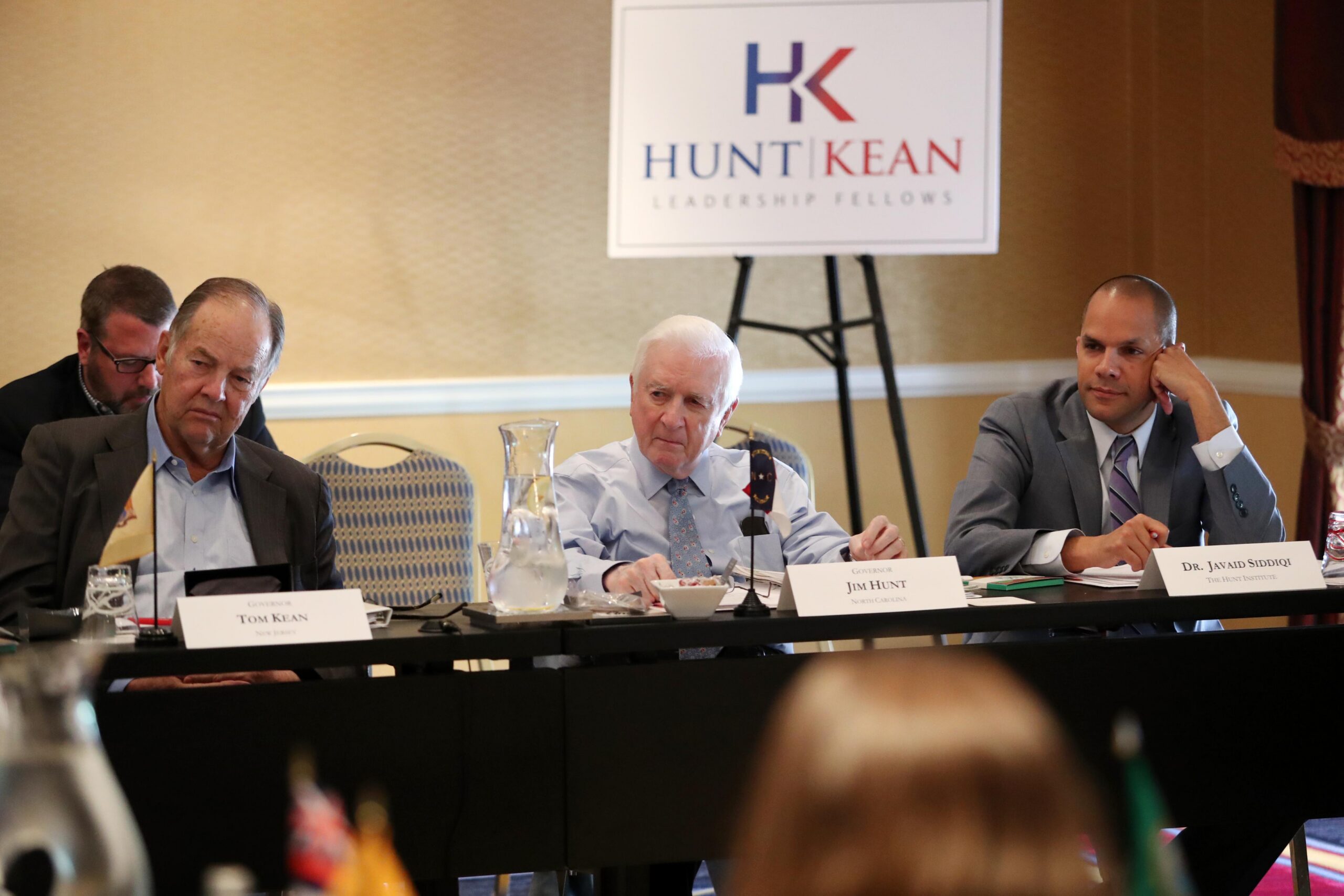
The two politicians met through the Hunt–Kean Leadership Fellows program, which has helped officials find common ground in small settings where they can speak freely across party lines. Named after two former governors known for their commitment to education — James B. Hunt, Jr., a North Carolina Democrat and Thomas H. Kean, a New Jersey Republican — it launched in fall of 2014 to provide a crash course in education policy for future governors and other up-and-comers. Its organizers thought too many candidates lacked a deep understanding of how schools work. Beyond offering information and varying perspectives on a broad range of issues — from testing and achievement gaps to budget constraints and AI — the fellowship aims to reduce the political polarization that can hurt progress.
Carnegie Corporation of New York made its first grant in 2015 to help establish the fellowship and has provided $2.25 million in funding over time. Today, the program has a broad range of funders, including the Bezos Family Foundation, Bloomberg Philanthropies, John M. Belk Endowment, Walton Family Foundation and Saul Zaentz Charitable Foundation. Their support helped the institute develop a network of 263 fellows from all 50 states and the District of Columbia. Eleven are now sitting governors. Participants are nominated by alumni, institute board members, and colleagues. Only one new fellow can come from each state.
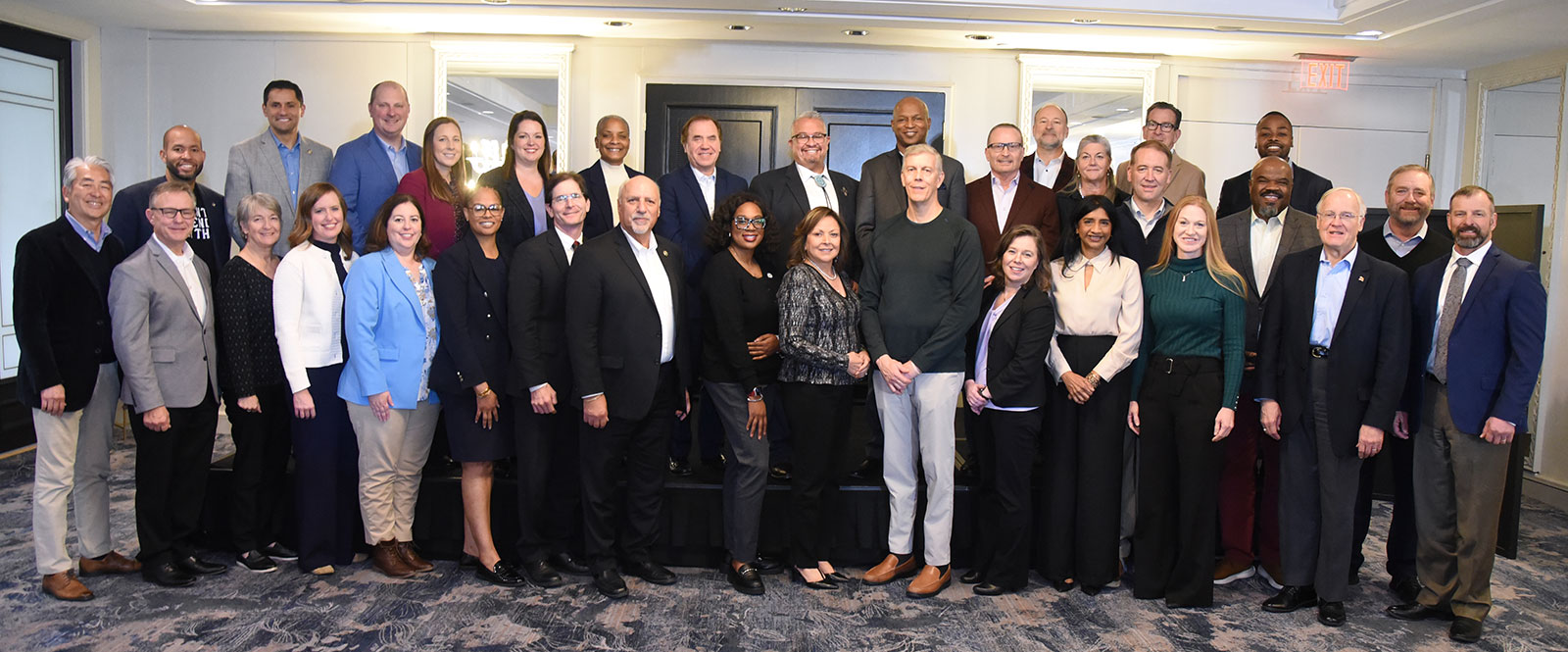
Interest in joining the free program, which covers travel and hotel expenses for participants, has grown as word spread. The current cohort of 32 fellows — more than double the pioneer group of 15 — met in Washington, D.C., this past December for a three-day conference. The agenda included a panel of governors, a visit to a charter school, case studies and talks by experts in brain science, the value of early learning, growing the childcare workforce, intervening in troubled schools, and other challenges. Fellows have meetings online monthly and will reconvene in August. To keep conversations flowing, they agree to quote participants’ comments only if they get consent.
“They’re able to speak about issues that are really politically divisive,” said Javaid Siddiqi, president of the nonprofit Hunt Institute, which runs the fellowship from its offices in Cary, North Carolina. “Back home in a committee meeting or on the floor when the media is around, they’re not able to hear each other because they’re so worried about what they’re saying and what voters will hear. Here they’re able to sit with thought leaders and experts, and grapple with heady issues, hear each other, and see the political lens the other side is looking through.”
Eleven sitting governors have participated in the Hunt–Kean Leadership Fellows program since its establishment in 2014:
- Governor <strong>Spencer Cox</strong> (R – UT)
- Governor <strong>Bob Ferguson</strong> (D – WA)
- Governor <strong>Maura Healey</strong> (D – MA)
- Governor <strong>Katie Hobbs</strong> (D – AZ)
- Governor <strong>Mike Kehoe</strong> (R – MO)
- Governor <strong>Brad Little</strong> (R – ID)
- Governor <strong>Tate Reeves</strong> (R – MS)
- Governor <strong>Kim Reynolds</strong> (R – IA)
- Governor <strong>Sarah Huckabee Sanders</strong> (R – AR)
- Governor <strong>Josh Stein</strong> (D – NC)
- Governor <strong>Gretchen Whitmer</strong> (D – MI)
In Siddiqi’s view, the nonpartisan program has had tangible impacts, such as helping fellows pursue efforts to build more diverse teacher pipelines in Illinois and craft proposals to allow charter schools in North Dakota.
The fellowship program grew out of a relationship between Hunt, who governed North Carolina for four terms (1977-1985 and 1993-2001) and Kean, who led New Jersey for two (1982-1990). They saw the need for greater cooperation between the parties long before political polarization became a major national issue. Both were members of Carnegie’s board of trustees. Kean served on the Carnegie board for almost 30 years, including 22 years as chair. They were alarmed at the mediocre performance of America’s education system and saw an urgent need for bipartisan collaboration to improve students’ performance.
The obstacles to politicians working together were especially clear during the Obama era, when many governors were dismayed to see a push to create national K–12 standards, known as the Common Core, collapse largely due to partisan rhetoric. Eventually, nearly all states adopted some form of the uniform goals for mastery by each grade level, but these efforts generally had to be rebranded as state blueprints to win local approval.
The Hunt–Kean Leadership Fellows program, established after the Common Core controversy, aims to help leaders dive into education debates with data, polite discourse, and open minds.
“Our commitment to you is to offer multiple perspectives,” said Siddiqi. “At times, you’re going to feel affirmed in your thinking; at times, you’ll feel stressed.”
When fellows arrive for the first meeting, they often don’t know who comes from which party. Name tags don’t mention political affiliation, but their leanings become clear through their discussions. Evaluations after the December conference showed fellows’ enthusiasm for the networking opportunities and panels, though some wanted more time for questions and answers. Noting that political leaders tend to monologue, one requested “time limits for all who hold the microphone.”
Baesler, North Dakota’s state school superintendent, says participants approached issues from different perspectives but often shared common goals, such as a desire for proven academic progress. In her view, Democrats often value state tests for equity purposes, to show when disadvantaged children are getting left behind and need better services, while Republicans tend to promote annual testing to show whether schools are using taxpayers’ money wisely to create a skilled workforce and robust economy.
“You get to that common point of agreeing on the value of testing,” Baesler said, “and then you can get to the deeper conversation about the specificity of tools, or their frequency, or who’s really being held accountable.”
Ruiz, majority leader of New Jersey’s senate, said she has nominated other legislators to join the program because it is helpful to have colleagues who aren’t on the education committee delve deeper into discussions about the nitty-gritty. “It’s wonderful to bring in other people from different avenues,” she said.
Ruiz remains committed to collaboration in New Jersey. Just last August, a bill she sponsored to establish a student literacy working group was signed into law with bipartisan support. It’s progress that she knows will require work to uphold.
“Too often,” she added, “politics is the best enemy of good policy.”
Leslie Brody, a freelance writer and former newspaper reporter, spent more than a decade on the education beat, most recently at The Wall Street Journal.