
Andrew Carnegie Fellows Bookshelf: Must-Reads on Black History
Pivotal moments, unsung heroes, and an ongoing struggle for justice and equality
By Angely Montilla
Feb 7, 2024
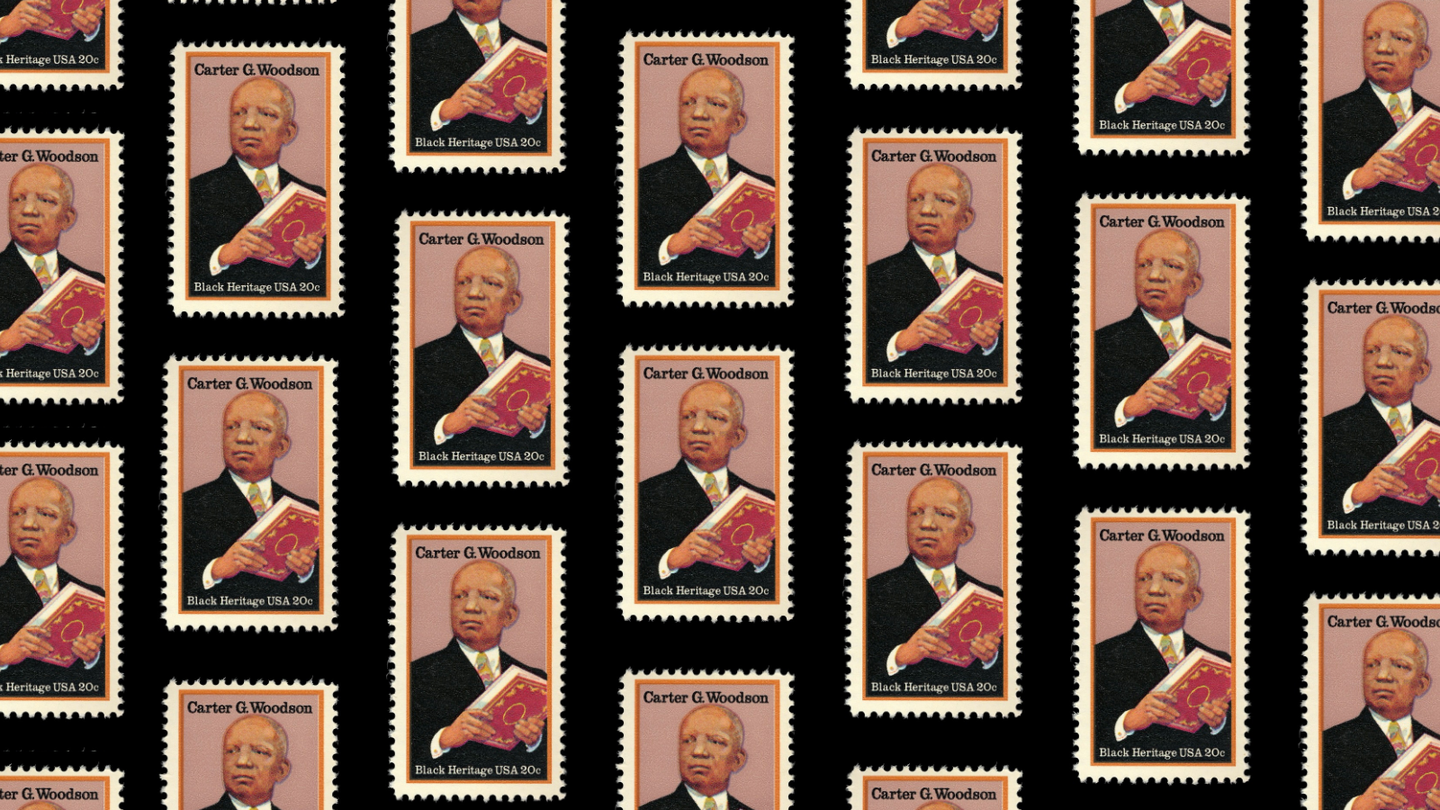
In 1921, Carter Godwin Woodson secured $25,000 in grants for the Association for Study of Negro Life and History from Carnegie Corporation of New York. Now called the Association for the Study of African American Life and History, the Corporation grants were used to support research and publication outlets for Black scholars and the dissemination of knowledge and information about Black life, history, culture, and achievements. In 1926, Woodson, the son of former slaves and the second African American to earn a Ph.D. at Harvard University, initiated the first Negro History Week, a celebration around the birthdays of Frederick Douglass and Abraham Lincoln. In 1976, the celebration was extended to include the entire month of February, now referred to as Black History Month.
Through its Andrew Carnegie Fellows Program, the Corporation continues to invest in the study of Black history with philanthropic support for high-caliber research in the humanities and social sciences. The program has supported the work of many scholars whose research projects cover everything from the challenges to Black economic equality in Reconstruction America to the historically inequitable use of lethal punishment on Black women in the United States.
In the reading list below, five Andrew Carnegie Fellows — specializing in Black history — recommend a selection of books that commemorate the resilience, achievements, and contributions of the Black community. Read on for a deeper understanding of pivotal moments in Black history, unsung heroes, and the ongoing struggle for justice and equality.
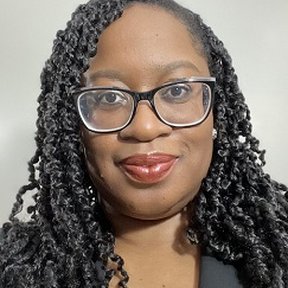 Keisha N. Blain, 2022 Andrew Carnegie Fellow, recommends:
- Half American: The Heroic Story of African Americans Fighting World War II at Home and Abroad by Matthew F. Delmont (Viking, 2022)
- I’ve Got the Light of Freedom: The Organizing Tradition and the Mississippi Freedom Struggle by Charles Payne (University of California Press, 1995)
- To ‘Joy My Freedom: Southern Black Women’s Lives and Labors after the Civil War by Tera W. Hunter (Harvard University Press, 1997)
- Wake Up America: Black Women on the Future of Democracy by Keisha N. Blain, ed., (W.W. Norton, 2024)
- Warriors Don’t Cry: A Searing Memoir of the Battle to Integrate Little Rock’s Central High by Melba Pattillo Beals (Washington Square Press, 1995)
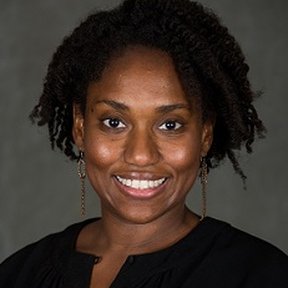 Marcia Chatelain, 2019 Andrew Carnegie Fellow, recommends:
- Built from the Fire: The Epic Story of Tulsa’s Greenwood District, America’s Black Wall Street by Victor Luckerson (Penguin Random House, 2023)
- A Girl Stands at the Door: The Generation of Young Women Who Desegregated America’s Schools by Rachel Devlin (Hachette Book Group, 2018)
- Half American: The Heroic Story of African Americans Fighting World War II at Home and Abroad by Matthew F. Delmont (Viking, 2022)
- Subversive Habits: Black Catholic Nuns in the Long African American Freedom Struggle by Shannen Dee Williams (Duke University Press, 2022)
- Wayward Lives, Beautiful Experiments: Intimate Histories of Riotous Black Girls, Troublesome Women, and Queer Radicals by Saidiya Hartman (W.W. Norton, 2019)
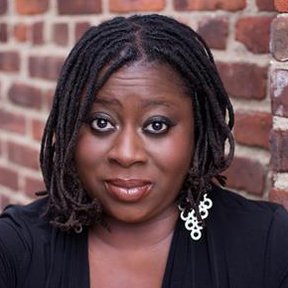 Melissa L. Cooper, 2019 Andrew Carnegie Fellow, recommends:
- Chicago’s New Negroes: Modernity, the Great Migration, and Black Urban Life by Davarian L. Baldwin (University of North Carolina Press, 2007)
- Help Me to Find My People: The African American Search for Family Lost in Slavery by Heather Andrea Williams (University of North Carolina Press, 2012)
- Making Gullah: A History of Sapelo Islanders, Race, and the American Imagination by Melissa Cooper (University of North Carolina Press, 2017)
- Subversive Habits: Black Catholic Nuns in the Long African American Freedom Struggle by Shannen Dee Williams (Duke University Press, 2022)
- Talk With You Like a Woman: African American Women, Justice, and Reform in New York, 1890–1935 by Cheryl D. Hicks (University of North Carolina Press, 2010)
- Traveling Black: A Story of Race and Resistance by Mia Bay (Harvard University Press, 2021)
 Sarah J. Jackson, 2020 Andrew Carnegie Fellow, recommends:
- Begin Again: James Baldwin’s America & Its Urgent Lessons for Our Own by Eddie S. Glaude Jr. (Penguin Random House, 2020)
- How the Word is Passed: A Reckoning with the History of Slavery Across America by Clint Smith(Hachette Book Group, 2021)
- Ida: A Sword Among Lions by Paula J. Giddings (Harper Collins, 2009)
- South to America by Imani Perry (Harper Collins, 2022)
- Oscar Micheaux & His Circle: African-American Filmmaking and Race Cinema of the Silent Era edited by Charles Musser, Jane Marie Gaines, and Pearl Bowser (Indiana University Press, 2001)
- Within the Veil: Black Journalists, White Media by Pamela Newkirk (NYU Press, 2000)
 Justene Hill Edwards, 2019 Andrew Carnegie Fellow, recommends:
- Banking on Freedom: Black Women in U.S. Finance Before the New Deal by Shennette Garrett-Scott (Columbia University Press, 2019)
- Black Majority: Race, Rice, and Rebellion in South Carolina, 1670–1740 by Peter H. Wood (W.W. Norton, 1974)
- The Claims of Kinfolk: African American Property and Community in the Nineteenth-Century South by Dylan C. Penningroth (University of North Carolina Press, 2003)
- Unfree Markets: The Slaves’ Economy and the Rise of Capitalism in South Carolina by Justene Hill Edwards (Columbia University Press, 2021)
In June 2023, the Corporation announced that its Andrew Carnegie Fellows Program will focus on developing a body of research around the root causes of political polarization in the United States. For at least the next three years, the program will provide $6 million annually for research that explores how and why our society has become so polarized and how we can strengthen the forces of cohesion in American society. The next class of fellows will be announced in spring 2024.