
How Are Modern Technologies Affecting Nuclear Risks?
Nuclear arsenals have decreased since the 1980s, but new technologies like artificial intelligence and new dynamics in outer space are introducing uncertainty and vulnerabilities that need to be assessed
Oct 27, 2025
The world’s nuclear arsenal has decreased sharply from a Cold War peak of 70,300 weapons to an estimated 12,241 today, according to a 2025 study by the Federation of American Scientists conducted with support from Carnegie Corporation of New York. But researchers see new risks as emerging technologies inject uncertainty and vulnerabilities into established understandings of nuclear security.
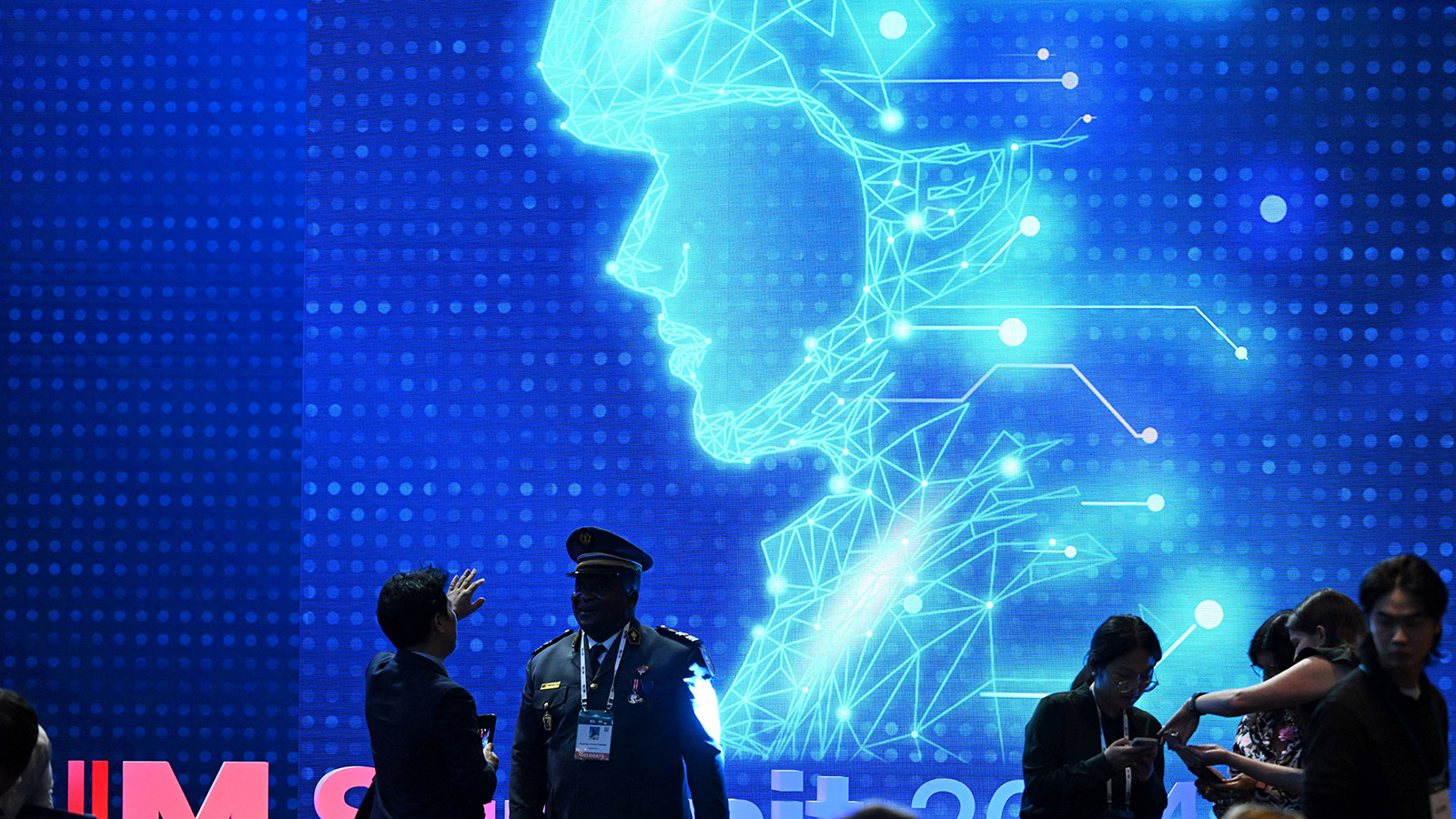
For example, artificial intelligence (AI) is already being integrated into the United States’ nuclear weapons systems. In a 2025 statement to the Senate Armed Services Committee, General Anthony Cotton, who oversees the United States’ nuclear weapons command and control as head of the United States Strategic Command, testified that the command is incorporating AI into the nuclear command and control architecture to “accelerate human decision-making.”
“Our concern is that we don’t know how incorporating AI systems is going to complicate things in ways we can’t predict,” says James McKeon, a program officer in Carnegie’s International Program. “While much of the information around these integrations remains inaccessible, we need further analysis to better understand the information we do have.”
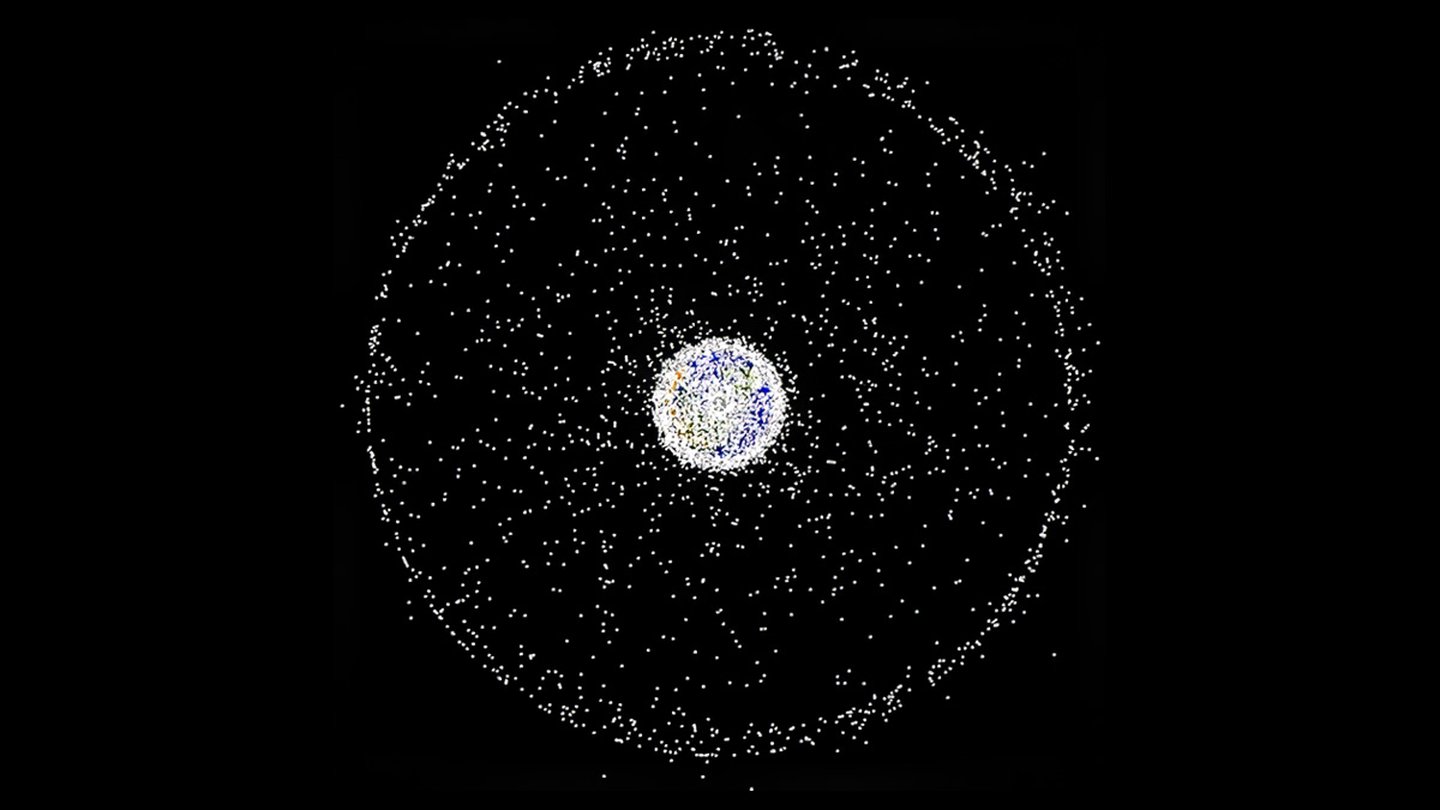
In addition, U.S. intelligence officials believe that Russia is developing a space-based nuclear weapon. As one defense official testified in 2024 before the House Armed Services Committee, the weapon, if deployed and used, could “pose a threat to all satellites operated by countries and companies around the globe.”
“A nuclear weapon detonated in space could bring catastrophic societal consequences,” McKeon says. “Moreover, any conflict in space would almost certainly involve nuclear-armed actors, greatly increasing the risk of escalation both in orbit and on the ground.”
What do experts think of the risks? The following Q&A features responses from Carnegie grantees who were awarded $3.2 million in grants in September 2025 to assess the implications of emerging technologies and develop actionable recommendations. Many of them warn that policymakers lack sufficient understanding of emerging technology’s impact on nuclear risks, though some argue that there is not yet enough evidence these advances have fundamentally altered nuclear strategy.
“Not all of our grantees agree on the exact relationship between emerging technology and nuclear dangers, and that’s a good thing,” McKeon explains. “We’re trying to promote a diversity of thought on these issues moving forward, with the overall aim of reducing nuclear threats long term and ensuring that a nuclear weapon is never used again.”
The world’s nuclear arsenal has decreased sharply from a Cold War peak of 70,300 weapons to an estimated 12,241 today, according to a 2025 study by the Federation of American Scientists conducted with support from Carnegie Corporation of New York. But researchers see new risks as emerging technologies inject uncertainty and vulnerabilities into established understandings of nuclear security.
What are the biggest knowledge gaps for nuclear experts to understand new technologies and nuclear dangers?
 Nuclear weapons systems and emerging technologies interact in key areas, including cyber vulnerabilities in nuclear command, control, and communications systems, the integration of AI into sensitive fields such as early warning and decision-making, and the development of quantum technologies, hypersonic weapons, and anti-satellite capabilities. While there is a growing understanding of the challenges and benefits arising from the integration of AI into nuclear systems, for example, or of the risks arising from other emerging and disruptive technologies, a significant limiting factor is the widespread lack of interdisciplinary literacy among nuclear experts. Although cross-section expertise is becoming more common, it is still unusual for nuclear experts to have a strong technical background or an AI/machine learning background, and vice versa.
— Julia Berghofer, Senior Policy Fellow, European Leadership Network
While significant scholarly attention has been devoted to the concrete effects of new technologies in the nuclear weapons space, the perceptive effects of these technologies and the impacts these effects have on strategy and strategic stability remain underexamined. How decision-makers react to new technologies — whether adjusting posture and procurement or responding to crises in the heat of the moment — is determined by their perception of these new technologies. This begins with concrete capabilities and empirical data, but it is filtered through experiences, community norms, and human cognition. Understanding these factors will be key to understanding and avoiding new nuclear dangers.
— Daniel Kroth, Research Scholar and Program Director, Next Frontier Seminar, University of California Berkeley Risk and Security Lab
 With regard to the application of different types of artificial intelligence to nuclear operations, although some types of failure are properly addressed through technical solutions, others may require additional human intervention or oversight measures. Ensuring that solutions are not only effective, but also intelligible to and auditable by appropriate authorities, is an additional challenge.
— Xiaodon Liang, Senior Policy Analyst, Arms Control Association
What is one way that technology is challenging long-held assumptions about nuclear deterrence?
 U.S. nuclear deterrence strategy has long relied on credible, effective, and survivable nuclear forces. Rapid advances in technology now challenge these pillars. For example, advanced missile defenses could threaten the ability to assure nuclear retaliation, and AI-enabled systems could threaten the ability to conceal nuclear forces. These shifts beg the question of how emerging technologies could impact the age-old and once-again-relevant question of how many and what kinds of nuclear weapons are enough. Policymakers require a better understanding of whether, and if so how, emerging technologies could complement or potentially substitute for the role played by nuclear weapons.
— Kingston Reif, Senior International / Defense Researcher, RAND Corporation
Which emerging technology do you think is the most misunderstood by policymakers?
 Frontier “reasoning” AI models are widely misunderstood. Policymakers and technical practitioners would benefit from more dialogue about this topic. These systems are not like traditional, deterministic software you test once and deploy forever. They’re probabilistic and can be fragile outside the conditions they were trained on. They may excel on benchmarks yet can hallucinate, be jailbroken, or fail under distribution shifts or data tampering. Verification and validation remain immature so laboratory performance fails in safety-critical settings. When integrated into decision loops, they can amplify automation bias, compress timelines, and produce cascading failures in high-stakes environments.
— Tom Weis, Associate Professor, Rhode Island School of Design, and Alice Saltini, Non-Resident Expert on AI, James Martin Center for Nonproliferation Studies
Are there any technologies that have emerged in the last ten years that are already reshaping nuclear strategy?
 There is little evidence for significant changes in existing nuclear strategy by any nuclear-armed state that can be attributed to technological innovations over the past decade. If anything, despite all the claims of emerging and disruptive technologies driving a new revolution in military affairs, so far we see mostly a focus on newer versions of old military platforms. We are still at the stage of claims and budgets driven by technological determinism, boosterism, over-promising, corporate and military interests, and strategic concerns about dominance and parity that cite a foreseeable technological future where emerging technologies actually impact nuclear weapon risks and strategy.
— Zia Mian and Alexander Glaser, Codirectors, Program on Science and Global Security, Princeton University
What will be the impact of your research on understanding future nuclear dangers?
 Our research will expand the understanding of future nuclear dangers by addressing the critical knowledge gap around the use of nuclear weapons in space. By modeling the effects of nuclear detonations on satellite constellations and critical ground-based infrastructure, we will examine the cascading economic and sociopolitical impacts and explore how such events could degrade vital national functions and global stability. This work will inform policymakers and the public about the profound risks of placing nuclear weapons in space in today’s interconnected world and develop measures to reduce these emerging threats.
— Jaganath Sankaran, Associate Professor, LBJ School of Public Affairs, University of Texas at Austin, and Patricia Jaworek, Director, Global Nuclear Policy Program, Nuclear Threat Initiative
What is a technology that most people are not worried about yet, but should be?
 Although still in early research stages, potential applications of quantum technology could have significant implications for nuclear stability and operations. While, theoretically, quantum technology will enhance capabilities like early warning, sensing, and data processing, it might also introduce new risks. For example, some claim that scientists could develop advanced quantum sensors with the ability to detect subtle shifts in physical parameters (e.g., magnetic, gravitational, or acoustic signatures) that could allow countries to pinpoint the location — thus threatening the survivability — of submarines and mobile missile forces. Quantum computing could also undermine current cryptographic protections, which could threaten the security of nuclear command, control, and communications systems.
— Eliana Johns, Senior Research Associate, Federation of American Scientists, and Mackenzie Knight-Boyle, Senior Research Associate, Federation of American Scientists
To what extent can technological advancements help reduce nuclear risk?
 New technology has made the world more transparent and transparency should help sharpen debate about risk. It also allows for nongovernmental analysts to track in near-real-time the dangers we all face and to raise awareness about the need for practical and measured steps to reduce frictions with adversaries to manage nuclear risk around the world.
— Aaron Stein, President, Foreign Policy Research Institute
Wilfred Chan is the senior content editor and writer at Carnegie Corporation of New York.