
Eyes in the Sky: The New Frontier of Open-Source Nuclear Weapons Analysis
Large satellite fleets are imaging the globe with unprecedented precision, allowing analysts to uncover evolving nuclear risks
By Matt Korda
Jul 8, 2026
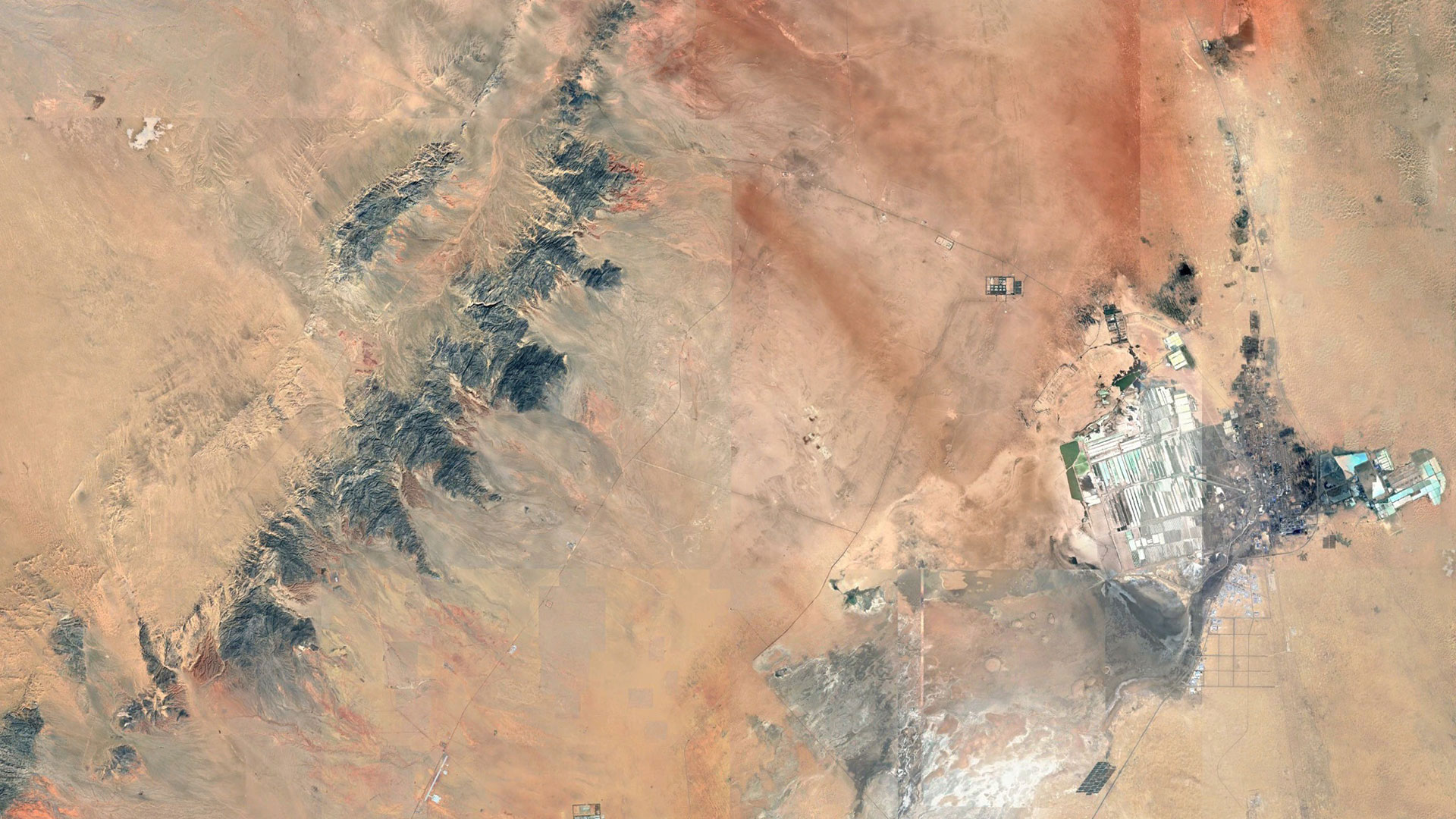
For decades, China maintained a relatively small nuclear arsenal of only a couple hundred nuclear weapons, compared to the thousands held by the United States and Russia. Everything changed, however, when 320 new silos in China — each of which could hold missiles carrying multiple warheads — were discovered in 2021 by open-source researchers.
For years, our team at the Federation of American Scientists and others across the field had been using breadcrumbs left by Chinese state media to track developments in the country’s nuclear capabilities.
My colleague, Hans Kristensen, came across a short video from Chinese state media of a military exercise that led to a breakthrough. He used it to discover a previously unidentified 1,000-square-kilometer missile training area featuring the construction of new types of missile silos covered by inflatable air domes. These domes, similar to those used for covering tennis courts during the winter, served a dual purpose: protecting the silos from extreme desert weather and hiding them from the prying eyes of satellite imagery analysts.
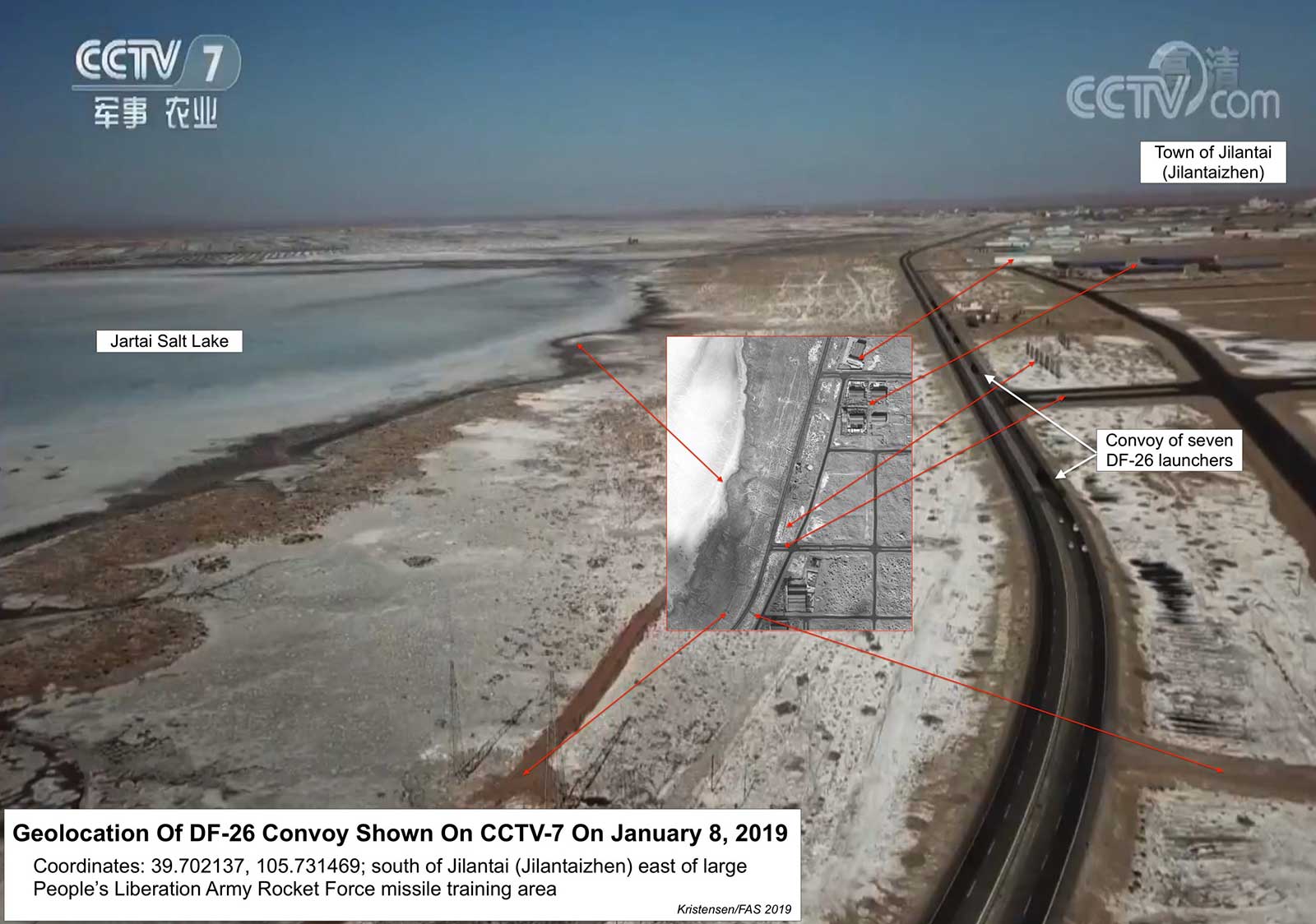
Hans Kristensen used signatures in a CCTV-7 video and commercial satellite imagery to geolocate a Chinese military exercise. (Credit: CCTV-7; Maxar/SecureWatch; Annotations by Federation of American Scientists)
Within a one-month period, other researchers, including me, used these distinctive domes to identify three more silo fields across northern China with room for 320 new silos — more than double the number of Russia’s operational silos and only about 130 fewer than those of the United States. The new missile silos indicated an exponential increase in the size of China’s nuclear arsenal and a genuine about-face for its nuclear force posture.
These discoveries, which were quickly validated by U.S. Strategic Command, made international headlines, and received sustained coverage in hundreds of news outlets across the globe.
No Security Clearance? No Problem
Emerging open-source tools, in the hands of well-trained analysts, are extremely powerful engines for investigation, transparency, and igniting global nuclear debates.
Hans has been a self-taught researcher with the Federation of American Scientists for more than 20 years, and he is a world-renowned expert in a very particular methodology: counting nuclear weapons. This includes not just the numbers of weapons that each country possesses, but also the numbers of missiles, aircraft, and submarines that could carry them; the number of deployed weapons; and the yields of the warheads themselves — the measure of their destructive power.
In lieu of relatively scarce official disclosures, Hans has relied on pieces of open-source intelligence, commonly known as OSINT, snippets of typically unclassified data that can be obtained legally through clever sleuthing: budgetary documents, for example, or treaty disclosure data, Freedom of Information Act requests, and satellite imagery. This typically involves a lot of paperwork, which often makes Hans’s office resemble that of an old-timey detective.
As the example of the domes demonstrates, this work is detective work. Each source reveals a small puzzle piece of information — the weight of a particular missile, for example, or the dimensions of a warhead storage bunker. Fitting the puzzle pieces together correctly reveals the intricacies of a country’s nuclear arsenal.
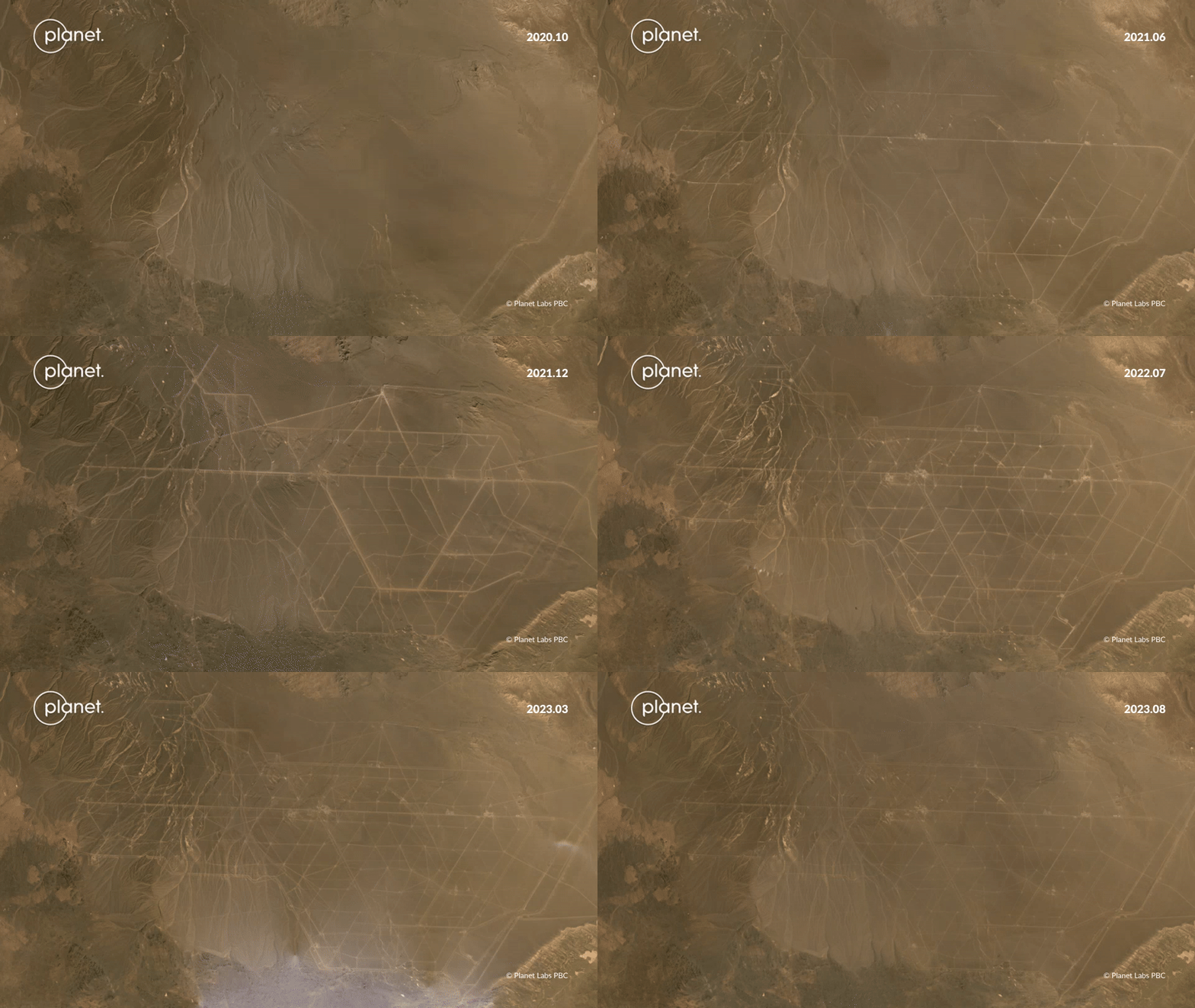
A timelapse reveals construction of another missile silo field near Hami, China. The silo field was publicly discovered by the author in July 2021. (Credit: Planet Labs PBC)
In 2010, no nuclear-armed state had ever disclosed to the public how many nuclear weapons it possessed, making this work very difficult. Hans and his colleague, Robert S. Norris, finished their calculations that year and settled on a final estimate for the United States of 5,100 warheads. As they were about to publish their number, the Obama administration — for the first time — declassified the number of weapons that were in the U.S. nuclear stockpile: 5,113.
Despite not having access to classified information, never having held a security clearance, and never working for the U.S. government, Hans was only 13 warheads off.
Over the years, this type of work has had direct policy impact. Not only does nearly every single nuclear stakeholder rely on these estimates for a common understanding of global nuclear arsenals, but diplomats and policymakers — themselves frustrated by chronic over-classification in their own national governments — have expressed that having third-party estimates has allowed them to engage more productively with their counterparts in other countries without revealing any sensitive information. It has also opened nuclear debates within more closed-off countries like China, where information is scarce and secrecy is the norm.
A Golden Age for Nuclear Open-Source Intelligence
Sixteen years ago, the open-source nuclear landscape was still in its relative infancy. The highest-quality resolution available (and affordable) from most commercial imagery providers, for example, was close to one meter — high enough resolution to spot an aircraft on a runway, but not high enough to identify the specific type of plane.
Since then, new companies, researchers, programs, and tools have emerged that have unlocked a golden age for nuclear open-source intelligence. Today, for example, several providers are capable of imaging at 25 centimeters or better — high enough to see people. Other providers with smaller sensors but larger satellite fleets can now image the entire globe at 50 centimeters on a daily basis.
The capabilities of non-electro-optical imagery — such as synthetic aperture radar, which can see through clouds and collect images at night — are improving rapidly as well.
Here is how it works: imagine that it is nighttime, and you are standing about a foot away from a fence with narrow vertical slits. You want to see what is behind the fence, so you shine a flashlight through one of the slits; you will only see a small part of the scene behind the fence. But if you walk parallel to the fence, shining your flashlight through each slit, your brain will knit together each of those individually illuminated scenes to form a coherent image of the entire area.
Synthetic aperture radar follows the same principle: in this metaphor, you are the satellite, and your flashlight is the sensor. As the satellite flies through space, its onboard sensor emits radar pulses that fly to the target, bounce back to the sensor, and get pieced together into one large scene.
Repeatable flight paths then allow analysts to obtain several images of the same site from different dates, layer them on top of one another, and calculate the relative change between them through a process called coherent change detection (CCD). While this technology is not itself new, the resolution quality of the images available in the commercial marketplace, coupled with the computing power unlocked by AI-enabled detection software, now allows us to observe extremely detailed instances of change.
Why might this be useful to a nuclear weapons analyst? Detecting minuscule instances of change allows us to see things that our eyes might otherwise not be able to see. For example, the electro-optical image on the left above merely tells us that there is a road leading into this facility, but the CCD-enabled synthetic aperture radar image on the right tells us that these roads have been disturbed between these two dates, possibly due to construction or someone driving heavy vehicles over them. Not only could this help analysts better track changing nuclear postures, but it could also theoretically be used to help verify future arms control agreements.
Open-source tools like these can be extremely powerful in the right hands, and the field of OSINT experts is growing, both in size and in policy impact. But there is a lot of work to do. The learning curves are steep, and the barriers to entry are high. It can take years for analysts to learn simply where and what to look for, and the imagery needed to look for it can be prohibitively expensive for individual researchers.
In addition, with few opportunities to learn open-source techniques outside of three-letter agencies, most nongovernmental open-source experts, including me, typically teach themselves how to use these powerful tools. But without formalized training and mentorship on OSINT ethics, empathy, and quality control, we risk supercharging the disinformation ecosystem through the proliferation of reckless or incorrect analyses. And this is all before we throw AI-enabled deepfakes, increased state opacity, manipulated satellite imagery, and active conflict zones into the mix.
As a result, it is critical that organizations, educators, and funders put resources behind training the next generation of open-source nuclear analysts. This is why our team, with the help of the Andrew Carnegie Foundation, started our Open-Source Nuclear Analysis Bootcamp.
The inaugural boot camp, held in June 2025, brought more than two dozen next-generation open-source practitioners from across the United States to Washington, D.C., where they participated in interactive modules, group discussions, and hands-on sleuthing. Throughout the boot camp, participants were introduced to tools and techniques such as Google Earth Pro, QGIS, 3D modeling, Google Dorking, Freedom of Information Act requests, and flight tracking. Our partners from the Stanley Center for Peace and Security introduced ethical frameworks for practitioners to apply to their investigations throughout the week.
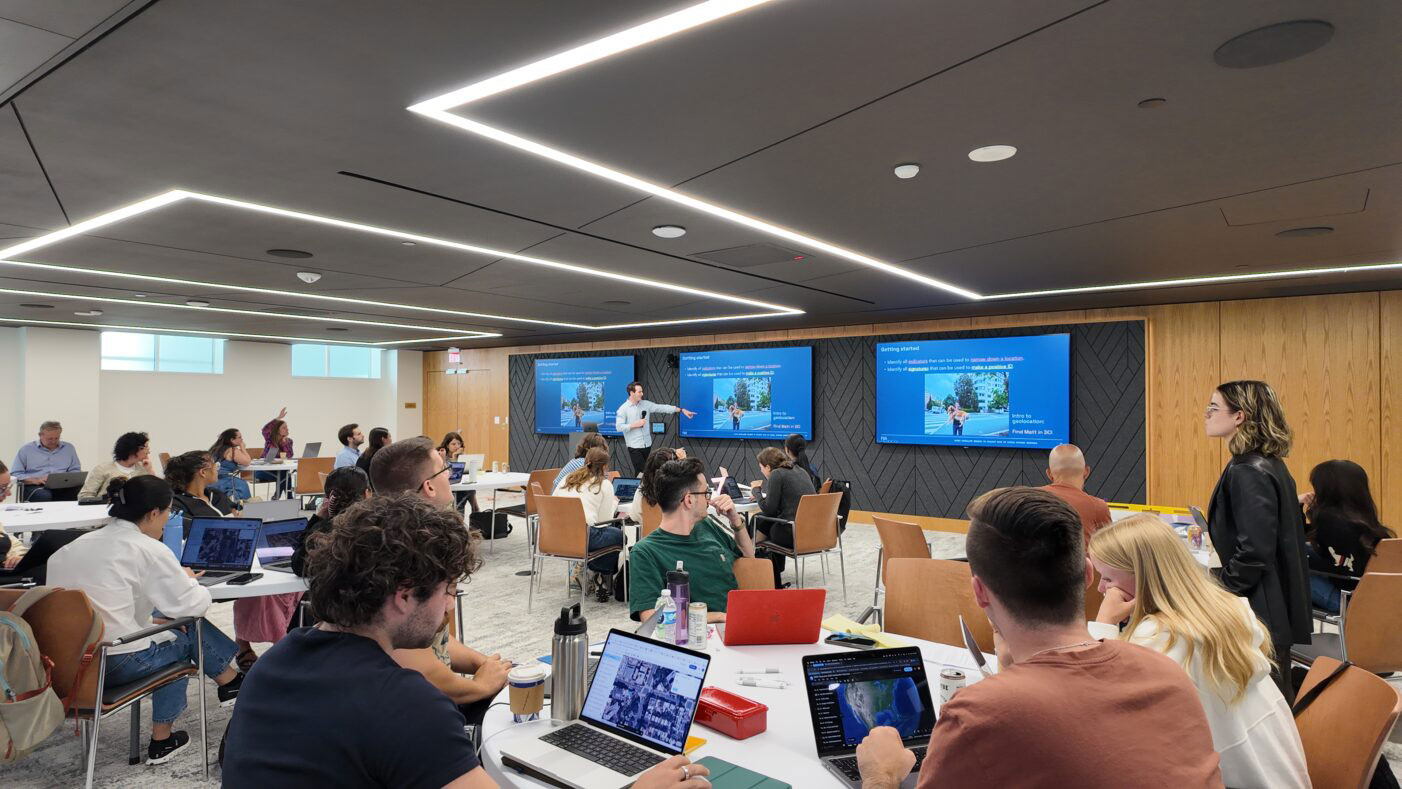
The author presents at the Federation of American Scientists’ inaugural boot camp, held in June 2025, which brought more than two dozen next-generation open-source practitioners from across the United States to Washington, D.C., where they participated in interactive modules, group discussions, and hands-on sleuthing. (Credit: Federation of American Scientists)
Following the overwhelmingly positive feedback from participants and trainers, we were excited to host the second iteration of our open-source boot camp in Montreal, Canada, in June 2026. We received more than 250 applications from all over the world, and our second cohort included participants traveling from Australia, Canada, China, Czechia, Indonesia, Italy, Japan, Kenya, the Netherlands, Scotland, Thailand, the United Kingdom, and the United States. They came from a variety of disciplines and backgrounds, including academia, journalism, think tanks, policy analysis, international organizations, and public education.
Given the significant demand for continued opportunities to learn and collaborate on open-source nuclear analysis, the Federation of American Scientists remains committed to fostering and developing an open-source intelligence community of practice, and we look forward to welcoming future participants to our programming over the coming months and years.
Matt Korda is the associate director for the Nuclear Information Project at the Federation of American Scientists, where he conducts open-source research on global nuclear forces and trends.