
Andrew Carnegie: To Try and Make the World in Some Way Better
How an immigrant from Scotland rose from poverty to define modern philanthropy, establish libraries around the world, and fight for world peace
By David Nasaw
Jan 15, 2026
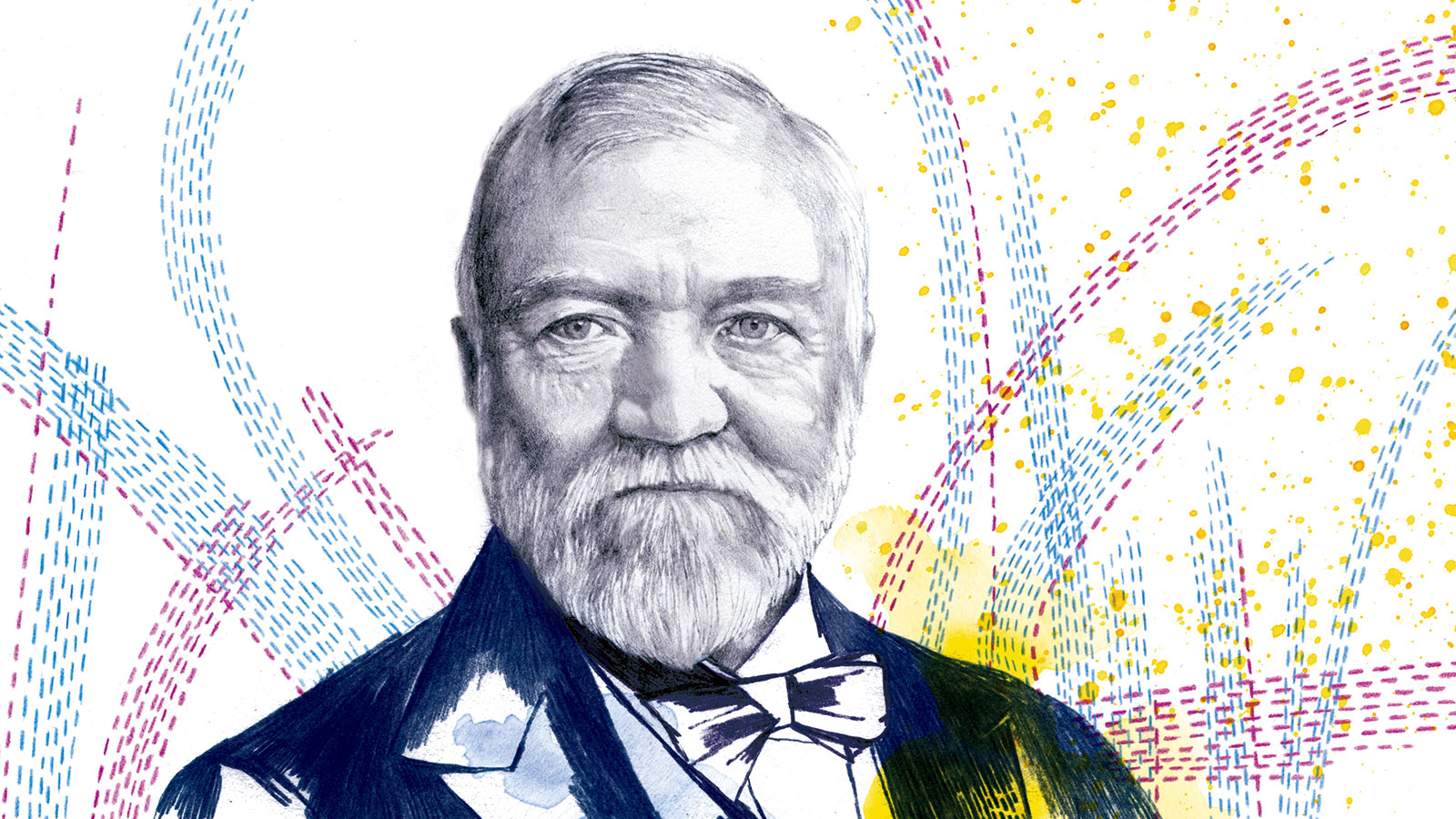
Andrew Carnegie was born in Dunfermline, Scotland, in 1835, the eldest son of a failed linen weaver and an entrepreneurially minded mother who kept shop and took in work from local shoemakers to put food on the table. At age thirteen, after no more than a year or two of formal schooling, young Andrew set sail with mother, father, and younger brother for America. Poor though the Carnegies were, they were supported by his mother’s extended family and by the Scottish emigrants who had preceded them to America and Allegheny City, across the Allegheny River from Pittsburgh. Andra, as he was called, was put to work as a bobbin boy at a cotton mill, but after less than a year in the mill, found work as a telegraph messenger, taught himself Morse code, and was hired as private telegraph operator and secretary to Thomas A. Scott, the Pittsburgh division superintendent of the Pennsylvania Railroad. For the next twelve years or so, he would work for the railroad. At age thirty, Carnegie resigned his position to go into business for himself with his former bosses, Tom Scott and J. Edgar Thomson, the president of the Pennsylvania Railroad. Together, they organized a series of companies — with Scott and Thomson as secret partners — that were awarded insider contracts to supply the Pennsylvania Railroad with raw materials and build its iron bridges. By his early thirties, Carnegie had, with help and investment capital from his friends, accumulated his first fortune — in Pennsylvanian oil wells, iron manufacturing, bridge building, and bond trading.
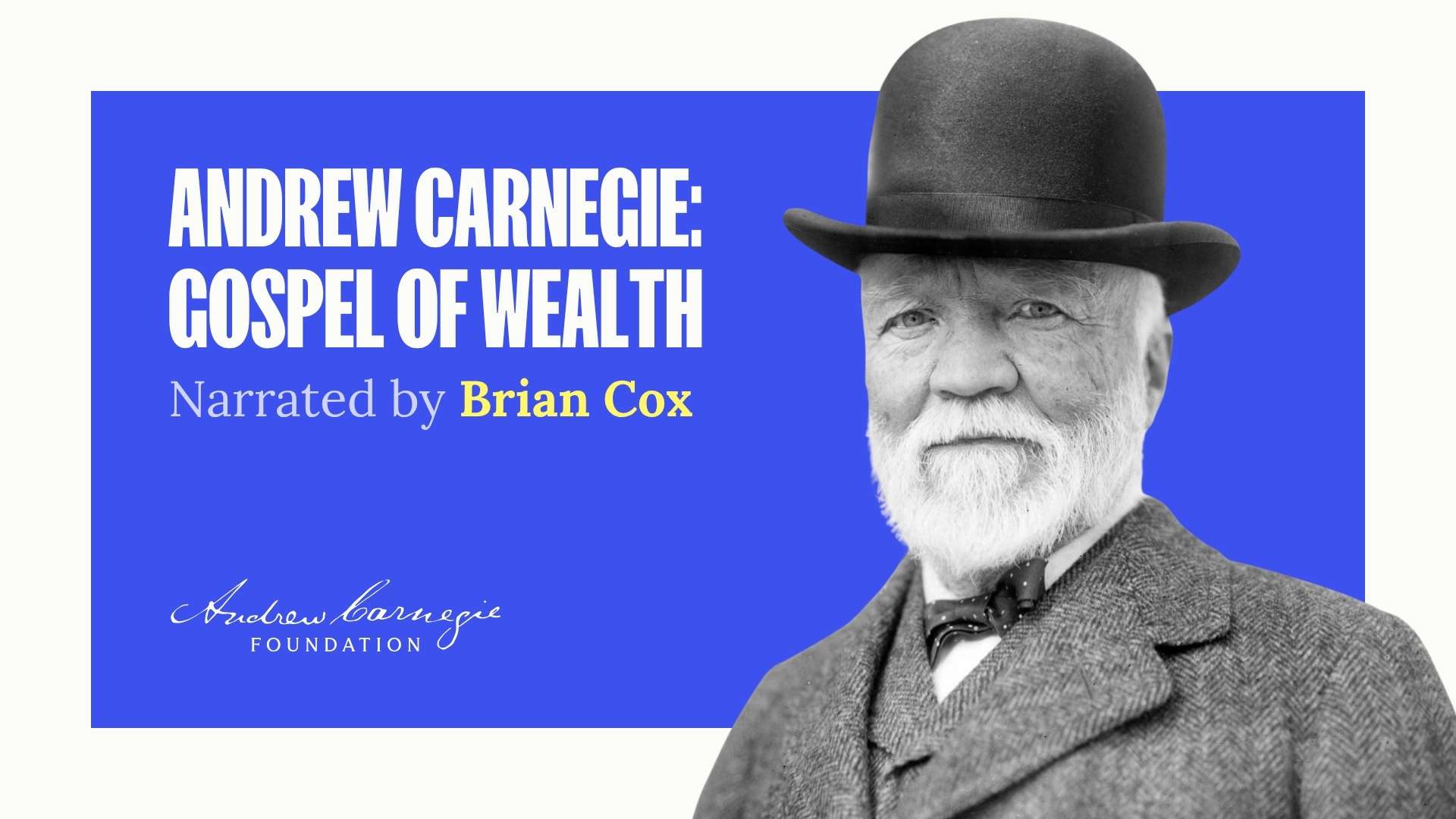
His business career was, to this point, not unlike that of other ambitious English-speaking immigrants who made their fortunes by being in the right place at the right time. In the early 1870s, he moved away from the source of his income, Pittsburgh, to New York City. He would continue to oversee his iron and bridge companies from his hotel suite in New York — which he shared with his mother. Day-to-day decision-making was delegated to a succession of partners, including his brother Tom, Henry Clay Frick, and Charlie Schwab. He seldom attended board meetings and visited Pittsburgh only three or four times a year.
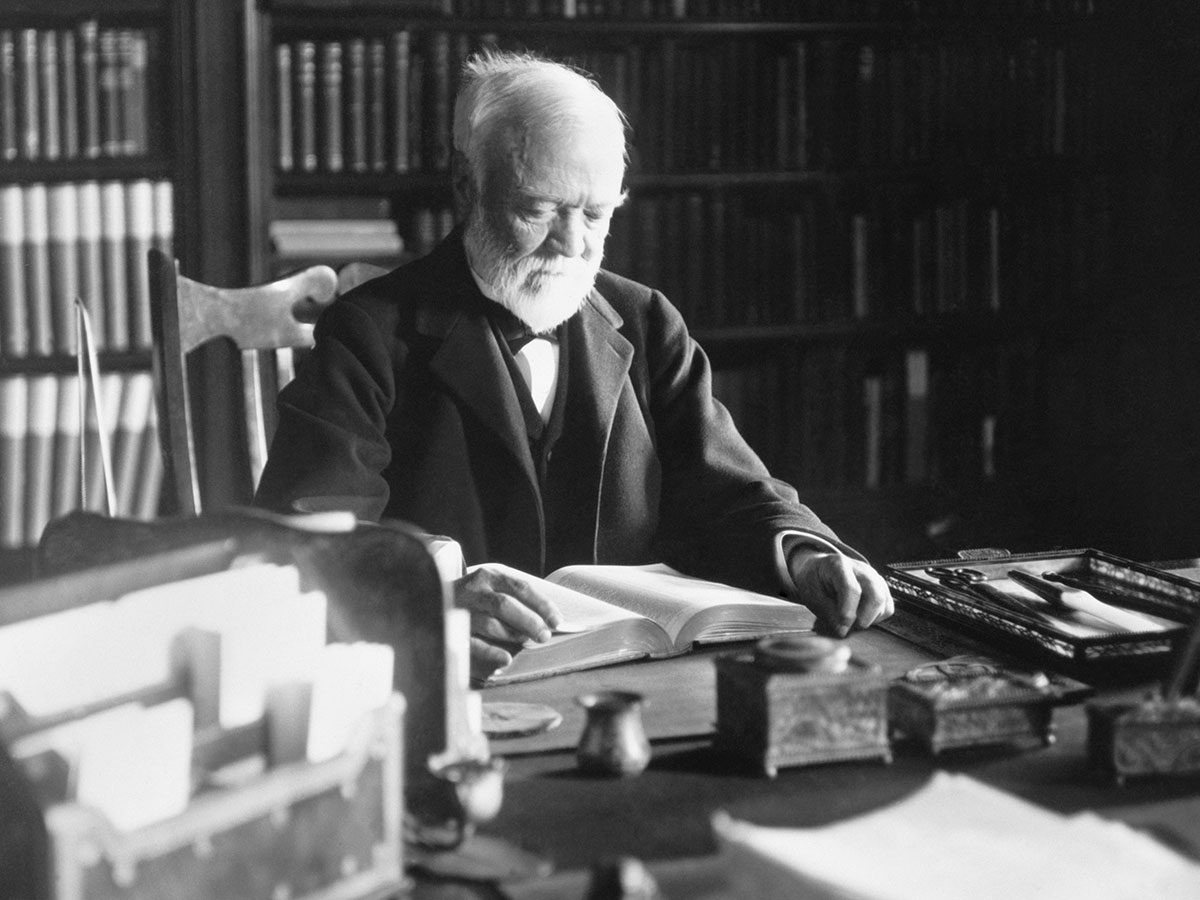
For the next thirty years, his workday was confined to a few hours in the morning — and an occasional luncheon or dinner — but he accomplished as much in these hours as most men do in a week, and was proud of it. Although he professed to have made the move to New York for business reasons, there were more important considerations behind his decision to live a day’s journey by train from his manufactories. He was thrilled with his success as a businessman and capitalist, but far from satisfied. He wanted more from life — and would spend the rest of his days in pursuit of it. His ultimate goal was to establish himself as a man of letters, as well known and respected for his writing and intellect as for his ability to make money. He had as a child and young man read widely and memorized large portions of Robert Burns’s poetry and Shakespeare’s plays. In New York and London, he continued his self-education. He befriended some of the English-speaking world’s most renowned men of letters, among them Herbert Spencer, Matthew Arnold, Richard Watson Gilder, editor of The Century Magazine, and Sam Clemens; published regularly in respected journals of opinion on both sides of the Atlantic; wrote two well-received travelogues and the best-selling book Triumphant Democracy, and with his “Gospel of Wealth” essays established himself as the moral philosopher of industrial capitalism. He spent half of each year in Britain, delegating to himself the role of cultural and political liaison between what he referred to as the two branches of the English-speaking race. He became the confidant of Republican presidents and secretaries of state and Liberal prime ministers and cabinet members, and inserted himself into the domestic and foreign affairs of the United States and Great Britain.

Meanwhile, his fortune grew and grew. Every major business decision he made appeared, in retrospect, to have been the right one. He was the first Pittsburgh iron manufacturer to move into steel, then the first steelmaker to diversify production from steel rails to structural shapes. To his partners’ dismay, he plowed most of the companies’ profits back into the business, integrating horizontally and vertically, modernizing, expanding, and securing steady cheap supplies of raw materials by buying a majority interest in the H. C. Frick coke works and leasing Rockefeller’s iron ore mines in the Mesabi Range at a huge discount. By 1901, when he sold his interest in Carnegie Steel to J. P. Morgan, he was arguably the richest man in the world.
On retirement, he accelerated his giving to communities for library buildings and church organs so that parishioners could be introduced to classical music. He also set up a number of charitable trusts, each charged with a specific task: free tuition for Scottish university students; pensions for American college professors; a scientific research institution in Washington, D.C.; a library, music hall, art gallery, and natural history museum in Pittsburgh; a Hero Fund for civilians; a “peace endowment.” Only as he approached his later seventies did he realize that, with his payout from selling Carnegie Steel at 5 percent a year on more than $200 million, he was running out of time to give away his fortune. Disheartened that he would fail at the most important task he had taken on — to wisely give back to the community the millions he had accumulated — he established the Carnegie Corporation of New York to receive and disperse whatever was left behind when he died.
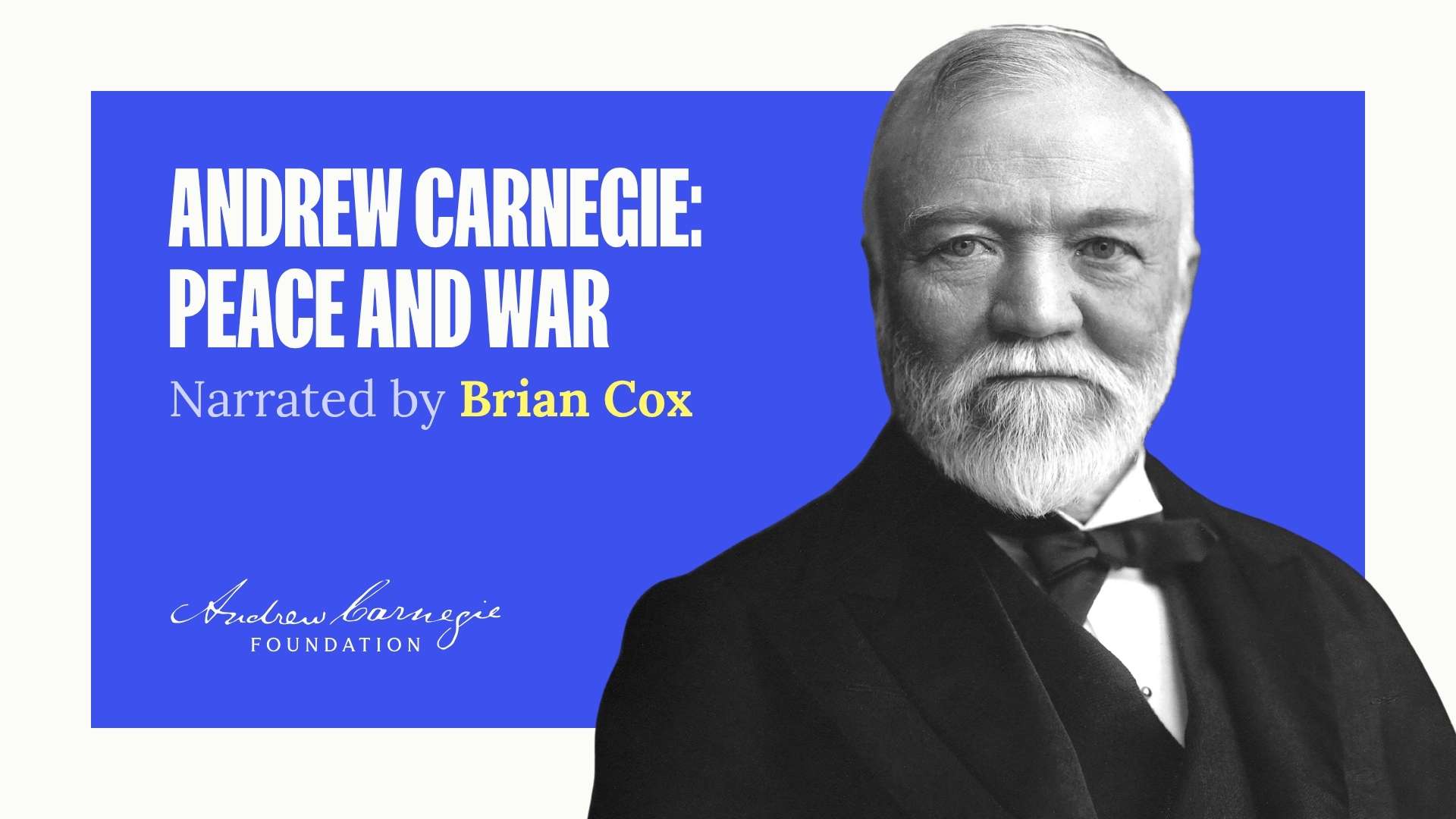
He had entered retirement intending to devote all his time and efforts to his philanthropy. But his last years were consumed with another cause: world peace. Arguing against his own self-interest — Carnegie Steel made millions manufacturing steel armor plate for the U.S. Navy — he campaigned for naval disarmament, then an international court, a league of peace, and treaties of arbitration between the nations of Europe and the United States. With considerable rhetorical power, he opposed American intervention in the Philippines and the British war with the Boer Republics in South Africa. As the European nations, followed closely by the United States, entered into an escalating naval arms race, he inserted himself into the diplomatic mix as an insider with access to the White House and Westminster. He would spend the rest of his days as an outspoken “apostle of peace,” commuting back and forth between his homes in New York and Scotland and the world’s capitals. Only at age eighty, in the second year of the Great War, did he recognize that his efforts had been in vain. He spent his last years in silence, isolated from his friends, unable to return to his home in Scotland, his optimism shattered.
A Scotsman in America, an American in Britain, businessman, capitalist, steelmaker, author, philanthropist, peace activist, pamphleteer, son, husband, and father, Carnegie wore his many hats well. He was in his long life seldom at a loss for words, never fearful of taking on a new role or task, and never less than passionate.
From Andrew Carnegie by David Nasaw, published by Penguin Press, an imprint of Penguin Publishing Group, a division of Penguin Random House, LLC. Copyright (c) 2006 by David Nasaw.