
A Carnegie Library Road Trip
Journalist Mark McDonald has traveled to more than 150 Carnegie Libraries in the United States. What he saw and learned, he says, made him proud to be an American
By Mark McDonald
May 23, 2025
For 25 years, Mark McDonald lived overseas as a foreign correspondent, covering the Afghanistan and Iraq wars for The New York Times and other publications. When he returned to the United States to teach journalism at the University of Michigan, he was “pretty confused about how I felt about the country,” he says.
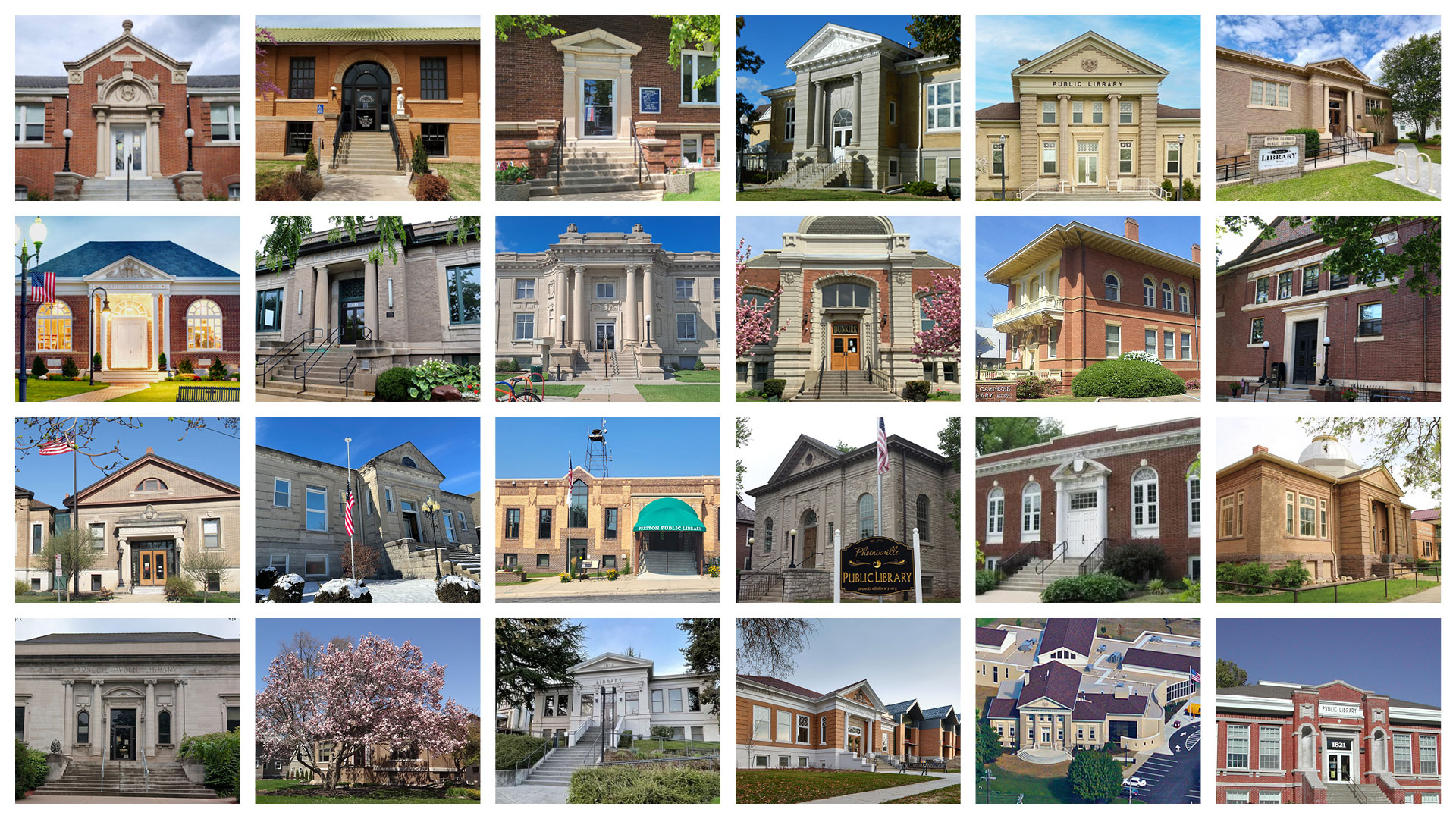
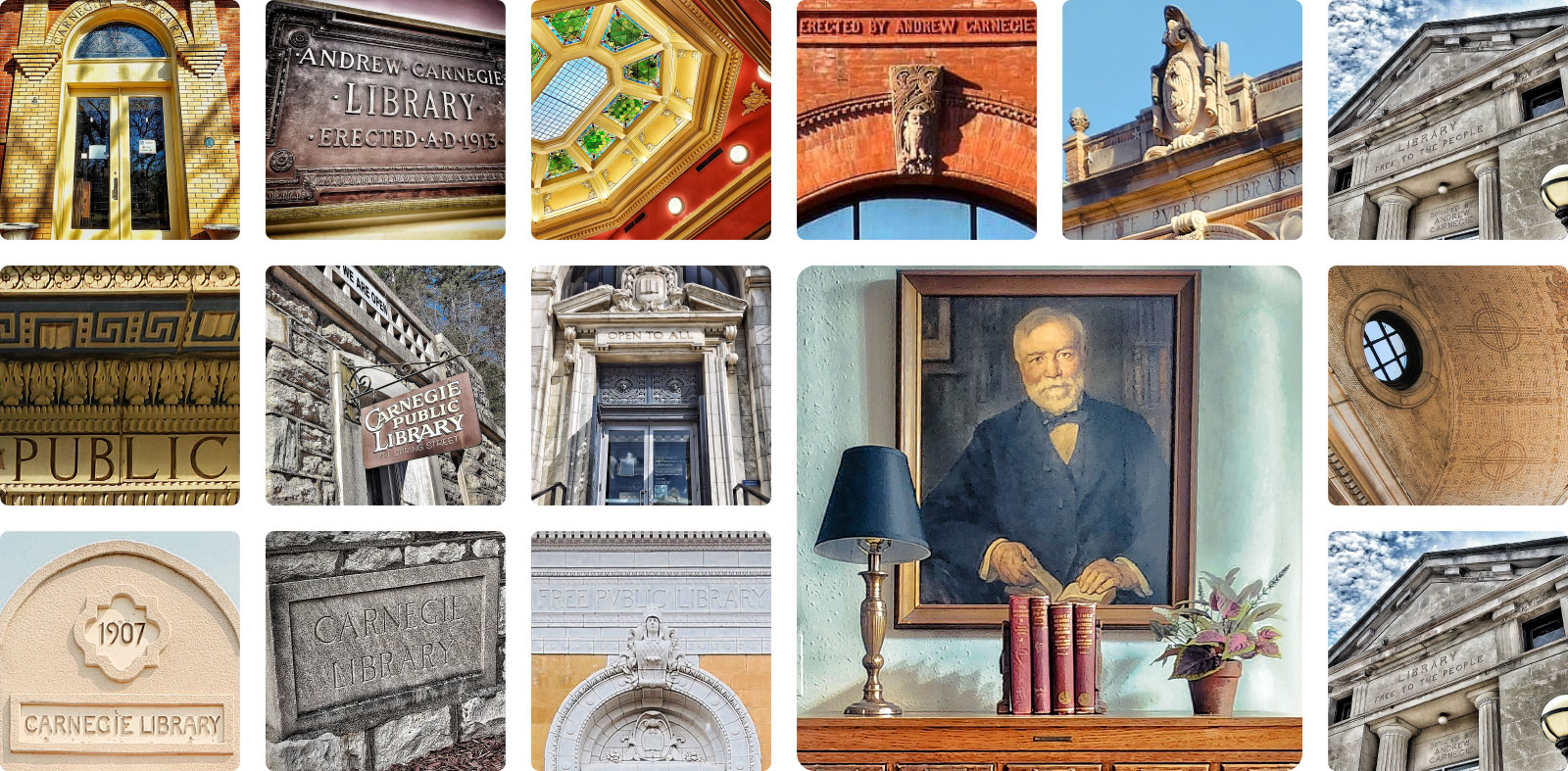
Serendipitously, the university gave McDonald an office in an old Carnegie Library that the university had bought and turned into classrooms. A self-described “history nut,” in 2021 McDonald began breaking up his semiannual drives between Michigan and his home in New Mexico with what became a “nerdy hobby”: visiting more than 150 Carnegie Libraries in big cities and small towns throughout the Midwest and beyond. For McDonald, the libraries symbolized a story about America’s defining optimism. “I figured out that the library was one of the important buildings for a young, ambitious, aspiring town,” he says. “People were hungry for learning. These little towns saw a library as a stake in the ground: ‘we’re here to stay. We’re in it for the long run, for our children and grandchildren.’ And that really got to me.” At each location, McDonald chatted with librarians and locals, uncovering hidden stories. “There was somebody notable and breathtaking who came out of every little town,” he says. “These libraries kickstarted a golden century for America.”
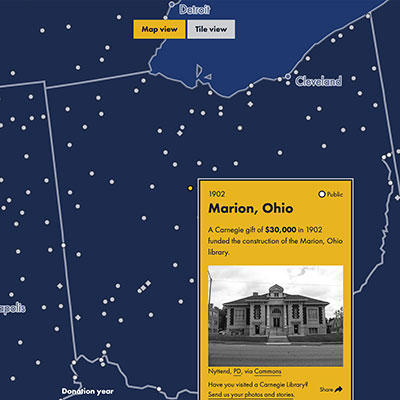
McDonald submitted his Carnegie Libraries photos and essays as part of the Carnegie Libraries mapping project, which allows people to search for the nearly 1,700 Carnegie Libraries that Andrew Carnegie and his foundation funded in the United States. McDonald also shares the stories on Facebook, where his posts have attracted loyal followers, among them fellow retired correspondent Michael Goldfarb, who has called McDonald’s Carnegie Library posts “the most pleasurable postcards I get to read.” Below, Carnegie Reporter presents a selection of his photos and essays, which have been excerpted and edited for length and clarity.
— Wilfred Chan, Senior Content Editor and Writer
Avondale, Ohio
The shelves were lined with books, the windows had been polished, and a chandelier was about to be hung over the circulation desk. Winter was almost over, that first week of March 1913, and Cincinnati was set to open a new library in the Avondale neighborhood.
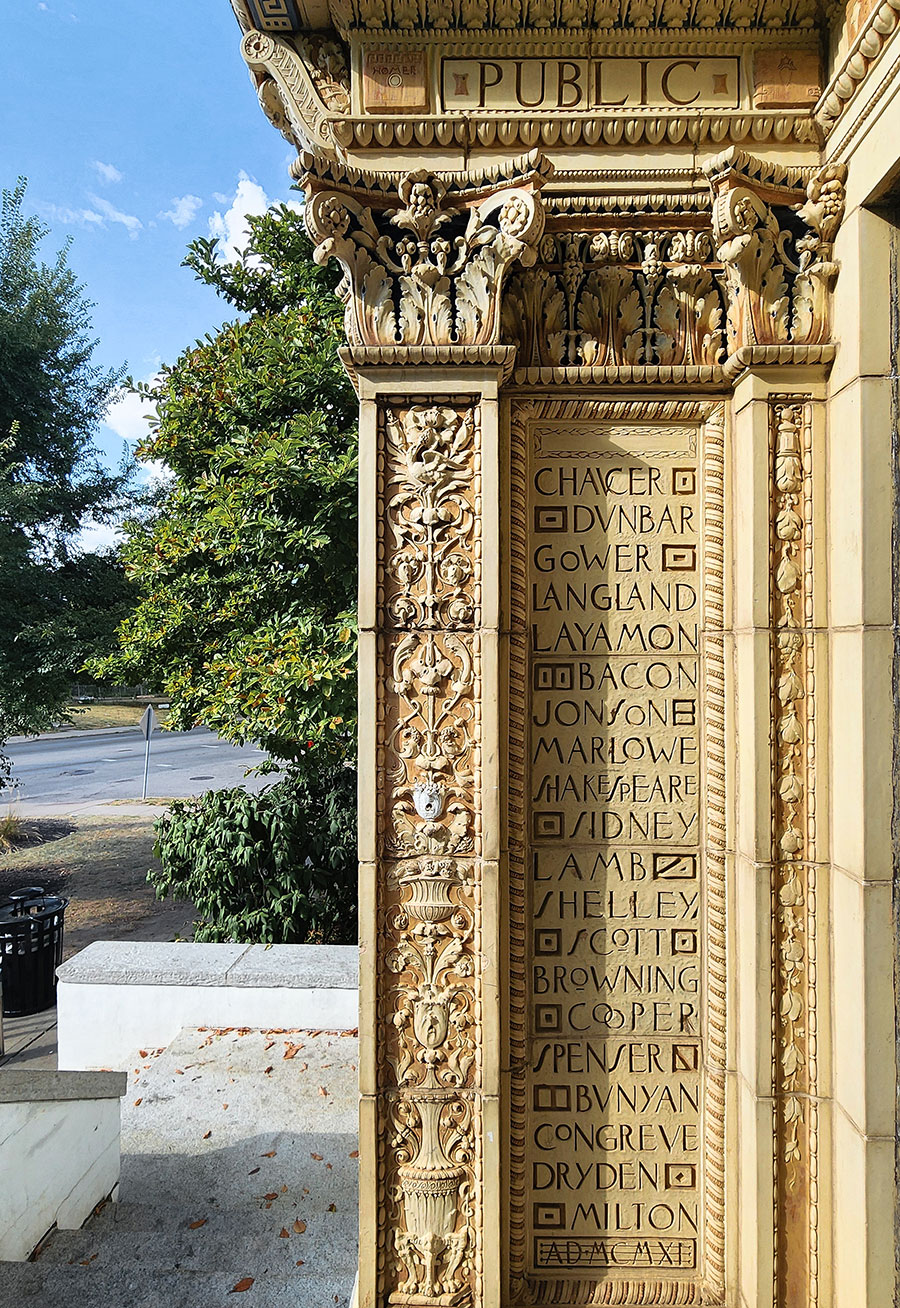
A gift from the steel baron Andrew Carnegie — one of nine branches he endowed in Cincinnati — the unusual Spanish Colonial design has aged beautifully. The Carnegie still has plenty of its original millwork inside, plus tapioca-colored brick, deeply coffered ceilings, and a soaring 30-foot rotunda that could accommodate a SpaceX rocket. But the real showstopper is the Rookwood pottery on either side of the front doors. Fluted columns, wedding-cake swirls of terracotta, vertical panels inscribed with the names of long-ago writers — it makes for a kind of American cuneiform, all done in a warm, egg-noggy color.
There are fewer people in the neighborhood now — barely 11,000 — than when the Carnegie was first built. But the library abides: a homework helper on site every day, hot meals for youngsters after school, story hours, DVDs and graphic novels, a telescope you can check out — anything to draw the kids inside. It’s heroic work, unsung and patriotic.
Learn more about the Carnegie Library in Avondale, Ohio.
Clarksdale, Mississippi
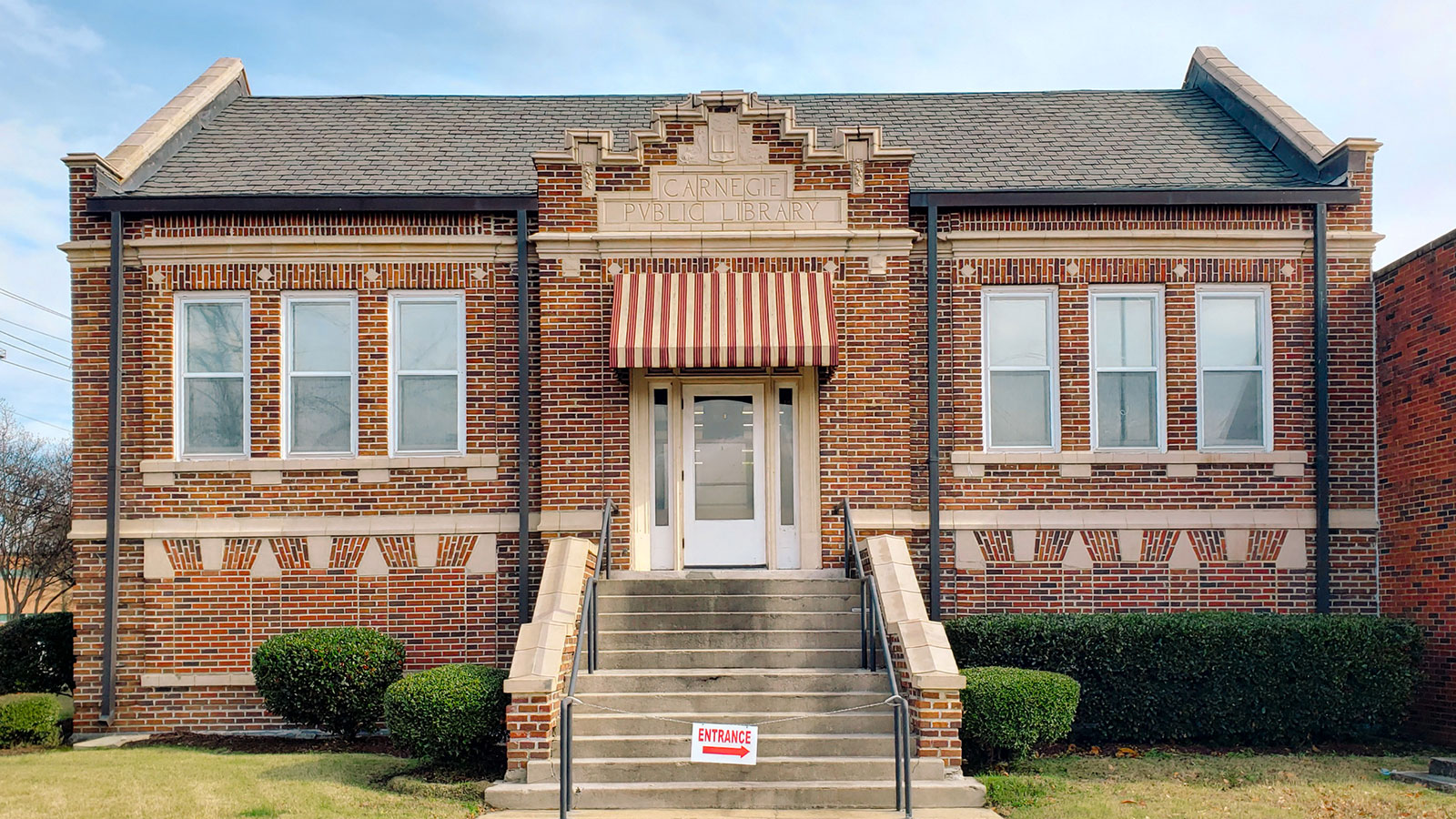
You can see it in the archives — a 1919 entry written with a fountain pen — how his grandmother brought him to the library here in Clarksdale, Mississippi — they would walk over from the Episcopal rectory where they lived. Thomas Lanier Williams was in primary school then and staying with his grandparents — still 20 years away from changing his first name to ‘Tennessee’ — and you can imagine him at one of the oak tables in the Carnegie Library, working his way through Robinson Crusoe and Huck Finn — a frail, wheezing, lonely little kid — his stern, shoe-salesman father called him Miss Nancy — and out of all that he became America’s greatest playwright.
Another of our great writers, Richard Ford, wrote his best novel here, right here, in the main floor reading room of the Carnegie Library. The Sportswriter is set in New Jersey, but Ford, who was born over in Jackson, said he chose Clarksdale on purpose: “The Carnegie Library [there] is a refuge. They offered me a haven. I want to be remembered in a place where people go read books. Literature can be a way for society to address what it doesn’t want to address.”
Learn more about the Carnegie Library in Clarksdale, Mississippi.
McCook, Nebraska
The little Burlington Railroad town of McCook, Nebraska, is just a hundred miles or so from the exact center of the country — the Lower 48, that is — and it doesn’t get much more “heartland” than McCook.
In 1905 the town asked Andrew Carnegie for a grant to build a library, and the steel baron came through with $9,500. An architect from Denver delivered a striking Spanish Colonial Revival design but when the budget grew to $11,000, Carnegie had to kick in the extra money to get the place finished in 1908. Very unusual for Mr. C to pay for cost overruns. He also did not approve of the city using the library as its polling place, police court, council chambers, and the office where you paid your water bill. He had paid for a library — and only a library. He sent an angry letter to the council saying this sort of mission creep was “a breach of faith.” That was enough to set things right.
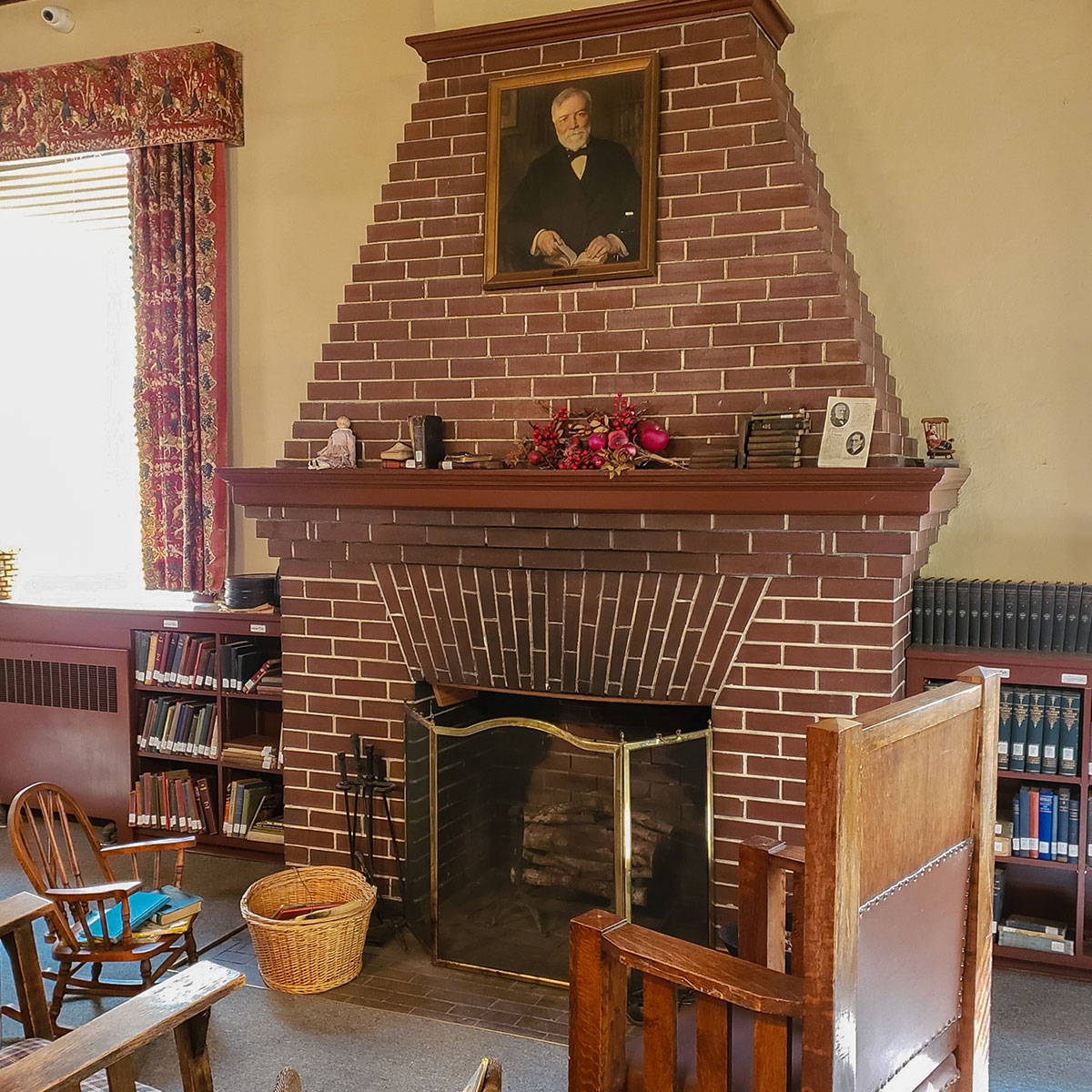
The library was a tiny beauty, so tiny, alas, that McCook eventually outgrew it. They built a god-awful, vaguely modernist carbuncle in 1969, and the old Carnegie became part of the High Plains Museum. It’s spectacular inside, with vaulted timbered ceilings, plenty of the original oak furniture and shelves, and nostalgic artifacts from McCook High School. Carnegie’s portrait hangs over a splendid brick fireplace in the old reading room.
Learn more about the Carnegie Library in McCook, Nebraska.
St. Louis, Missouri
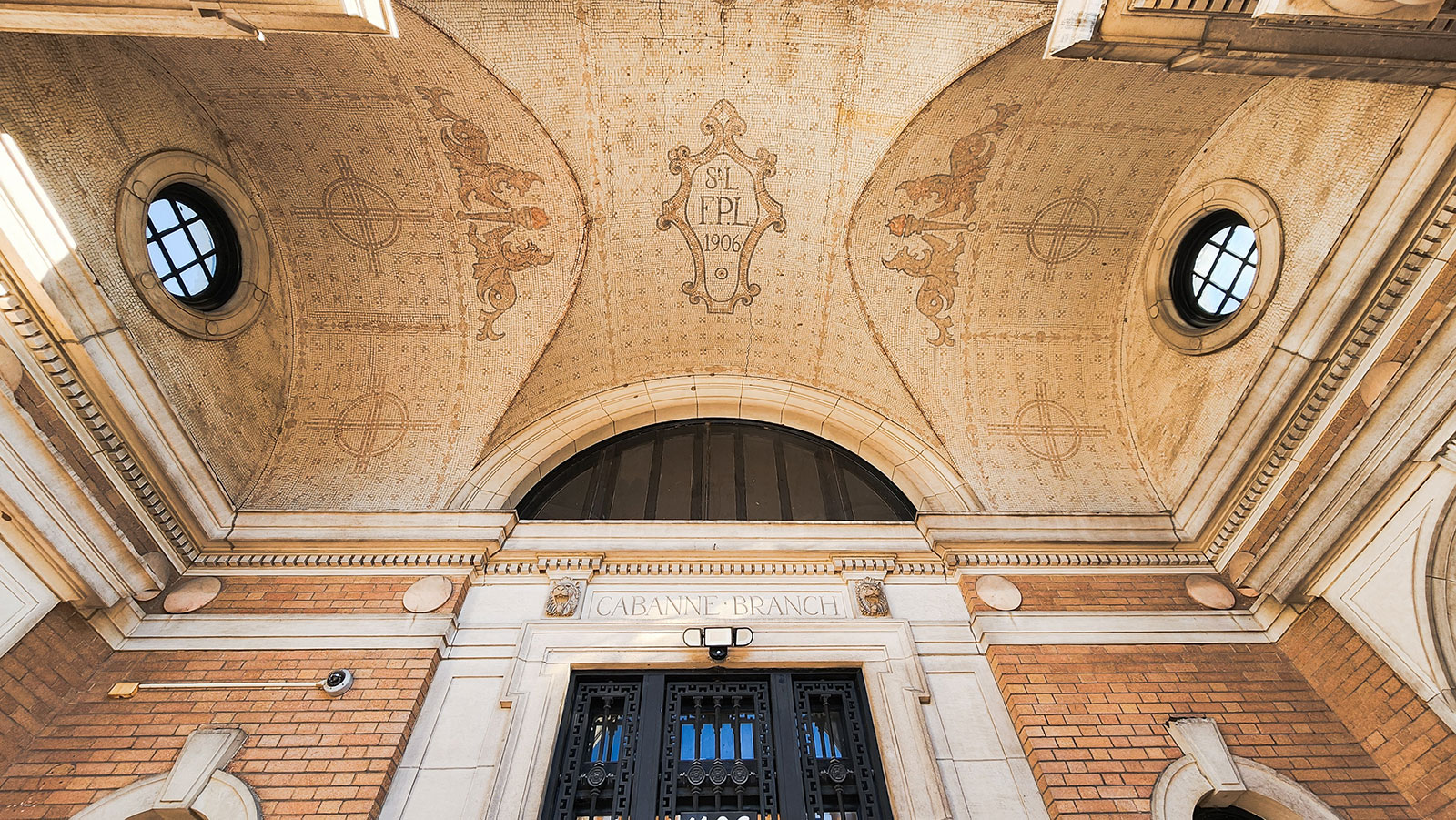
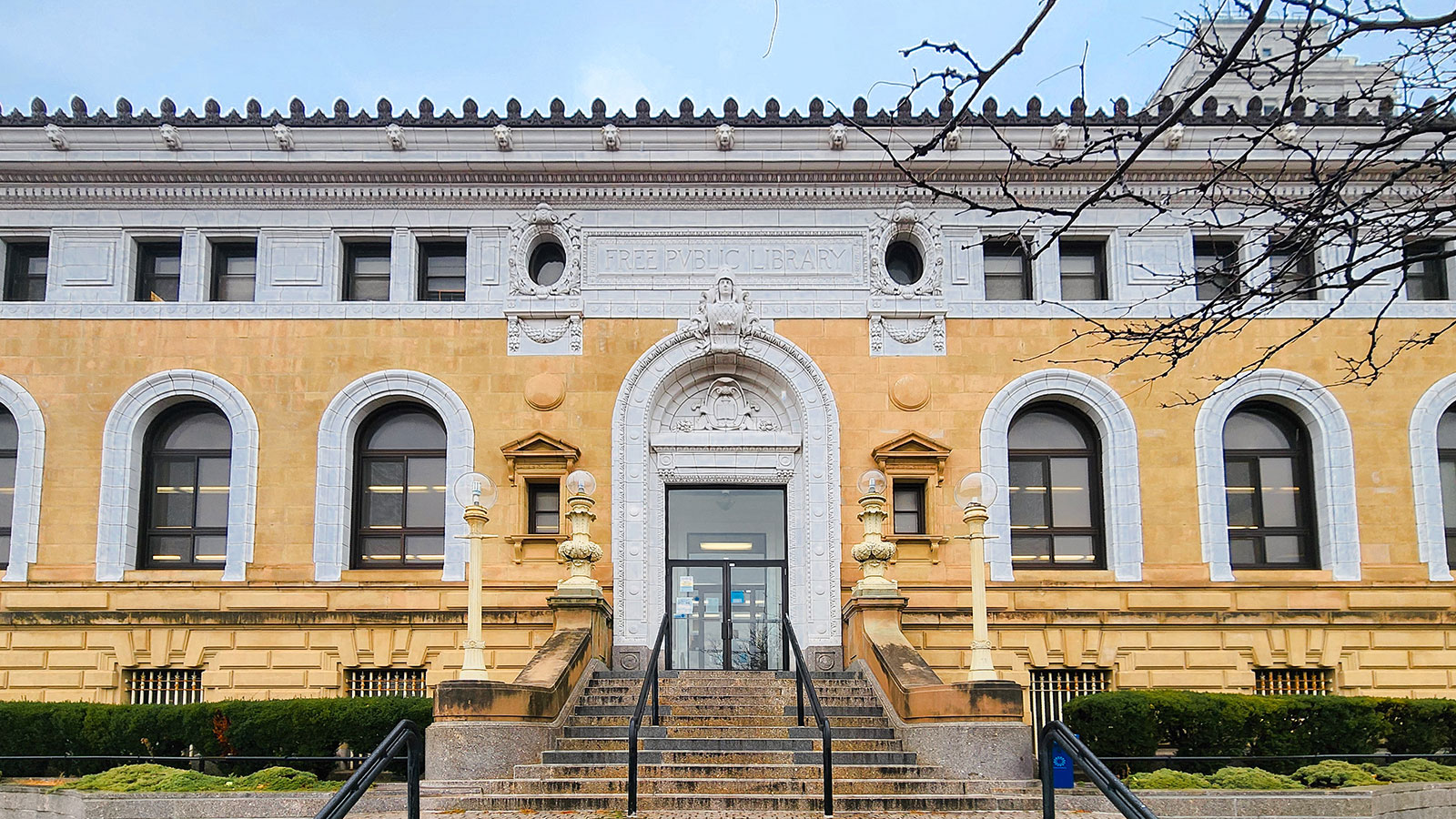
One of Carnegie’s first big gifts was a million-dollar grant to St. Louis for a main library and six branches. The main library downtown is monumental, majestic, and worthy of the Medicis. The Cabanne branch on Union Boulevard opened in 1907 and it’s a Beaux-Arts masterpiece, too. They just don’t make ’em like this anymore — Indiana limestone, terracotta carvings, pressed brick, tile mosaics, granite, mahogany, marble. Every inch of the exterior seems decorated; it’s almost too much to take in. The interior is great, too, despite a horrifying dropped ceiling that obscures what must be a Vatican-grade rotunda in the vestibule. Cabanne is one of the very few Carnegie Libraries in America with four fireplaces.
Soldan High, a Gothic brick Matterhorn of a school, opened just two years after the library, and Soldan kids have been regulars at the Carnegie ever since. Among the Soldan alums who used the library: the writer A.E. Hotchner, who was Ernest Hemingway’s best friend and a cofounder with Paul Newman of the Newman’s Own brand; the R&B singer Fontella Bass, who had the hit song “Rescue Me”; a former managing editor of The New York Times, Gerald Boyd; the former Secretary of Defense Clark Clifford; and William Martin, the longest-serving chairman of the Federal Reserve.
Learn more about the Carnegie Library in St. Louis, Missouri.
Elizabeth, New Jersey
The early “library” here was actually a selection of books rather than a fixed building, and the collection was kept at various times at the Nags Head and other taverns, a tobacco store, a hotel, a laundry, and the post office. A women’s club agreed to keep the collection at one point, but only after all the novels had been removed. Fiction, they ruled, was too frivolous.
Finally, in 1910, the steel magnate Andrew Carnegie offered the city a $75,000 grant for a permanent home for the library, plus another 50-grand for two branch libraries. The Carnegie in Elizabeth was designed by Edward Lippincott Tilton, a classical scholar who was the architect of the immigration hall at Ellis Island. The library has some wonderful bones — original metal-frame stacks, vaulted ceilings, a marble interior staircase — and one report from the 1912 dedication ceremony said it was “reminiscent of an Italian palazzo.”
Libraries aren’t just libraries anymore, whether they’re urban, suburban, or rural, and during my visit to Elizabeth, there were regular PA announcements alerting patrons to free services at the library — citizenship, literacy, and ESL classes; SNAP and Medicaid enrollment; help with ID cards for French-speaking immigrants from Haiti; sign-ups for GED tutorials; and a reminder of free showers at a church around the corner.
Learn more about the Carnegie Library in Elizabeth, New Jersey.
New Haven, Connecticut
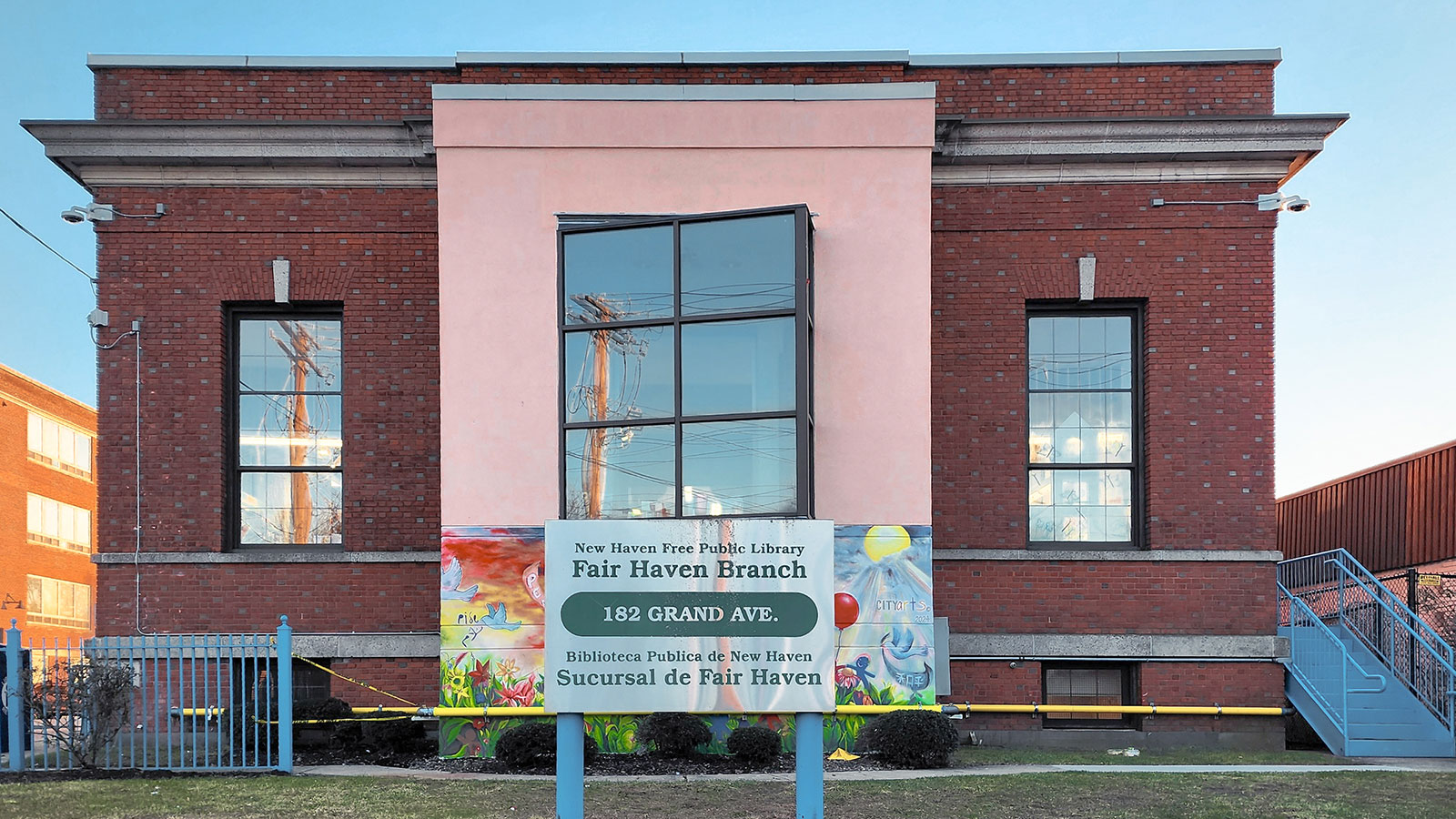
New Haven, Connecticut, dedicated a new library in December 1916, in the blue-collar neighborhood of Fair Haven. Andrew Carnegie had given the city $60,000 to build three branch libraries, and Fair Haven was the first to open. The library sits across the Mill River from Yale University, in an area once called Clamtown because of its long history of fishing and oystering.
The Fair Haven Carnegie is very much a working library, and it’s bright and busy inside, although not much to look at from the street. Carnegie Library grants after 1910 were largely controlled by the steel tycoon’s private secretary, James Bertram, and he cast a cold, implacable eye on every new application. He rejected the florid, highly ornamented architecture seen in the Carnegie Libaries of earlier years, and his letters to municipal grantees were often scolding and abrupt. He told them to forget about the marble stairs and copper domes they wanted. He railed against friezes, frescoes, and fireplaces.
“We’re a transactional library,” one staffer told me. English is not the first language in 48 percent of area homes, so the library offers bilingual story times, books in Spanish for adults and kids, fax and copy machines, test prep manuals, giveaways of herb and vegetable seeds, plus a city social worker comes in one day a week.
Learn more about the Carnegie Library in New Haven, Connecticut.
Savannah, Georgia
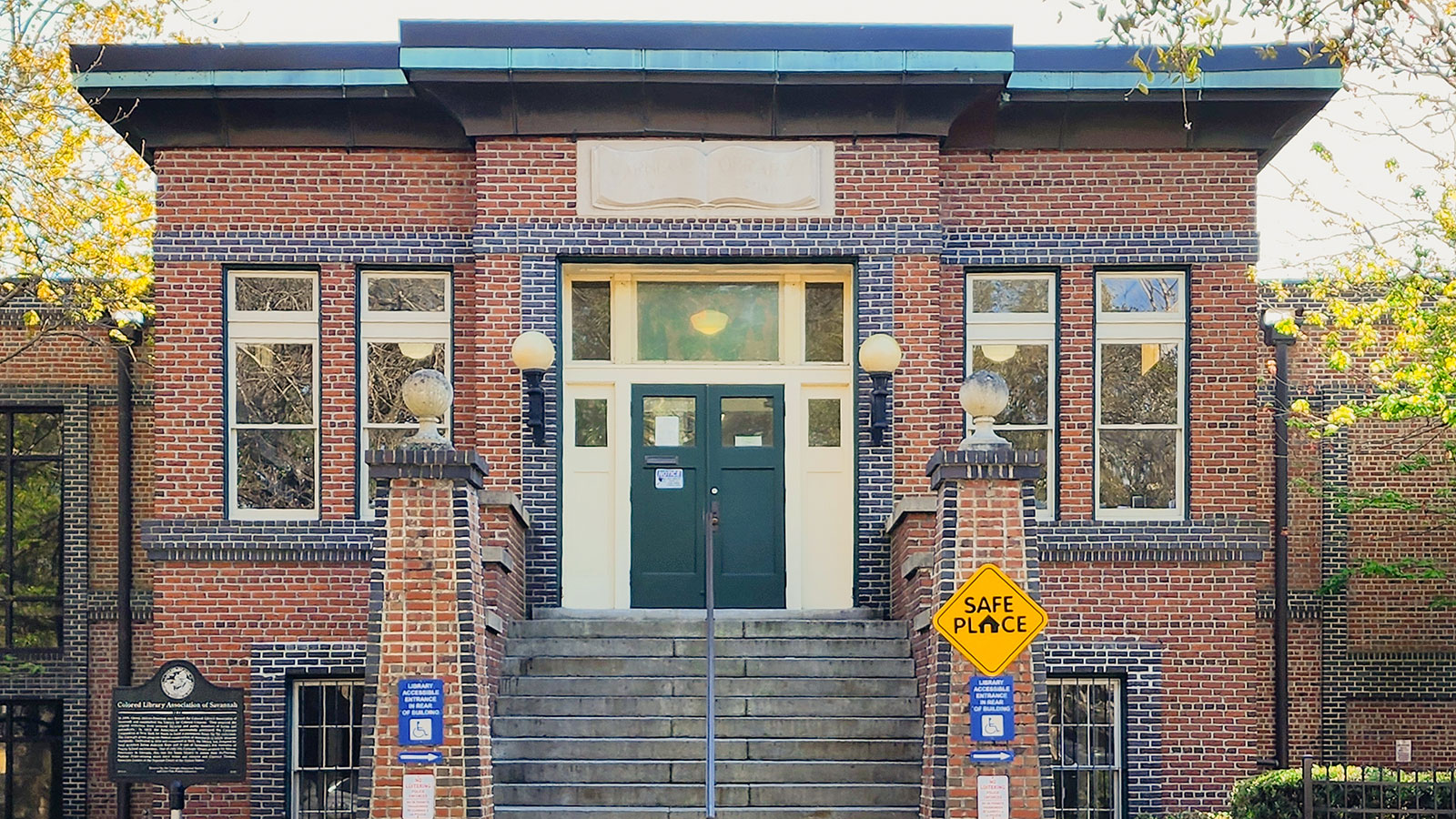
Twelve of Andrew Carnegie’s libraries were intended solely for African Americans, and 11 of those were in the South, including the one across from Dixon Park here on East Henry Street.
Carnegie had given Savannah $75,000 in 1910 for a whites-only library on Bull Street downtown. It’s a white whale of a neoclassical building — built mostly of Georgia marble — with a towering entrance porch, parapets above, gardens below, and a couple of massive Ionic columns. The Carnegie Colored Library, meanwhile, got a grant of just $12,000, which meant small, which meant brick, which meant no columns. The handsome Prairie-style building opened in 1915.
The roof and the floors started giving way in the 1990s, and the library was closed and vacant for seven years until a $1.3 million renovation got it going again in 2004. James Alan McPherson, the first Black author to win the Pulitzer Prize for fiction, grew up here — as did Supreme Court Justice Clarence Thomas five years after him. They were regulars at the Carnegie Colored Library. Growing up, as boys becoming men, McPherson and Thomas just needed a little elbow room, and that’s precisely what the Carnegie gave them. McPherson called their library “a lifesaver.”
Learn more about the Carnegie Library in Savannah, Georgia.
Shenandoah, Iowa
The boys were barely out of kindergarten when they began singing together, live, every morning, on a 6 a.m. radio show in Shenandoah, Iowa — billed as “Little Donnie and Baby Boy Phil.” After the show they’d go to school, and after school they’d walk together to the Carnegie Library on Elm Street to do their homework. The Everly Brothers were in high school when they moved from Shenandoah to Nashville, and in 1957 their first record made the pop, country, and R&B charts — “Bye Bye Love.”
As it was with the Everlys, walking to the Carnegie Library here after school was the drill for Jay Scheib, a third-generation farm kid from Shenandoah. “I’d check out a lot, a lot, a lot of books,” Scheib, now a playwright, a director of stage plays, ballets, and operas, and a professor of music and theater at MIT, told me. “I mostly read about kids like me, kids growing up on the Plains. Little House, Nancy Drew, the Great Brain books. That library was such a great place for me.”
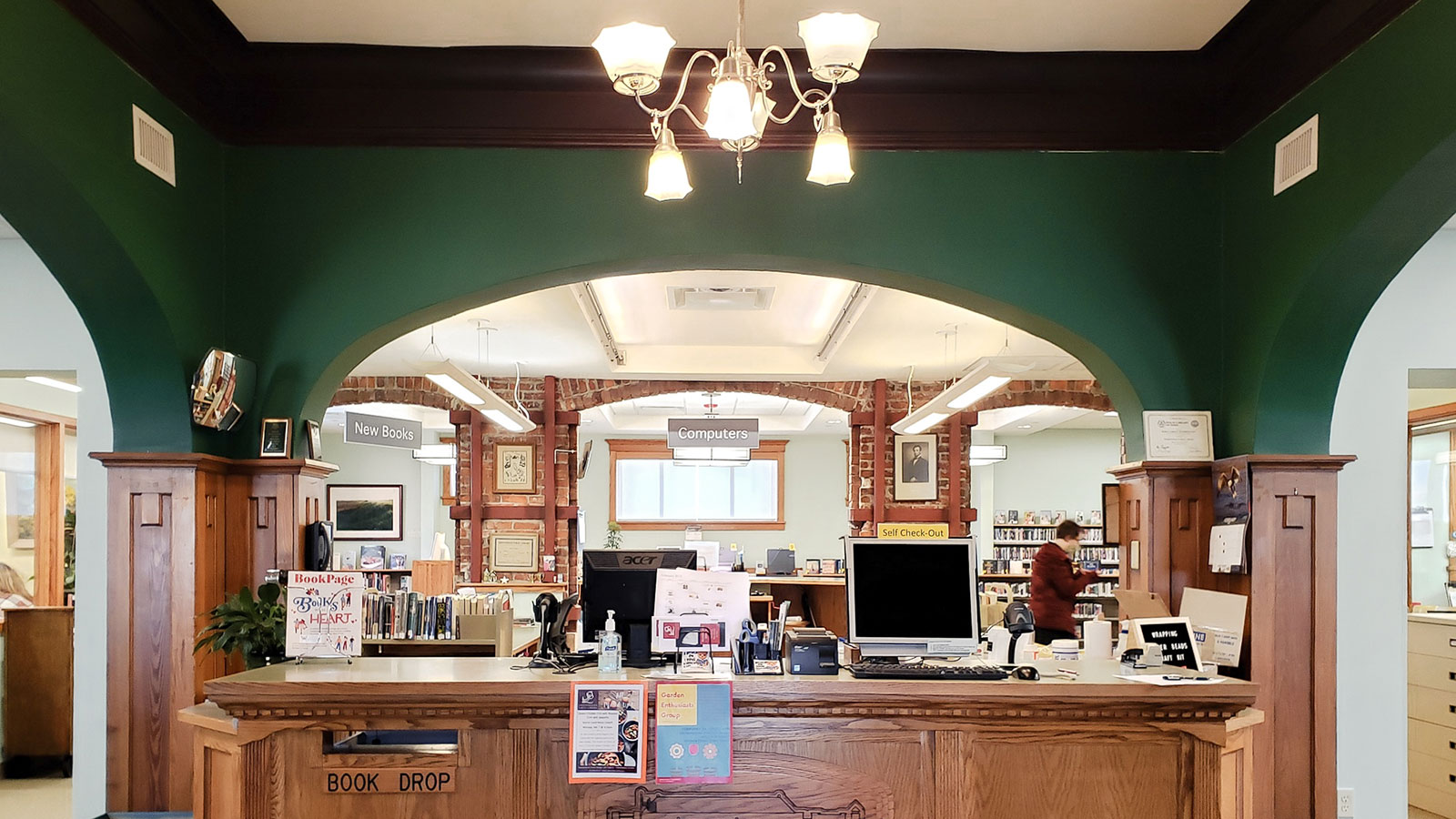
The Carnegie Library here is no palazzo, but the original circulation desk still has pride of place, front and center, just like opening day in 1905. It has been tricked up a little, yes, and it’s maybe carrying a little too much varnish, but the quarter-sawn tiger oak is still burning bright.
Learn more about the Carnegie Library in Shenandoah, Iowa.
Palestine, Texas
The Carnegie Library out here in the piney woods of East Texas is something special among the nearly 1,700 public libraries that Andrew Carnegie built in the United States. It was vacated, mothballed, and left for dead — then was renovated and reborn as a working library.
When Palestine outgrew its Carnegie several decades ago, the whole collection was moved to an unused school on Cedar Street — until 2009 when the roof caved in. Further relocations to an empty storefront and an old mall were a bust — the whole collection, truth be told, was homeless. The forsaken Carnegie, meanwhile, had a string of tenants like the Daughters of the American Revolution and a railroad museum.
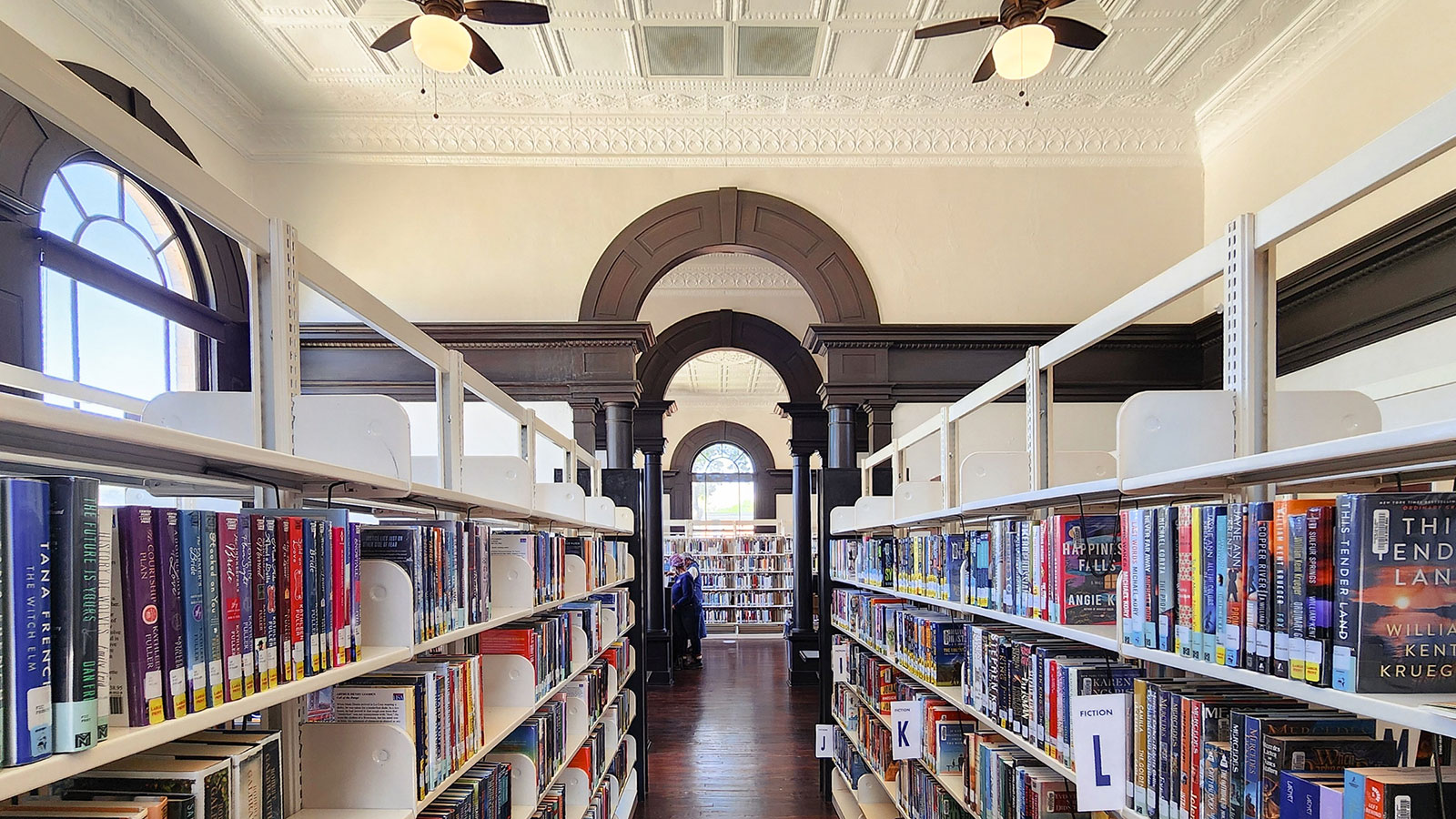
But then Palestine made the bold decision to restore and retrofit its Carnegie rather than knock it down and build a new one in its place. The supervising architect made sure the good stuff was preserved in the renovation — the 20-foot-high stamped-tin ceilings, the lath-and-plaster walls, the original millwork, and the pine floors that have just the right amount of give and creak. Mr. Carnegie agreed to a $15,000 grant to build the library in 1912. She’s small but she’s fierce, and she’s a beauty.
Learn more about the Carnegie Library in Palestine, Texas.
Mark McDonald is a former international correspondent for The New York Times, among other publications, and a former journalism professor at the University of Michigan. You can view more of his Carnegie Library posts on Facebook.
We’d love to know more about the current use of the Carnegie Library near you. Send us your photos and stories or visit carnegielibraries.org. They may be featured in forthcoming issues of Carnegie Reporter magazine.