
When Carnegie Libraries Run in the Family
A librarian learns that her grandfather helped build Carnegie Libraries
By Gabriel Fine
Feb 19, 2026
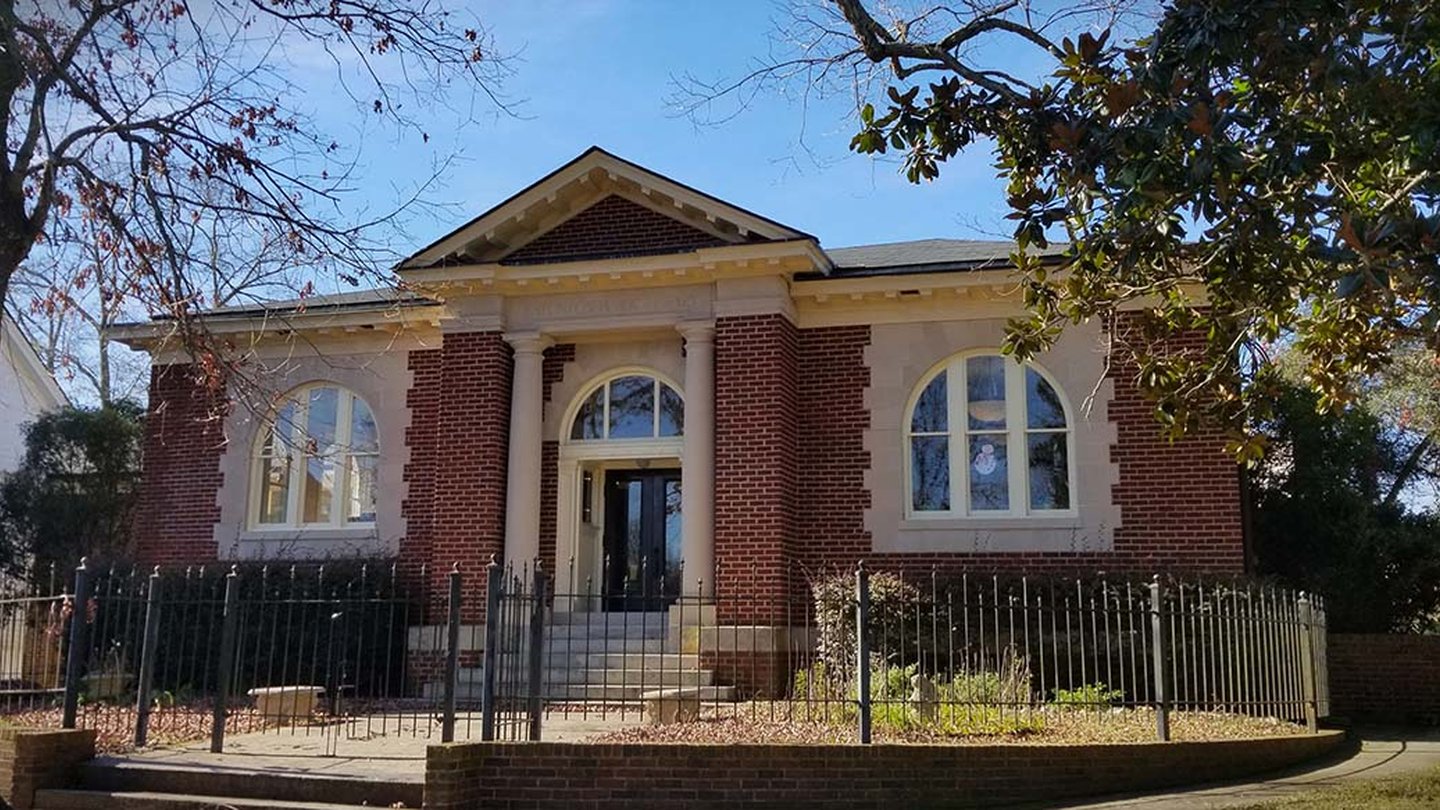
Library Name: Midtown Carnegie Branch Library
Location: Springfield, Missouri
Date Built: 1905
Original Carnegie Grant: $50,000
Fun Fact: A 2024 renovation restored the quote “A book fitly chosen is a lifelong friend,” which was originally painted above the library’s circulation desk.
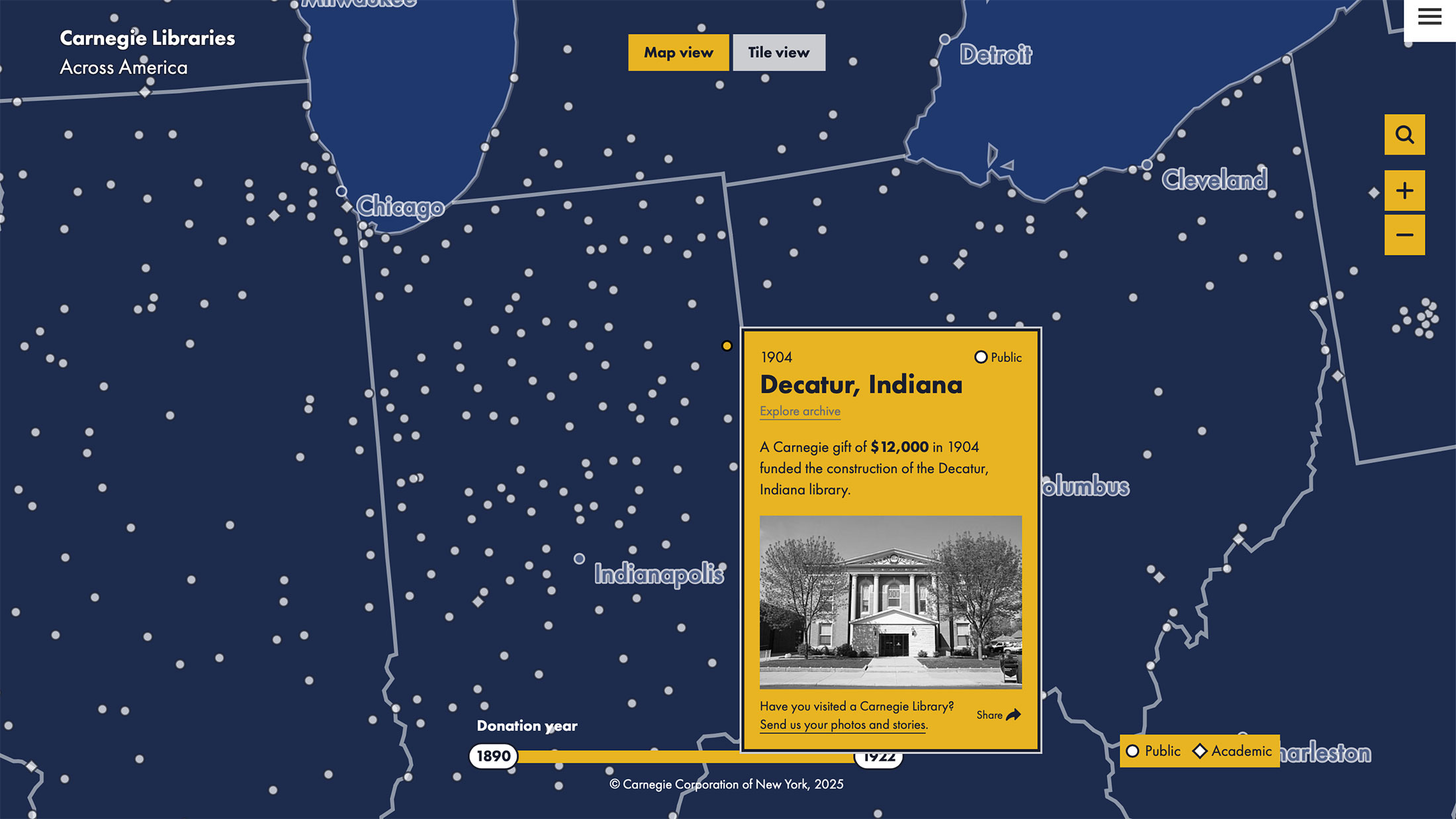
When Andrew Carnegie funded the construction of nearly 1,700 Carnegie Libraries across the United States, beginning in 1886, he insisted on the condition that the libraries be maintained by their communities. Many of them have kept that commitment for more than a century. In our series, Carnegie Library Road Trip, we visit some of these remarkable public institutions through personal stories submitted to our website, carnegielibraries.org.
Suzanne Levy was working as a special collections librarian at the Fairfax County Public Library when her aunt passed away in 2000. Among the family photographs that she inherited were several black-and-white images depicting Carnegie Libraries. It turned out her grandfather, a cut-stone contractor from Chicago, had helped build them.
Levy knew Andrew Carnegie’s free public library philanthropy well. She started her career as an information assistant at the New York Public Library’s 58th Street branch in 1969 (housed in a Carnegie-funded building until that year) and later worked as an acquisitions librarian at the Schomburg Center for Research in Black Culture in Harlem. Home to one of the largest collections of materials related to African American history and the African diaspora, the center was originally funded in 1926 by a $10,000 grant from Carnegie Corporation of New York, which continues to support the library today.
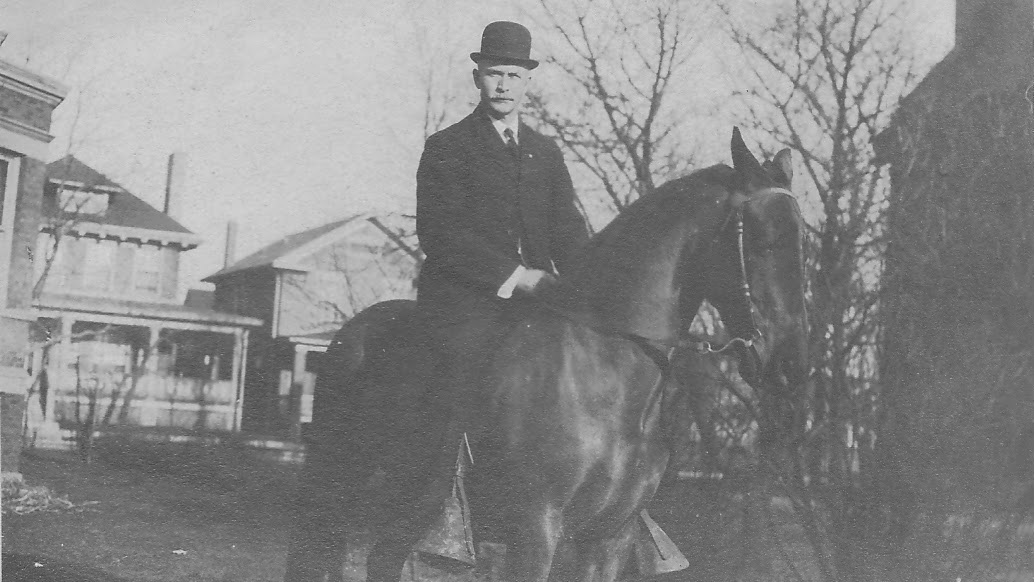
“Finding out that my grandfather, who I never really knew, built at least three Carnegie Libraries just really made me feel closer to him,” Levy says.
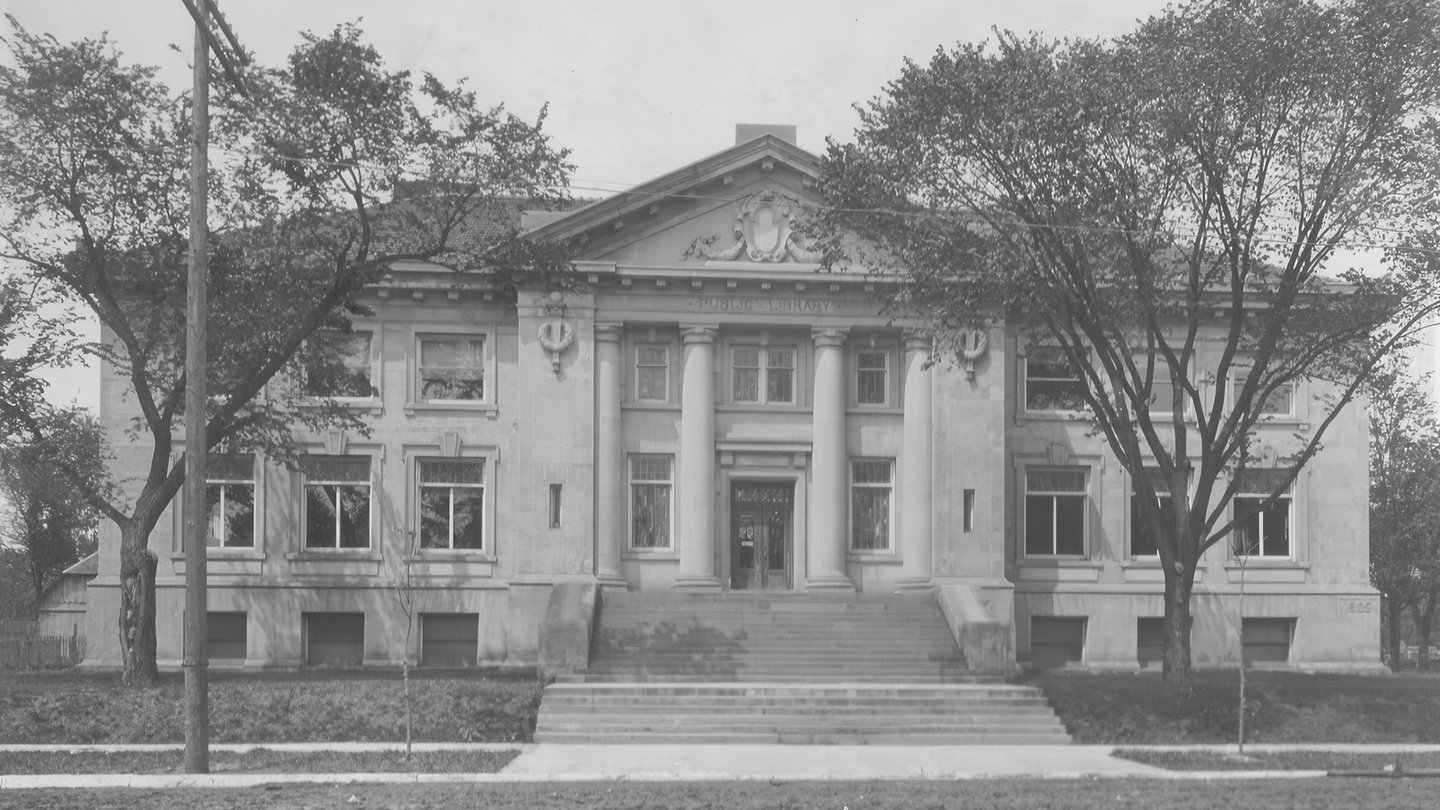
Levy had heard various family tales about her grandfather, Ernest Geipel, who died two years before she was born: that he had immigrated from Fleissen, Austria (now Plesná, Czechia), to Joliet, Illinois, that he played mandolin, and that he had made his own liquor during Prohibition. She also knew Geipel had a cut-stone business and helped construct countless buildings, statues, and other stonework across the Midwest. But until inheriting the pictures, Levy never knew he built at least three of the nearly 1,700 libraries Andrew Carnegie helped finance across the United States: in Leavenworth, Kansas (no longer in operation); Lincoln, Illinois; and Springfield, Missouri.
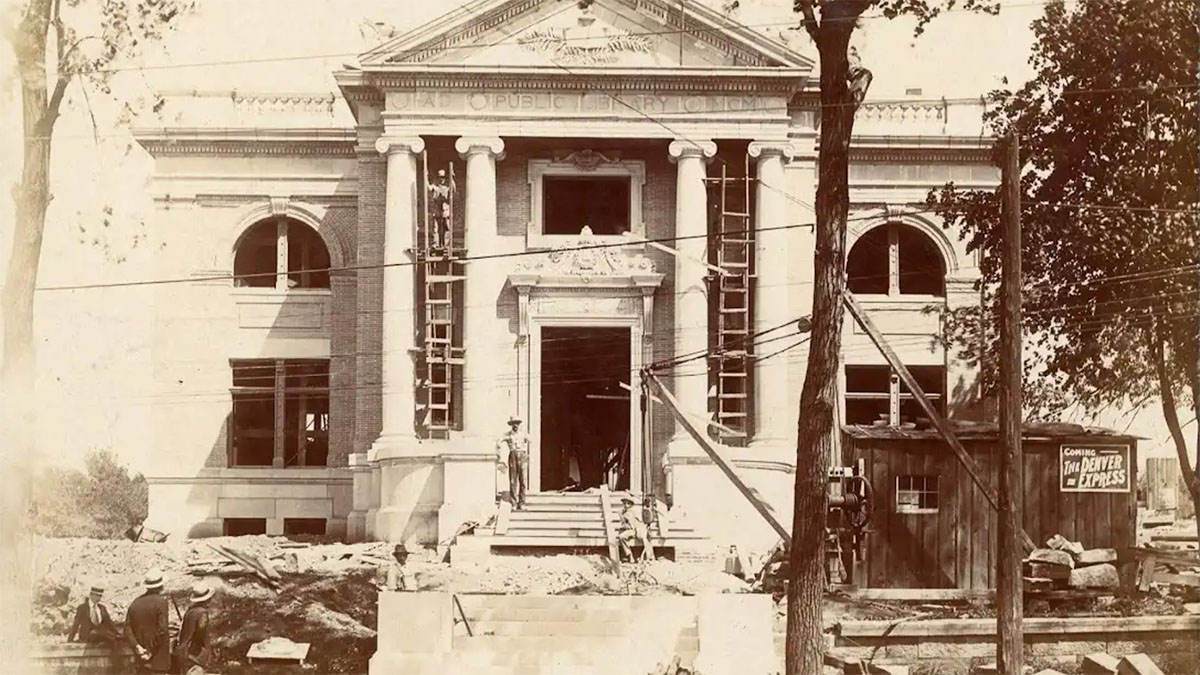
In fact, Geipel’s obituary in The Herald-Press, following his death in 1945, describes him as a “nationally recognized” stonecutter whose firm “did much of the stonework for the Carnegie libraries throughout the country.”
In Springfield, Geipel helped build the elaborate Beaux-Arts masonry of what is now called the Midtown Carnegie Branch Library with the aid of a $50,000 grant from Carnegie. Designed by then-prominent architectural firm Patton & Miller and contracted to Geipel’s company, the building features details like classical columns and intricately carved bas-reliefs. It was built with Indiana limestone, a light tan material used at the time in monumental structures like the Empire State Building and Lincoln Memorial, rather than the more readily available Carthage stone, quarried in Missouri. After the Springfield library was completed in 1905, the chairman of the newfound board wrote to Andrew Carnegie to describe the building as “one of the finest and most substantial structures of its kind I know in the west.”
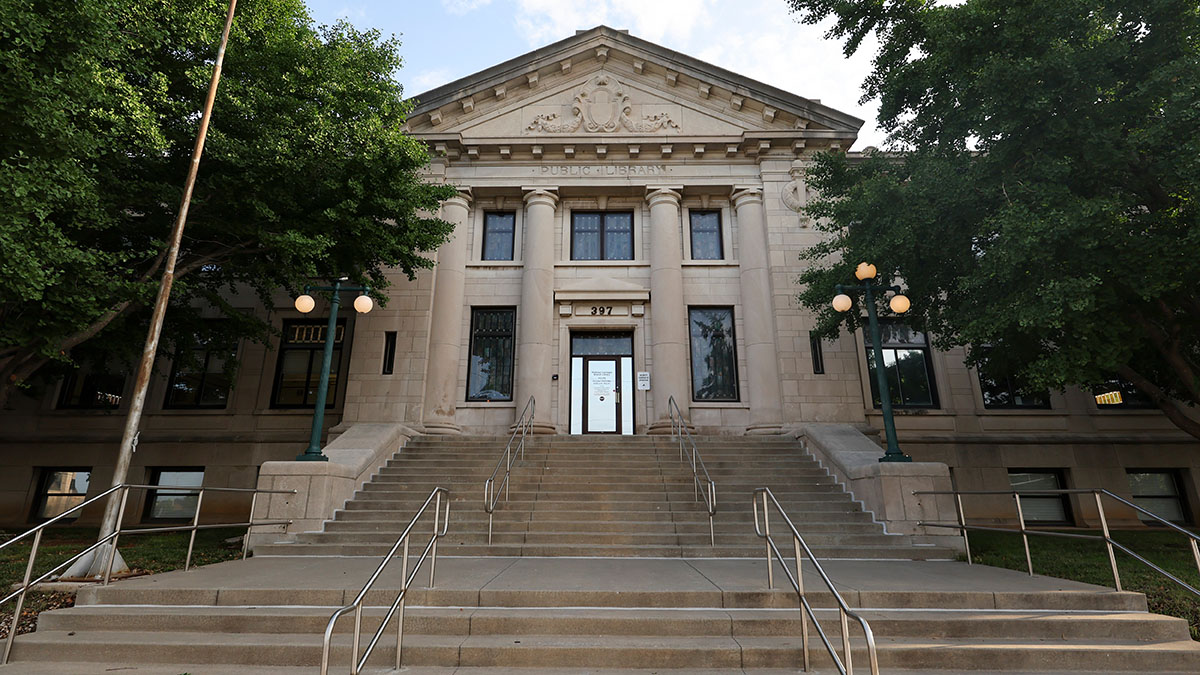
Today, the Midtown Carnegie Branch Library is located among the brick city offices and courthouses of Springfield’s Government Plaza neighborhood. Across the street from one of the city’s largest high schools, it serves students, government workers, seniors, and residents of the city’s only day shelter for homeless people.
“Every day there is such a completely different group of people coming in and using the library side-by-side,” says branch manager Eva Pelkey. “I just feel like that’s always been the goal of the public library: to have this total cross-section of America using the library in different ways, shoulder to shoulder.”
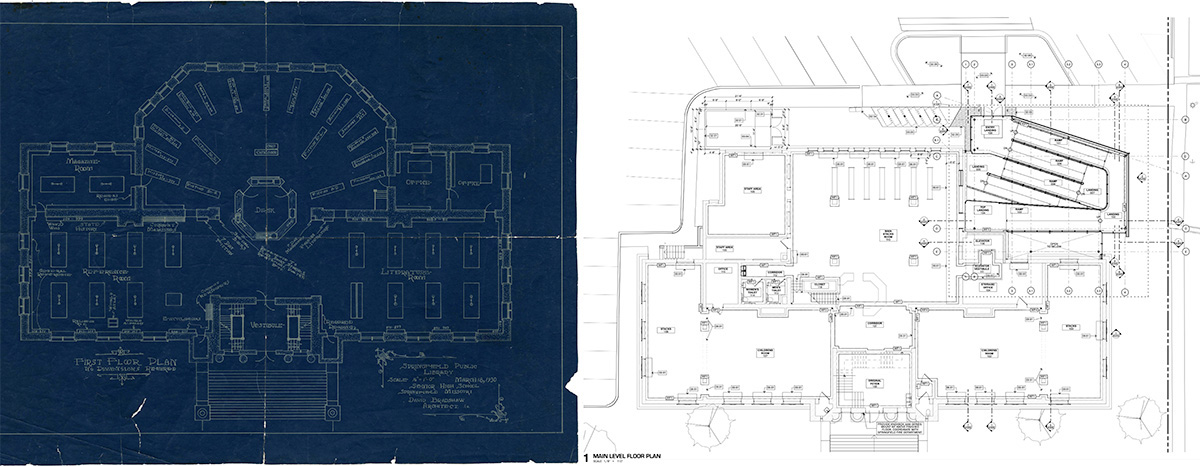
The location boasts a computer training center and maker space, where patrons can take advantage of tools like 3D printers, podcast equipment, and heat presses. A 2024 renovation and addition modernized the HVAC system and made the entryway more accessible. Visitors interested in Carnegie Libraries often come from all over the country to tour the branch and admire Geipel’s notable stonework, says Pelkey. “We look and feel like what people think a library should look and feel like.”
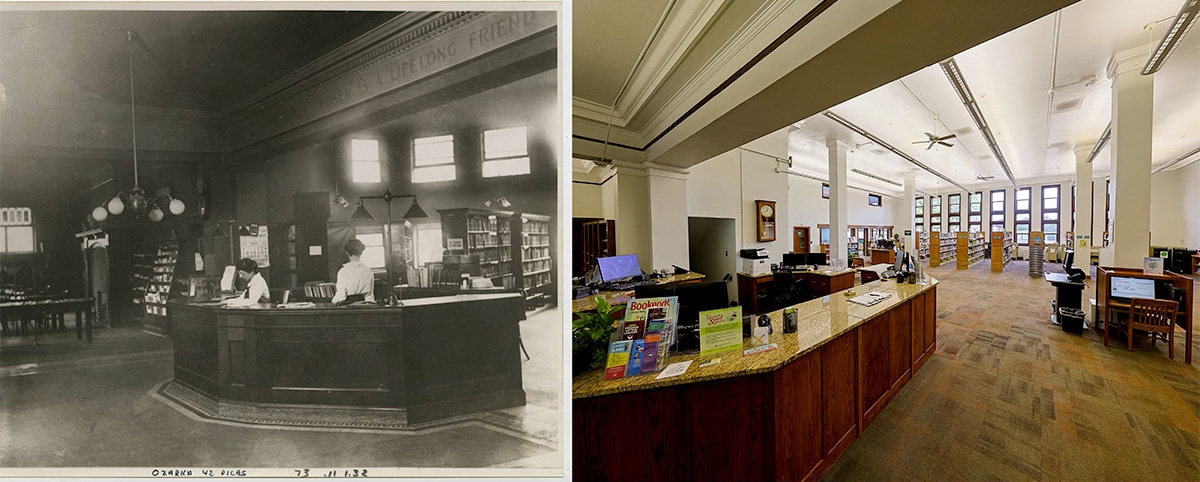
Levy, who retired in 2012 but remains active on her library’s board, continues to research archival newspaper clippings, ancestral databases, and directories for further information about her grandfather, hoping to discover other Carnegie Libraries that he helped build. “I believe he would be looking down and smiling,” she says, “knowing that his descendants are benefiting from his work.”
By the Numbers
The Springfield library opened with an annual circulation of 8,657 materials, which has grown to 38,580 at the branch and 3,926,602 across the district today. More than 103,000 people have library cards in the Springfield-Greene County Library District. 30 railroad cars of Indiana limestone were transported to construct the library. In-person visits to urban libraries in the United States increased by 9.8% from 2023 to 2024. The Midtown Carnegie Branch Library’s programs were attended 4,851 times from 2023 to 2024. The library distributed 9,316 pounds of food through its community fridge during the 2023–24 fiscal year.
Gabriel Fine is the content manager at the Andrew Carnegie Foundation.