

Toward a New Model for US-Russian Relations
Our polycentric, interconnected word — the new normal — and the rise of China call for a new diplomatic style and a context in which competition is no longer zero-sum
By Dmitri Trenin and Thomas Graham
May 20, 2021
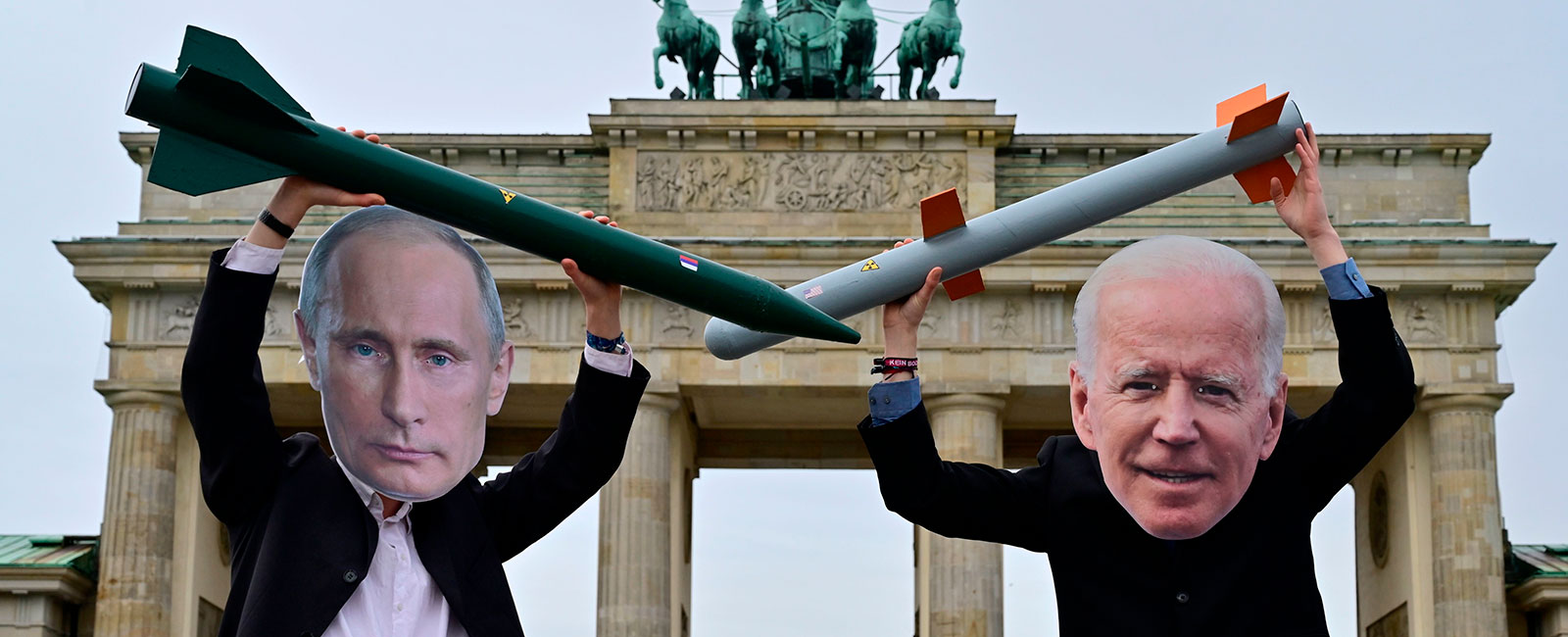
The confrontation between the United States and Russia today is systemic. It is not a product of misunderstandings or a mismatch between leading personalities on the two sides. But this antagonistic relationship is markedly different from the Cold War. It is no longer an all-out, zero-sum, existential game for geopolitical and ideological domi-nance. Neither is it the main axis of world politics.
The confrontation is dangerous nonetheless. Washington sees Russia’s effort to reassert itself as a great power with global influence, including its thinly veiled attempts to in-fluence U.S. domestic politics, as intolerable disruptions of its, and its allies,’ post-Cold War project to extend the liberal world order across the globe. Moscow, for its part, sees America’s prolific use of its multidimensional power as a challenge to Russia’s domestic political stability and a threat to the country’s external security. In these cir-cumstances, the risk of an inadvertent collision escalating to an armed conflict, poten-tially with the use of nuclear weapons, is uncomfortably high. Coexistence remains an imperative today, as it was during the Cold War.
A fresh Russian attempt to reconcile with the United States on Washington’s terms is as difficult to imagine as is Washington’s changing its basic intensely negative view of Vladimir Putin and his policies.
This situation is unlikely to change soon. A fresh Russian attempt to reconcile with the United States on Washington’s terms is as difficult to imagine as is Washington’s changing its basic intensely negative view of Vladimir Putin and his policies. Even Putin’s eventual departure will not likely change the situation. The view that U.S. poli-cies are inimical to the national interests of Russia is by now well established with the principal stakeholders of the Russian state. So, forget strategic partnership. What is possible is reducing the current high-intensity confrontation to a medium-intensity rivalry, which characterized U.S.-Russian relations before the onset of the Cold War. In the longer term, competition conducted with a measure of mutual restraint, leavened by cooperation on some transnational challenges, should be the realistic goal for both Washington and Moscow.
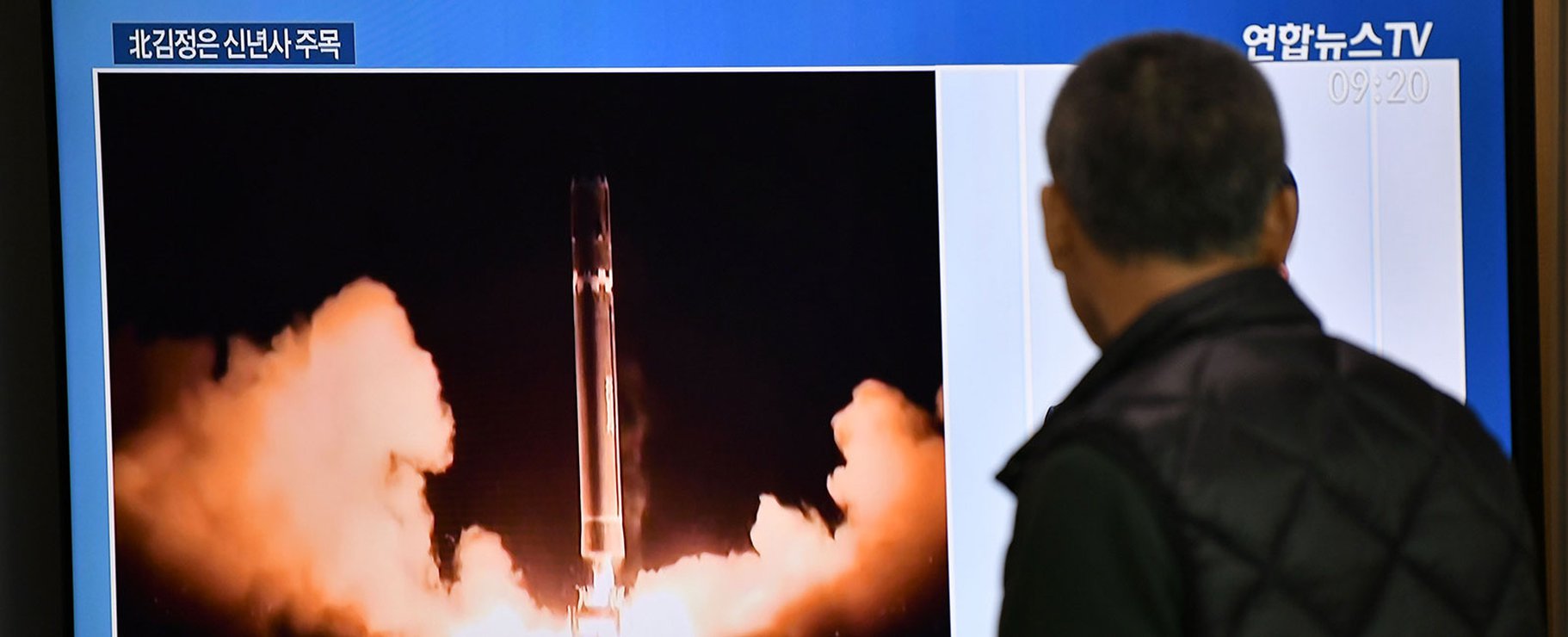
Council on Foreign Relations Publishes Annual Conflicts to Watch for 2021
North Korea’s nuclear program tops Corporation-supported survey ranking 30 potential overseas conflicts by their likelihood and potential impact on U.S. interests, as assessed by foreign policy experts
This new normal would bear some resemblance to the detente of the 1970s, but the now existing polycentric, interconnected world and the rise or China have changed the stakes and counsel a new diplomatic style. Polycentrism creates a context in which the competition, no matter how serious or sustained, is no longer zero-sum. Each country needs to take into account its relations with other global and regional centers of power. That fosters a natural restraint which can be reinforced by bilateral agreements.
If the competition is no longer bipolar, the diplomacy can no longer be solely, or even primarily, bilateral. Bilateral contacts need to be enveloped in a multilateral framework. Since the end of the Cold War, the two countries have participated in a number of what we might call ad-hoc coalitions of the necessary to deal with concrete problems. Alt-hough the Chinese now reject the idea, a China-Russia-U.S. dialogue on strategic sta-bility is necessary, supplemented perhaps with the addition of France and the United Kingdom. The recent American-Russian-Saudi negotiations to stabilize global oil mar-kets should become a permanent feature of interaction among the energy superpowers.
Small, multilateral strategic dialogues mitigate the negative consequences of U.S.-Russian asymmetries, enrich the discussions, and are more likely to result in ideas that can be implemented in practice because the critical countries on a given issue are en-gaged from the beginning.
Other coalitions are thinkable and practical — with Germany and France on European security, separately with Israel and Turkey on the Middle East, with India on Eurasian security, and with Japan on Northeast Asia, for example. These small, multilateral stra-tegic dialogues mitigate the negative consequences of U.S.-Russian asymmetries, en-rich the discussions, and are more likely to result in ideas that can be implemented in practice because the critical countries on a given issue are engaged from the beginning.
Many of these dialogues are not ripe for official discourse at this point. They are best pursued unofficially in expert channels — ideally with official support. This approach would create a kind of private-public partnership for managing U.S.-Russian relations and help generate the public support necessary for the long-term success of any initia-tive. The end result would be a web of multilateral fora, official and unofficial, that would stabilize U.S.-Russian relations and restrain competition.
To move toward this new model, Washington and Moscow need to take immediate steps to ratchet down the confrontation, to create safer conditions for the continuing rivalry, and to act on the urgent need for cooperation on a few areas, such as the fight against COVID-19. Three steps are critical.
First, the two countries have to restore normal diplomatic relations, restarting regular discussions of the full range of issues on the diplomatic agenda. Engagement does not necessarily mean cooperation. To the contrary, relations will continue to be marked by tough competition. Nor is reengagement a reward for bad behavior, as many Ameri-cans will object: it is a matter of national security. It will enable each side to develop a better understanding of the goals, interests, and redlines of the other side, and thereby reduce the risk of an unintended conflict. It is simply not prudent for two countries with the destructive power of the United States and Russia to lack normal diplomatic dialogue.
It is simply not prudent for two countries with the destructive power of the United States and Russia to lack normal diplomatic dialogue.
The second necessary step is extending for five years the New START treaty, which ex-pired in February 2021, and launching a sustained discussion on strategic stability. The treaty has serious limitations — it is bilateral in a strategic world that has already be-come multipolar, it does not cover many of the new high-tech weapons systems that are coming online, and it does not cover space and the cyber domain and tactical nucle-ar weapons. However, it provides for a monitoring and verification system that allows insight into each country’s nuclear arsenal and helps build predictability. After the de-mise of the ABM Treaty in 2002 and of the INF Treaty in 2019, it makes no sense to add another measure of uncertainty to an already complex, confusing equation by let-ting the last remaining major arms control agreements lapse.
That last issue is also part of the third immediate task — resolving the issue of foreign interference in domestic politics. The intensity of the issue on the American side might ease if the 2020 presidential election yields a clear victory for one or the other candi-date, which could not be credibly attributed to Russian meddling. But the issue will not go away. Resolution will likely require expanding the issue to interference broadly con-strued to go beyond the disruption and abuse of computer networks and manipulation of public opinion through social media to measures that the United States has routine-ly practiced in the post-Cold War years to promote democracy in Russia, including for example direct support and encouragement for political activists and groups opposed to the Kremlin. The Russian leadership sees these longstanding U.S. policies as at-tempts at regime change. Any resolution of this issue will likely not entail an agreement not to interfere, but rather one on what interference is tolerable in an interconnected world that makes it unavoidable.
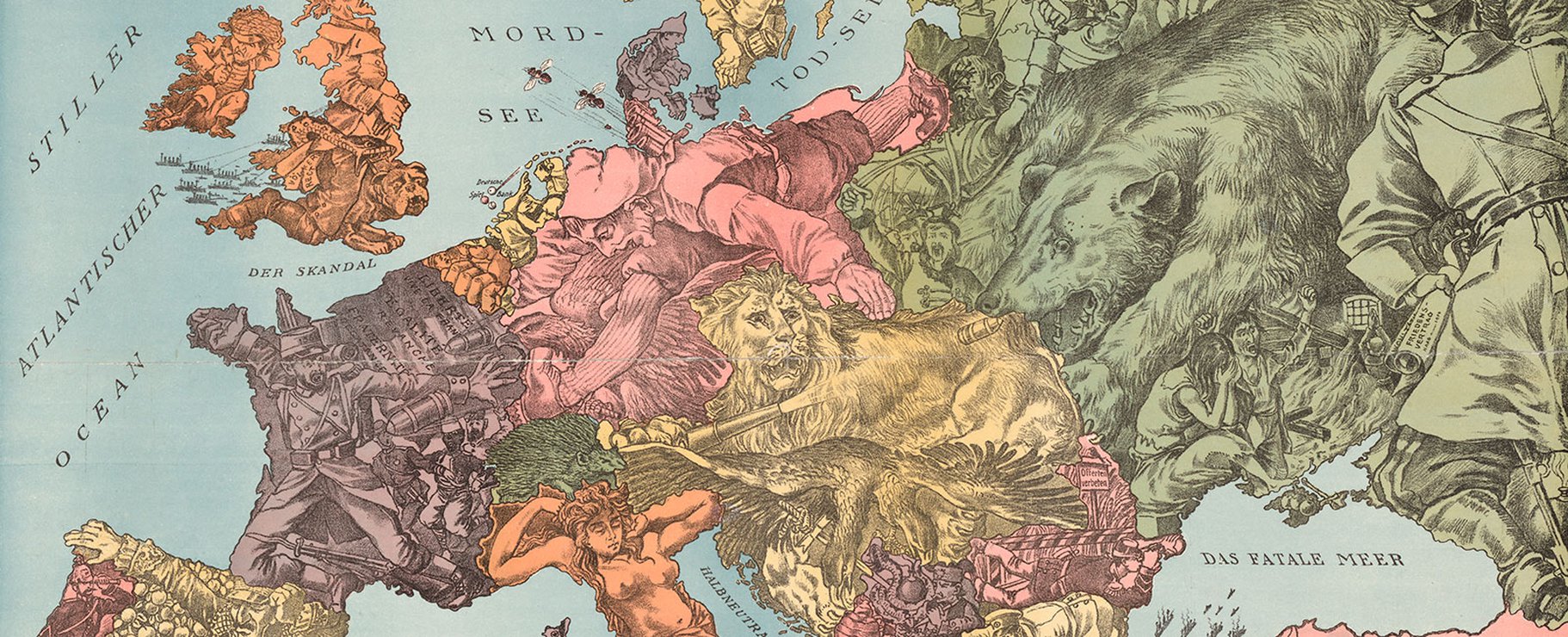
What the First World War Can Teach Us about Misjudging Tech and Social Change
Global threats like the coronavirus pandemic are transforming the world today. An existential truth has emerged: technological advances are outstripping political capacity and imagination. This is not a new story
As for the obvious area for immediate cooperation — the COVID-19 pandemic — ex-pectations should be restrained. The pandemic is not the basis for a reset in relations, as some leading Russians have suggested; it is not the 21st-century equivalent of the struggle against Hitler in dimension or existential threat. Cooperation in developing a vaccine will be encumbered by memories of Cold War biological warfare programs. Renewed American concern about Russian disinformation, and Russian complaints about biased Western reporting, will also hamper cooperation without strong leader-ship. In any event, multilateral cooperation is a more urgent need than bilateral U.S.-Russian collaboration.
The hard truth is that the aspirations for partnership that the two sides harbored at the end of the Cold War have evaporated irretrievably. The future is going to be a mixed relationship of competition and cooperation, with the balance heavily tilted toward competition and much of the cooperation aimed at managing it. The challenge is to prevent the rivalry from devolving into acute confrontation with the associated risk of nuclear cataclysm. In other words, the United States and Russia need to cooperate not to become friends, but to make their competition safer: a compelling and realistic in-centive. The methods of managing great power rivalry in the past two hundred years — though balance-of-power mechanisms and, for brief periods, detente — are inadequate for the complexity of today’s world and the reality of the great asymmetry between the United States and Russia. What might work is what we might call responsible great power rivalry, grounded in enlightened restraint, leavened with collaboration on a nar-row range of issues, and moderated by trilateral and multilateral formats. That is the new model for U.S.-Russian relations.
Dmitri Trenin is the Director of the Carnegie Moscow Center; Thomas Graham is a Distinguished Fellow at the Council on Foreign Relations
This is an excerpt, lightly edited for clarity, from the essay first published in Survival: Global Politics and Strategy (August/September 2020; Vol. 62, Issue 4). © The Inter-national Institute for Strategic Studies, reprinted by permission of Taylor & Francis Ltd, tandfonline.com on behalf of The International Institute for Strategic Studies.