
Opening Campus Doors for Low-Income Learners
The idea of the American Dream has become a mirage for millions. How are educational programs working to support upward mobility for students?
By Drew Lindsay
Jun 3, 2026
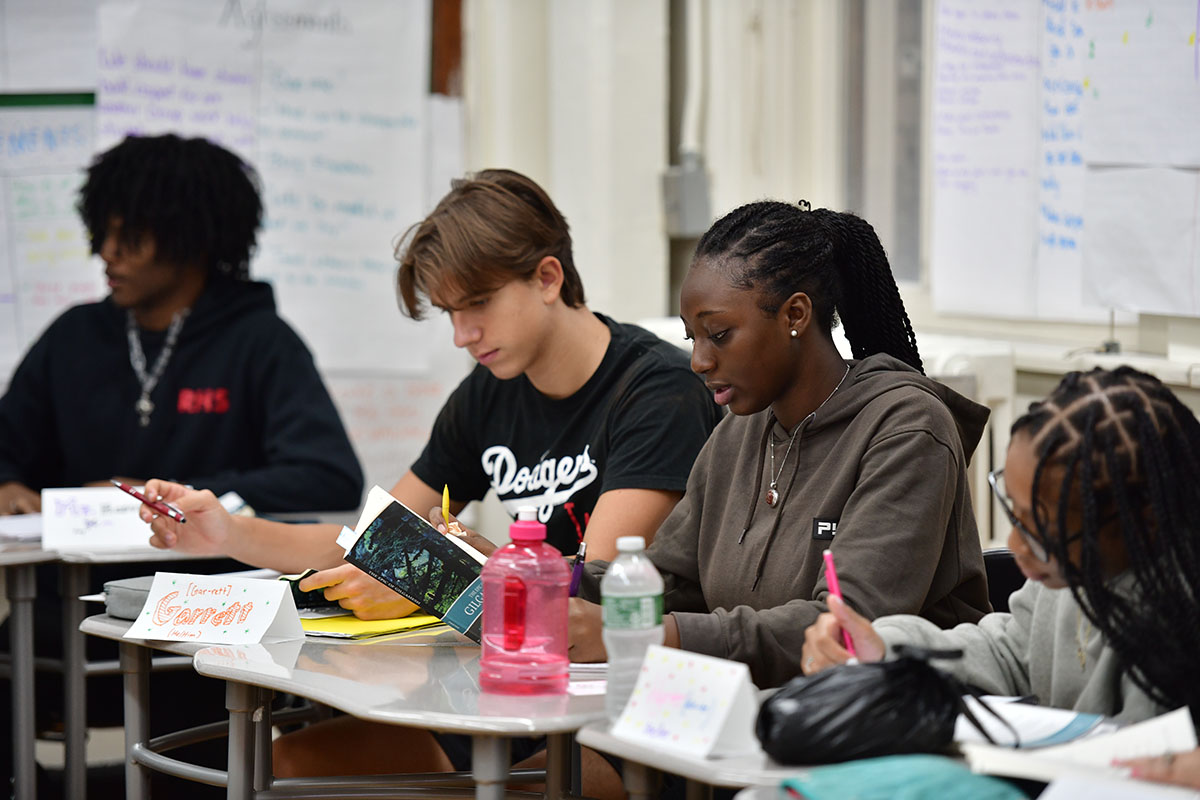
Entering his last year of high school, Camren Daley was more than ready to close out his education. He was a good enough student — he got mostly Bs and Cs — but none of his classes interested him or seemed relevant.
Daley and his mother lived in government-subsidized housing in the Connecticut town of Manchester and scrambled to pay for rent, electricity, and groceries. “I wasn’t really thinking about college,” he says. “I was thinking about how to survive day to day.”
But that first semester of his senior year, Daley got a taste of college, courtesy of an online personal-finance class taught by a professor at the University of Pennsylvania’s Wharton School. He got an A, and virtually overnight, his future took on new possibilities.
In May, almost five years later, Daley walked across the commencement stage at the University of Connecticut, the first member of his family to get a college degree. A Phi Beta Kappa honoree with a near-perfect grade-point average, a major in physiology and neurobiology, and a minor in chemistry, he has already lined up a paid internship at a Massachusetts General Hospital affiliate working at the intersection of neuroscience and the law. Eventually, he expects to go to law school, then get a PhD in neurobiology.
The Wharton class that inspired Daley was part of the National Education Opportunity Network (NEON), previously known as the National Education Equity Lab. NEON partners with top schools like Wharton, Duke, Spelman, and Stanford to bring college credit–bearing online college courses to low-income students in schools nationwide. The organization, which has grown rapidly since its 2019 launch, has served more than 60,000 students across 34 states. The work is made possible through school district fees (40 percent) and philanthropic funds (60 percent). It’s a lean operation — there are only 36 staff members — built to scale quickly; NEON aims to reach 1 million students in the next decade.
NEON is part of a wave of efforts to supercharge education as an engine of social and economic mobility — work that also could tamp down the country’s runaway polarization. Like traditional investments in scholarship and financial aid, these ventures open campus doors often closed to low-income students. Collectively, they go further to ensure that those who go to college get their degree as well as postgraduation jobs or training.
“At its core, this is an economic mobility strategy,” says Leslie Cornfeld, a former civil rights prosecutor who launched NEON with $50,000 in seed money from the Andrew Carnegie Foundation. “Our public education system was intended to be the great equalizer of opportunity, but too often it has the opposite impact for low-income students.”
NEON and its counterparts, also Carnegie grantees, are posting impressive results:
- NEON participants like Daley are twice as likely as other students in high-poverty schools to enroll in a four-year college, according to data by Johns Hopkins scholar Robert Balfanz. These students also are more likely to get their degree.
- At Breakthrough New York, which starts in middle school, 98 percent of participants enroll at a four-year college. They also graduate at a rate 61 percent higher than their peers.
- At the 10 campuses of the Bard Early College, nearly 80 percent of students who go on to college earn a bachelor’s degree within six years. Two of its New York City campuses — in Manhattan and Queens — posted the highest on-time college completion rates for low-income students at any public school in the state.
- Braven, a national nonprofit that provides career-planning resources to universities with large numbers of first-generation and low-income students, has a graduation rate of 92 percent. In 2025, 57 percent of its students landed a strong job or entered graduate school, compared to 45 percent nationally for all bachelor’s graduates.
All these ventures aim to restore one of America’s most celebrated features: the opportunity to climb the economic ladder, even if you start on its lowest rungs. This idea of the American Dream has become a mirage for millions, according to research by Harvard’s Opportunity Insights project, led by economist and Andrew Carnegie Fellow Raj Chetty. While more than 90 percent of children born in the 1940s grew up to earn more than their parents, that figure has plummeted to about 50 percent.
Solutions range widely. The Trump administration has announced $1,000 investment accounts for newborns — money to be tapped as adults for education, home ownership, or starting a business. Steve Ballmer, the former Microsoft CEO, and his wife, Connie, are investing hundreds of millions in mobility efforts that include criminal justice reform and affordable housing. NextLadder Ventures, a new $1 billion philanthropic effort led by, among others, tech mogul Bill Gates and industrialist Charles Koch, aims to harness artificial intelligence and other technologies to help Americans achieve financial security.
Still, education is seen as one of the most reliable ways to increase upward mobility and is a natural counterweight to America’s polarization and frayed civic health.
- Bachelor’s degree holders earn a median of $2.8 million during their career — 75 percent more than if they had only a high school diploma, according to the Center on Education and the Workforce at Georgetown University.
- Thirty percent of first-generation college graduates reach the top earnings quintile compared to 10 percent among their peers who do not obtain a college degree, according to research by the Carnegie-sponsored Sutton Trust.
- College graduates are more likely to have strong marriages and networks of friends — critical bulwarks given the “loneliness crisis” declared by the former U.S. Surgeon General in 2023.
- Compared to Americans with no more than a high school education, college graduates are more likely to volunteer and give to charity, according to a Lumina Foundation-Gallup study.
- A map of civic opportunities nationwide by county found patterns of inequality tied to education as well as race, class, and immigration status. The map — produced by Johns Hopkins University’s SNF Agora Institute with support from the Andrew Carnegie Foundation — examined opportunities available through churches, neighborhood organizations, social-fraternal clubs, and other groups. “The more educated the county, the more likely it will have a density of civic opportunities,” says Hahrie Han, a Hopkins political scientist, inaugural director of the SNF Agora Institute, and a 2025 MacArthur Fellow.
Efforts to increase opportunities for education are not just targeting the tricky transition from high school to college. They knock down often unseen barriers for ages ranging from pre-teens to working adults.
Bard College, a 166-year-old liberal arts school, was among the first to bring intensive college prep to low-income high schoolers. It opened its first Early College campus in 2001 and now operates in five states and the District of Columbia, serving an early college enrollment of nearly 4,000.
After two years of instruction in the fundamentals needed for higher education, students jump into credit-bearing courses often found in the first year at top colleges; 73 percent of Bard students earn an associate’s degree upon finishing high school. Classes are often taught as college-style seminars, and about 70 percent of teachers have a PhD, an MFA, or other terminal degree.
Janet Cuatlacuatl was one of the first students at Bard’s Bronx campus, which opened in 2023 with support from the Andrew Carnegie Foundation. Cuatlacuatl found that her classmates and her teachers aggressively pursued their intellectual interests, whether robotics or music. “It made me feel not so alone in wanting to do something special,” she says.
Her college advisors encouraged her to apply to Princeton. “I didn’t believe that I had a chance to get in, but they pushed me to believe in myself,” says Cuatlacuatl, who is now on a full scholarship at Princeton and the first in her family to go to college.
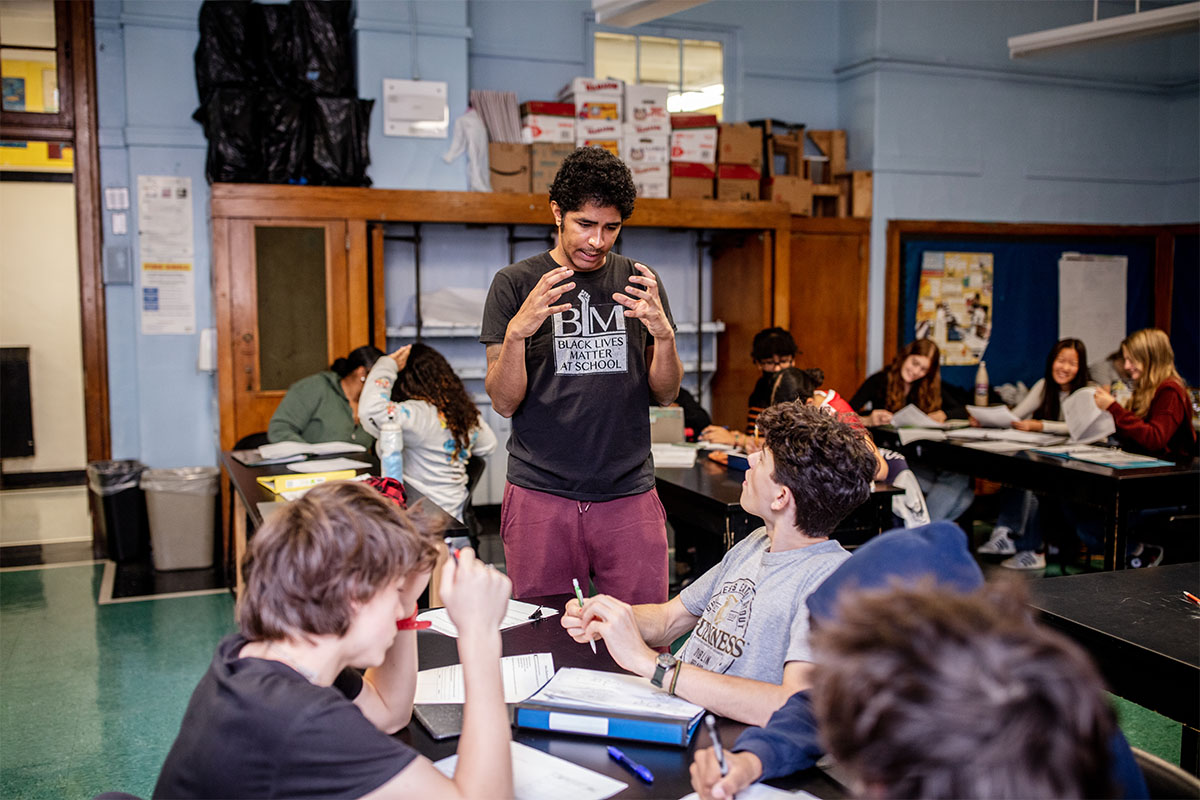
A teacher engages high school students in a Bard Early College class. The campuses now operate in five states and the District of Columbia, serving an early college enrollment of nearly 4,000. (Credit: Bard Early College)
Breakthrough New York is another organization that helps low-income students set their sights on college at an early age. It offers 10 years of support beginning in middle school with a five-week summer school to prepare students for the next year’s subjects.
Teachers come from AmeriCorps and are often first-generation college students — examples for Breakthrough students of how they, too, can make it in college, says executive director Nikki Thompson.
“The students have to see it to believe it,” Thompson says. “And they have to hear it over and over again to internalize it.”
While financial aid remains critical, it is also important to prepare students for college-level work, says Balfanz of Johns Hopkins. “Our research suggests preparation is even more powerful than money.”
Other organizations are working with older students to use higher education to launch upward mobility.
Braven New York works in partnership with universities to complement their career-planning resources and ensure that large numbers of low-income and first-generation students receive the advice, industry networks, interview skills, and résumé-burnishing internships that their more well-off peers often get through family and friends.
“We want to ensure that the students who’ve done everything right are earning the return on investment for college and are on the path to the American Dream,” says executive director Kilsys Payamps-Roure.
Braven offers a three-credit course in which students design a career plan; create cover letters, résumés, and LinkedIn profiles; conduct mock interviews with professionals; and begin to network and apply for positions. After the course, students can apply for one-to-one mentorship with a professional in their career field of interest, in addition to career search support for the first six months after graduation.
At the University of Baltimore, a public university with 2,900 undergraduate and graduate students, the average age for students pursuing a bachelor’s degree is 31. These are typically individuals working in minimum-wage jobs or trapped in mid-career uncertainty. Many are referred to as college comebackers — students who have attended college but still lack a degree.
“Sometimes they’ve been to several other colleges and received six credits here and eight credits there,” says Theresa Silanskis, vice president for advancement and external relations.
The school’s academic programs are designed to prepare graduates for high-demand jobs in fields such as accounting and cybersecurity. Courses are offered online, in person, or in a hybrid format. Professors regularly make accommodations for students who need to bring a child to class. “That’s not out of the ordinary,” says Silanskis.
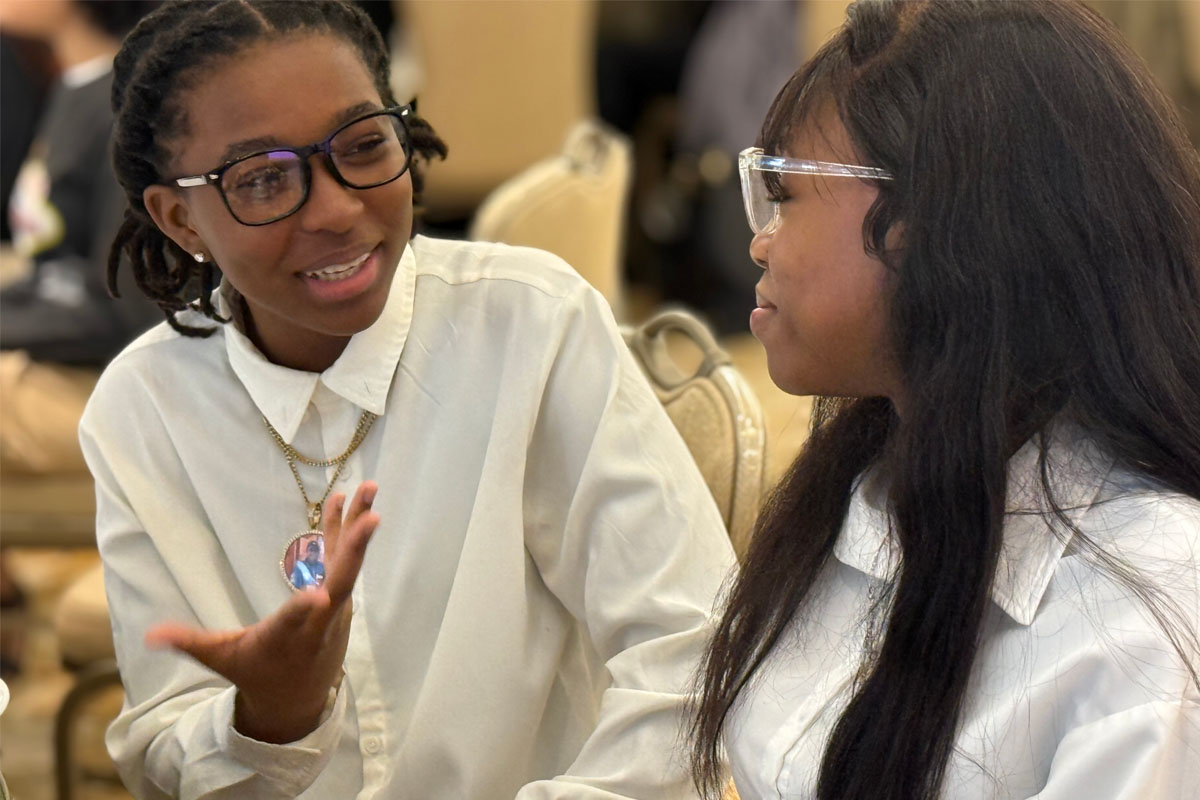
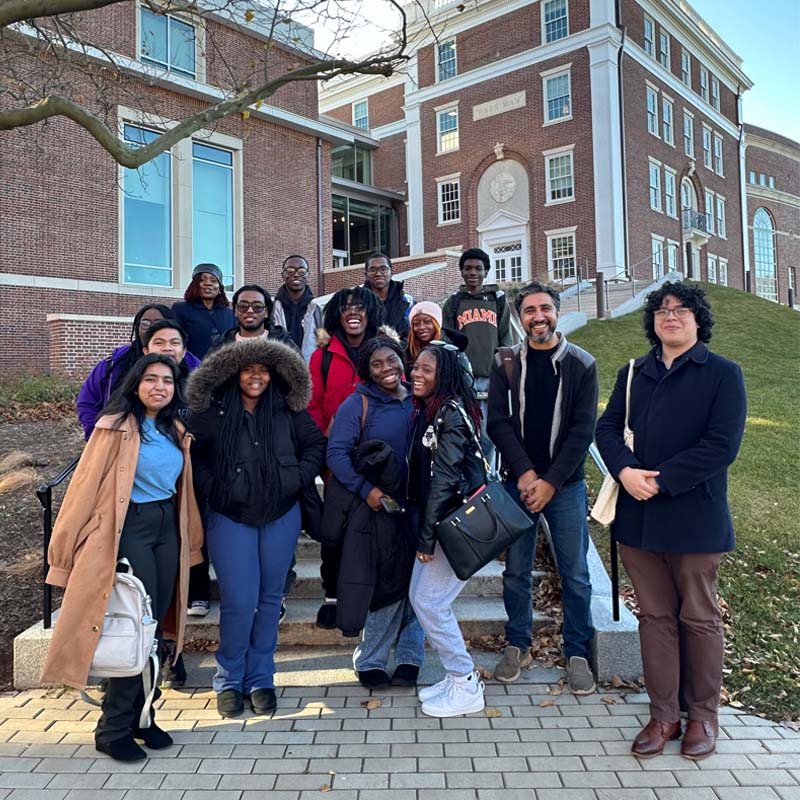
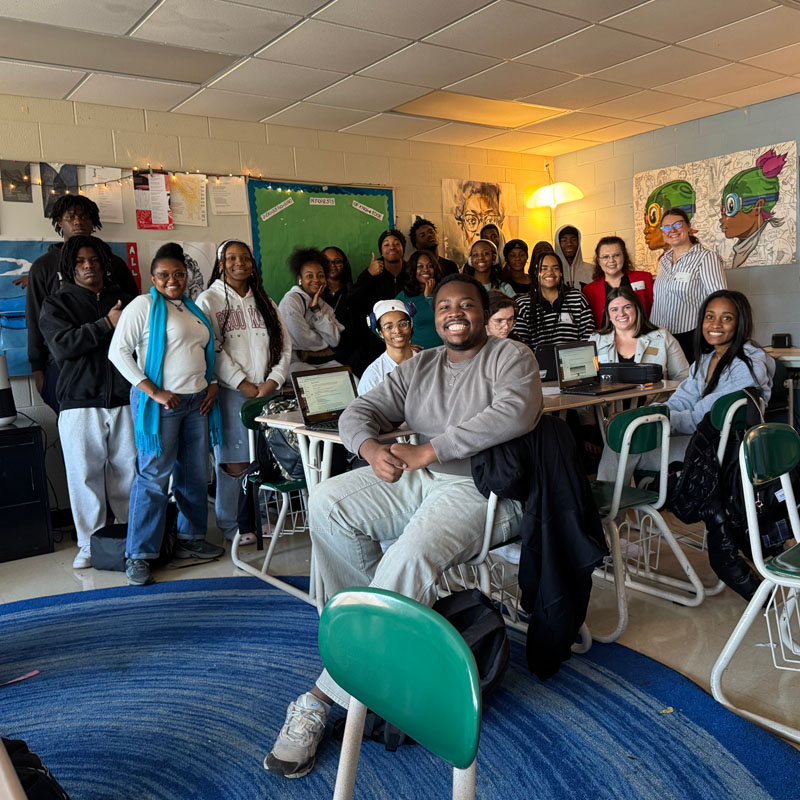
NEON scholars from Miami-Dade County Public Schools participate in a roundtable discussion. Since its 2019 launch, NEON has served more than 60,000 students across 34 states. (Credit: National Education Opportunity Network)
Reach University offers even more flexibility for working adults, bringing a college degree program directly into the workplace. Partnering with K–12 schools, the six-year-old nonprofit enrolls typically low-paid staff — cafeteria and custodial workers, teacher and library aides, coaches — in an apprenticeship program that offers a bachelor’s degree and teaching credentials. Students continue in their jobs, get credit for clinical work in the classroom, and take evening online classes. Once they become teachers, their salaries can double or triple, says Reach president Joe Ross.
The organization is taking the model into hospitals, starting soon in Washington state. “Every workplace can become a college campus if this grows,” Ross says.
Reach is one of a growing number of programs that offer alternative paths operating outside traditional higher education. Increasingly popular as rising tuition and student debt raise questions about the value of college, these programs include vocational training, coding boot camps, and short-term training for micro-credentials. Many aim to increase economic mobility without a college degree.
Propel America trains low-income adults ages 18 to 26 for healthcare positions such as medical assistants and care providers, helping participants access careers with strong potential wage growth and upward mobility. Propel partners with employers to ensure its programs align with workforce needs and hiring demand.
Training is fast by design — participants typically earn a credential, often with college credit, in a matter of months. Many young adults can’t afford to go to college for years, defer income, and possibly accrue debt with no certainty about a job, says Chad Rountree, Propel’s chief executive officer.
“Is college worth it? I’d say ‘yes.’ A degree still has immense market value,” Rountree says. “But we shouldn’t look at it as the only doorway to mobility. If education is going to deliver on its promise of mobility, it has to be more tightly connected to how people get hired, build skills, and advance over time.”
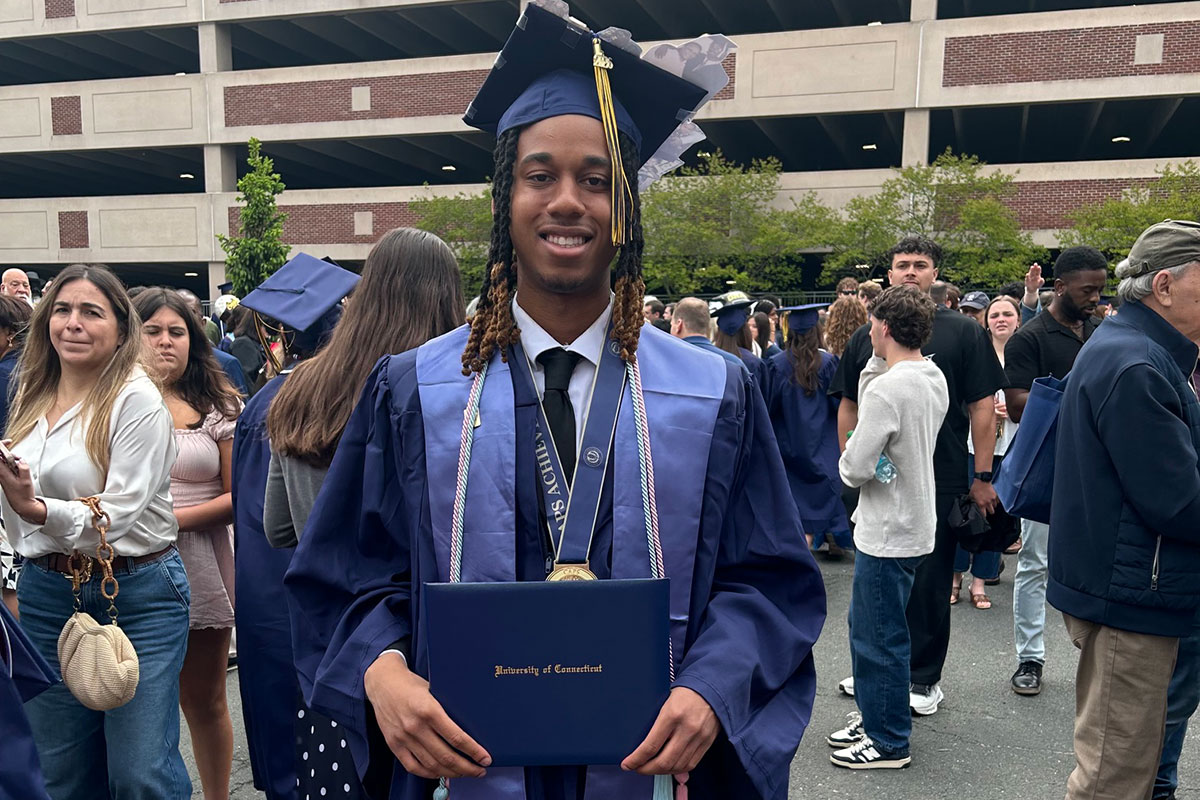
During his senior year of high school, Camren Daley enrolled in an online personal-finance class taught by a professor at the University of Pennsylvania’s Wharton School. He got an A, and virtually overnight, his future took on new possibilities. Almost five years later, Daley walked across the commencement stage at the University of Connecticut, the first member of his family to get a college degree. (Credit: National Education Opportunity Network)
When Camren Daley arrived at the University of Connecticut on a full scholarship nearly five years ago, he wasn’t scared. “I had already got an A in an Ivy League course,” he says, referring to his Wharton class. “I knew I was capable of great things, and I knew what it takes — discipline, a strong work ethic, and grit.”
Even as he took organic chemistry, biochemistry, and other courses required for medical school, Daley was surprised to find that he was more prepared for college-level work than classmates with better high-school records. He had worked with Wharton teacher assistants and knew how to navigate an online course module.
Now leaving college, he is confident that he will have the financial security absent from his childhood. “Law is not a career,” he says, “where you’re going to have to be living dollar to dollar every day.”
Drew Lindsay is a former writer and editor for Education Week and the Chronicle of Philanthropy.