Now Is the Time for National Service
Four out of five Americans across party lines support national service. Could it also help reduce political polarization?
By Dame Louise Richardson
Oct 21, 2026
Writing in the 1830s, Alexis de Tocqueville described Americans’ proclivity to create voluntary groups and civic organizations to solve local problems. In 1961, John F. Kennedy memorably encouraged Americans to “ask not what your country can do for you, but what you can do for your country.” In 1993, President Bill Clinton signed the National and Community Service Trust Act creating AmeriCorps. Applications to the country’s largest service organizations, AmeriCorps, the Peace Corps, and Teach for America, soared after the 9/11 attacks. In his first State of the Union address after the attacks, President Bush launched the USA Freedom Corps and called on Americans to contribute two years of national service. Over the years since, cosponsored bills and the White House Citizen Service Act demonstrated bipartisan support for national and community service.
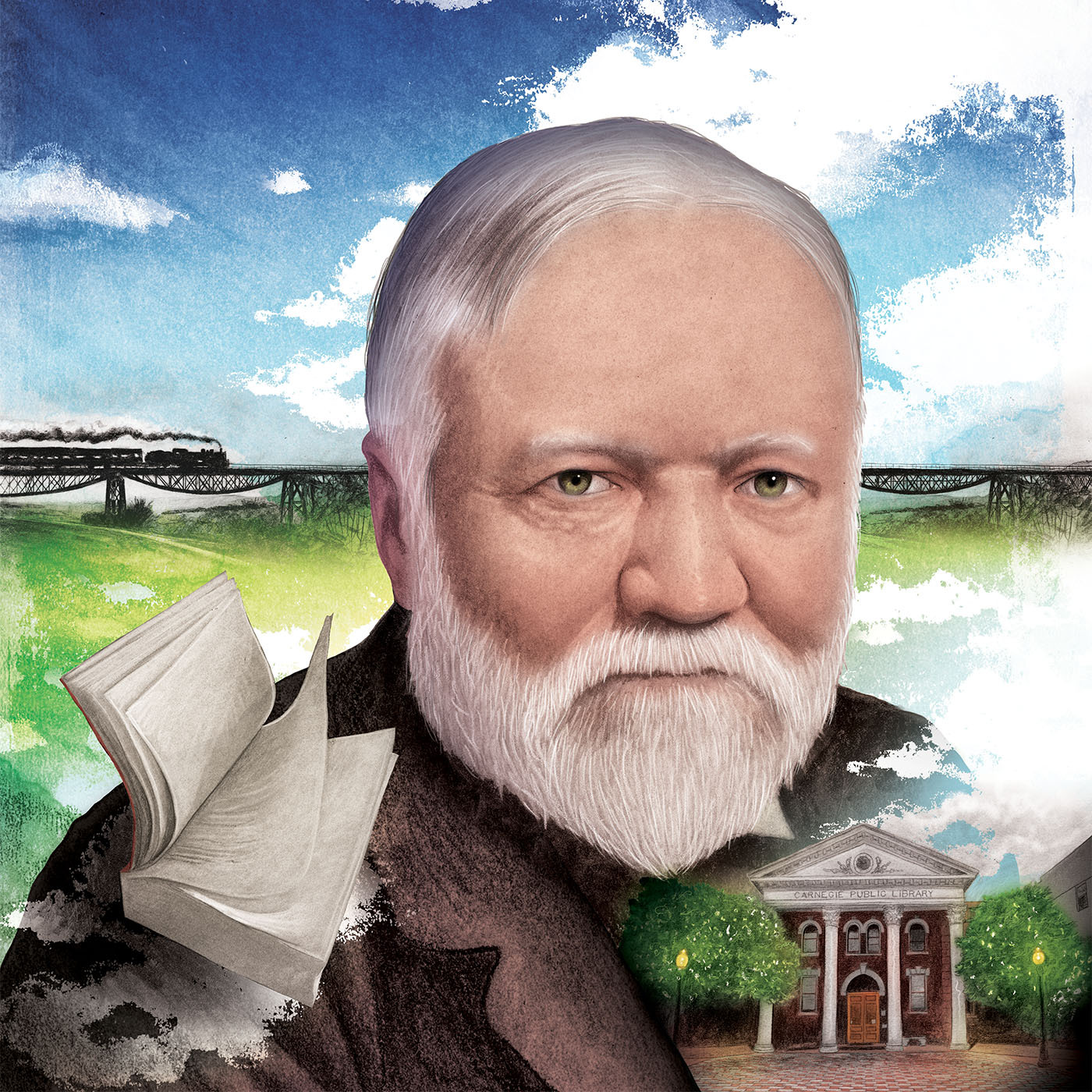
The Andrew Carnegie Foundation, too, has long played a prominent role in supporting national service. In his 1902 book, The Empire of Business, for example, Andrew Carnegie told wealthy young men that they had a “duty to contribute to the general good of the community.” During the Johnson administration, we helped to create the White House Fellows program, and in 2008 we cohosted a bipartisan summit with 600 participants that was addressed by presidential candidates, Senators John McCain and Barack Obama, both keen advocates of service. More recently we have supported state-level service initiatives in Maryland and Utah as well as the Service Year Alliance, which is working with several states. We have developed a framework and business models that can be used by cities and states as they contemplate service programs, and we have created a Service United Fund to support the National Governors Association as it leads a new strategy to promote state service.
We have been drawn to extend our commitment to community service primarily because we view it through the lens of polarization. The literature on the extent of political polarization in the U.S. is extensive, and every American witnesses its impact every day. We see it in the dysfunction in Washington and the failure of our political leaders to forge compromises on issues of concern to all of us, from immigration reform to education and health care. We at Carnegie see the political paralysis in Washington as impeding our ability to deliver the advances we seek in education, strengthening democracy, and promoting peace.
Far from improving, political polarization appears to be getting worse. For the past several years, Carnegie has commissioned a CivicPulse survey of local government officials across the country. The findings have been consistent: local political leaders perceive polarization at the national level as a significant problem, but not at the local level, where shared problems require cooperation to implement solutions. Recently this has changed. The number of local political leaders who see polarization as a problem locally jumped from 30 to 41 percent in the most recent survey. The national number has consistently been around 90 percent.1
We believe that we cannot simply sit back and watch polarization deepen and shred the fabric of our democracy, especially as the evidence suggests that Americans are not, in fact, as divided as the rhetoric of our political leaders would suggest. Study after study has shown that there is an enormous convergence among the majority of Americans on democratic values2 and on what American history should be taught.3 Yet our political structures, with a winner-take-all system and closed primaries that favor the extremes, ensure that our political leaders are more polarized than the people they are elected to represent. Moreover, the business model of social media and cable TV augments these extremes and contrives to keep us divided.
We at Carnegie believe that national and community service is one way to put a brake on the trajectory of political polarization. It is one of the few issues that has bipartisan support: 82 percent of Americans, including 88 percent of Democrats and 78 percent of Republicans, support service programs.4 There is not as much hard evidence as we would like of the impact of national service on polarization, but all the evidence points in one direction: When diverse cohorts serve together for a sustained period, work toward common goals, and build a common identity, they reduce polarization. This pattern holds across military service studies in Europe,5 Israel, and Singapore, and across U.S. civilian programs such as Teach for America and City Year.6
Any service to one’s community is, of course, a plus, both to the individual and the community, but the particular type of service program that we are advocating is one that learns from the experience of the military. It requires sustained commitment. It is worth noting that over 70 percent of those who apply to serve in the military are, for one reason or another, deemed ineligible. These young people could readily be referred instead to a service program. The service programs likely to have the most impact are those that last for a sustained period; the ideal would be one year between high school and college. Participants are paid, so that nobody is excluded on grounds of cost. People from different races, regions, religions, and classes are brought together to work on shared projects of benefit to the community. They are trained together and develop a strong collective identity.
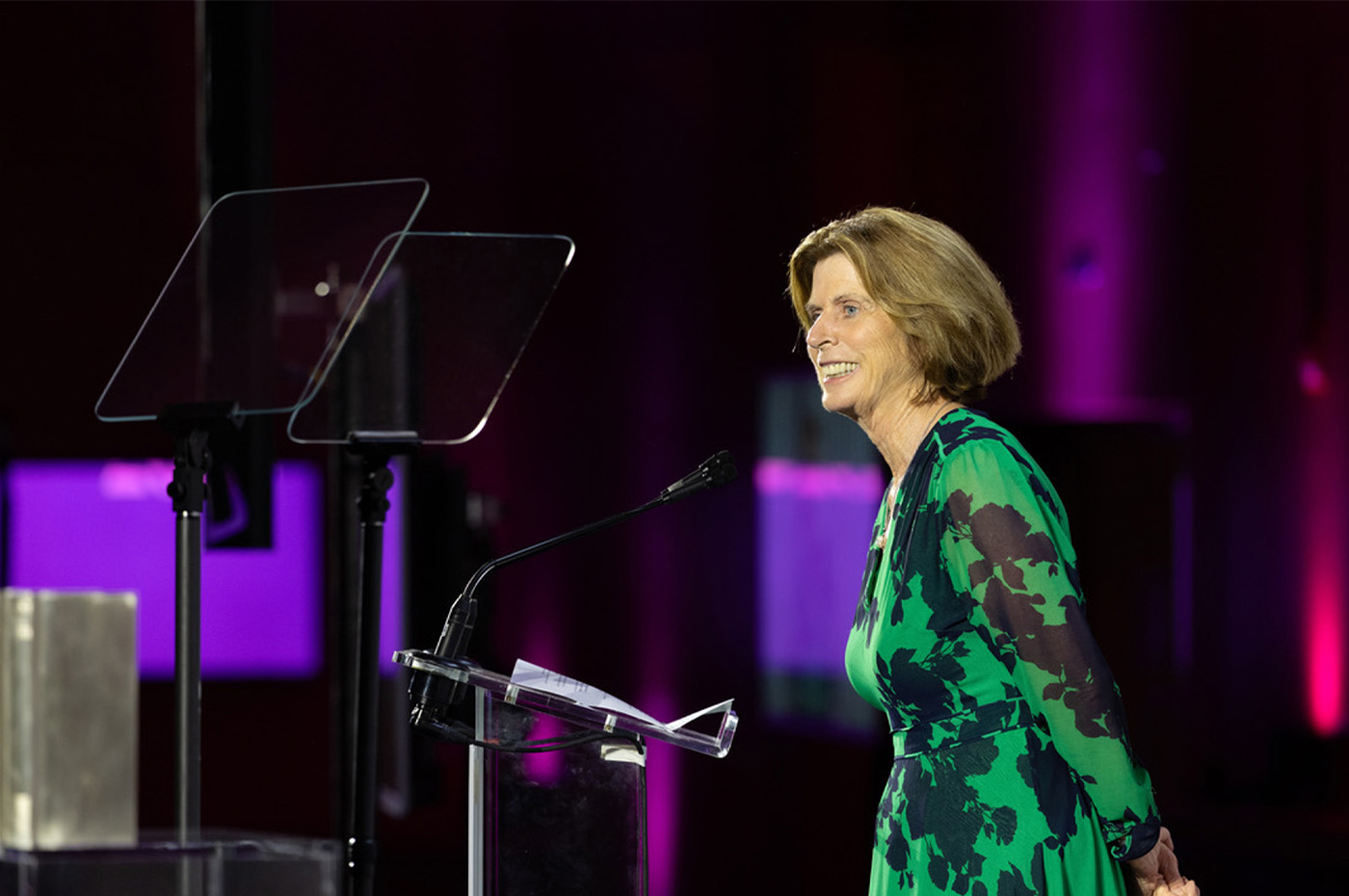
“When diverse cohorts serve together for a sustained period, work toward common goals, and build a common identity, they reduce polarization.”
Dame Louise Richardson
While many argue that a service year should be mandatory, we believe that offering incentives for participation is more likely to be successful. Businesses could help by offering preference to applicants who have completed a service year. Universities could help by offering preference in admission, scholarships, credit, or automatic deferral for those undertaking a year of service. Philanthropists could help by offering to fund completion bonuses to participants, or by joining Carnegie in helping states develop the necessary infrastructure.
There are many advantages to national and community service, quite aside from the impact on polarization. A year’s service would also provide young people with critical workforce skills as they make the transition from education to career. It provides an opportunity to acquire the discipline necessary to succeed in the workforce, skills required for particular jobs, as well as exposure to a range of possible careers. Someone who has successfully completed a service year is likely to be an attractive prospective employee.
In addition to these tangible benefits, we believe that participation in a year’s service is also likely to help address the epidemic of loneliness and alienation being experienced by young people today. The opportunity to get off their screens and participate in something bigger than themselves, to get to know people unlike themselves, and to feel that they are contributing to helping others, can only be beneficial to their mental health in the near term. In the longer term, one hopes, it will help develop an appreciation of the importance of community and civic participation.
Carnegie’s commitment to national and community service is the apex of our grantmaking in the area of civics education. The work of some of our grantees is covered in the current issue of the Carnegie Reporter. Civics education is badly needed. The 2026 ACTA survey7 found that 61 percent of college students cannot identify term lengths for senators and members of Congress. Thirty-seven percent know that Congress holds the power to declare war while an equal number answered incorrectly that the president has the authority. In the 2022 NAEP civics assessment,8 only 22 percent of eighth graders scored proficient, the first decline in the test’s 25-year history. Nearly one in three students could not describe the basic structure of the U.S. government. The 2025 Harvard Youth Poll found that only 15 percent of young Americans trust the federal government to do the right thing most or all of the time.
It is, of course, easy to distrust something you don’t understand, but you cannot build or sustain a healthy democracy when its citizens do not understand, or care, how it works. Only 47 percent of young people aged 18–29 voted in the 2024 presidential election, yet Gen Z now represents one-fifth of the electorate. Our portfolio of grants under our Education for Civic Participation program is designed to ensure that by the time they graduate from high school, young people understand how their government works, have a keen appreciation of their rights and responsibilities as citizens, and have attained some experience of participating in civic life. If they do, and they then follow their graduation from high school with a year of robust community service, we may just put the brakes on political polarization and reclaim the democratic spirit, the energy, and the idealism that built this great republic.
Dame Louise Richardson is president of the Andrew Carnegie Foundation. A widely recognized expert on terrorism and international relations, she previously served as vice-chancellor of the University of Oxford and of the University of St. Andrews, and as executive dean of the Radcliffe Institute for Advanced Study.
1. CivicPulse, Polarization in America (December 2025).
2. More in Common, Hidden Tribes: A Study of America’s Polarized Landscape (October 2018).
3. More in Common, Defusing the History Wars: Finding Common Ground in Teaching America’s National Story (December 2022).
4. Voices for National Service, “Poll Finds Broad Bipartisan Support for National Service” (January 2020).
5. Chagai M. Weiss, Compulsory Military Service Reduces Affective Polarization: Evidence from Conscription Reforms in Europe (December 2022).
6. Esther Burson, City Year Alumni Bridging Study, under the supervision of Richard Kiely (Cornell University, prepared for City Year, June 2024).
7. ACTA, The Story of Our Nation: How Well Do College Students Know America? (June 2026).
8. NAEP, Nation’s Report Card, National Assessment of Educational Progress (May 2023).